Tag Archives: silver

States Asserting Their Money Power

There is a bill pending in the Idaho legislature to make gold and silver legal tender. A recent article describes the bill and mentions that, “The passage of H177 would make Idaho the sixth state to recognize gold and silver as legal tender, as they always should have been doing.” The article also states that “Utah led the way, reestablishing constitutional money in 2011. Wyoming, OklahomaArkansas, and Louisiana have since joined.” If six states can do it, why not every state?

Simply citing these examples should pique the interest of people everywhere to learn about our national money system and why the States are taking such actions. What is the point of declaring gold or silver to be legal tender? Isn’t the US dollar already legal tender? What’s wrong with that? It is questions such as these that have been the focus of my work for the past 45 years, questions that I have answered in great detail in my various books, articles, lectures and interviews, all of which have been posted on my website and on my various other channels[1]. The bottom line is this—our national system of money and banking, along with that of virtually every other country in the world, is deeply flawed and destructive[2]. But there is plenty that can be done about it—by we the people, by small- and medium-sized businesses[3], and by lower levels of government.

In this article I will discuss what the States can do to help liberate what I call the “credit commons” and restore “Constitutional” and honest money to various levels of our economy. The declaration by State governments of gold or silver as legal tender is important, not because metallic money will circulate widely, but because it establishes a proper measure of value and unit of account in which to denominate credit obligations which are the true media of exchange. Coins do not even need to be minted to serve that purpose, they only need to be defined, for example, as a specified weight of silver of some specified fineness. The definition that seems most appropriate to adopt is the original definition of the US Dollar that was established early in the history of the United States. I related that bit of history in the new, revised edition of my book, The End of Money and the Future of Civilization:

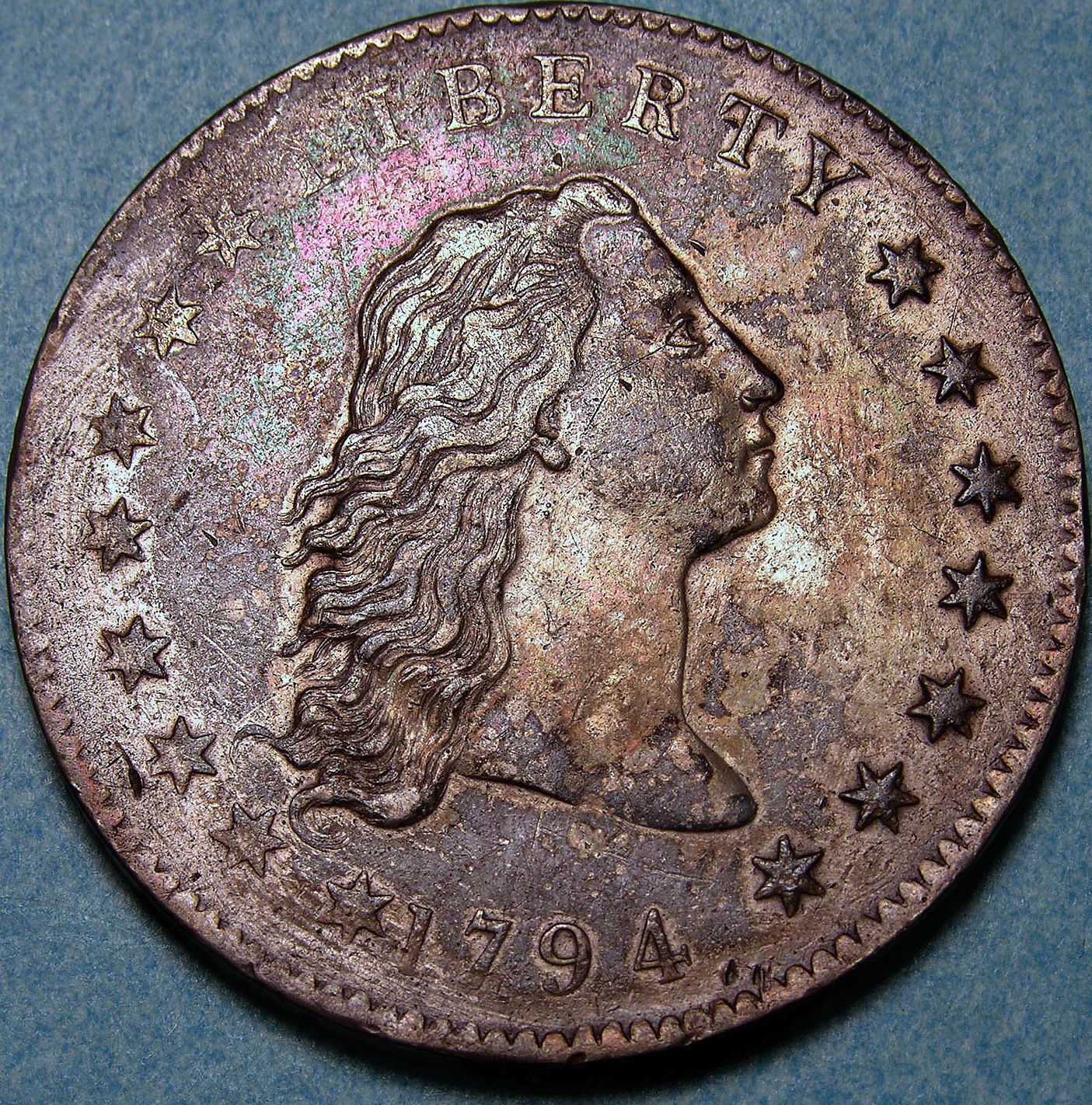
To complete the task of defining the monetary unit for the United States in a way that would not disturb commerce, a committee was commissioned to survey the money stock and assay a representative sampling of Spanish dollar coins so that the American dollar would closely approximate those coins already in circulation. This was easily accomplished, and it was quickly settled that the United States dollar should be defined as a silver coin containing 371.25 grains of fine silver. Coins were subsequently minted according to that specification along with gold coins valued in dollars. As the country developed, various expedients were implemented to make money more abundant[4].”
Source: US Mint

Once such a standard gets established somewhere, it will be widely adopted elsewhere, and that may eventually lead to a more stable composite standard being defined and adopted[5].

Once a State defines a commodity like silver to be legal tender, it can then encourage municipal governments or private businesses enterprises within the state to issue, individually or collectively, their own credit voucher notes denominated in terms of said silver dollar units by spending them into circulation as partial or full payment to suppliers of material inputs to production, and to employees and other service providers who must be paid. Those vouchers can then circulate widely as money to settle the obligations that others in the economy have to one another. The state government could also accept said vouchers, in whole or in part, as payment for taxes, fees, and other obligations due to the state government, and the state government might even consider issuing its own modified Tax anticipation warrants (TAWs) in the form of paper notes, ledger entries, or digital tokens denominated in terms of said silver dollar units.

People will accept these modified TAW and use them to pay one another because the warrants can be used to pay taxes and fees that are due to the issuing State government, or to pay private vendors of goods and services. When the government eventually accepts them back as payment for taxes and fees, the warrants are retired. In the interim period between their issuance and their retirement, the warrants can circulate among the population of the region as a means of payment that is independent of the federal Government, the Federal Reserve, and the banks that issue US dollars. As the TAW mature/expire, new series of TAW may be issued in amounts that are not excessive in relation to anticipated revenues.

As the people at large come to better understand and trust the validity and benefits of these payment media, they will increasingly use them in place of national fiat currencies in business dealings within the region, and in doing so will achieve a greater measure of local/regional self-reliance and control over their own affairs.


[1] See my posts on YouTube, Medium, and Substack.

[2] See these revised chapters of my book, The End of Money and the Future of Civilization, Chapter 4:

Central Banking and the Rise of the Money Power, and Chapter 6: Usury, the Engine of Destruction.

[3] Ibid. See especially, Chapter 11, Credit Clearing: the “Un-Money”, and Chapter 12. How to Solve the Money Problem.

[4] Chapter 9—The Evolution of Money—From Commodity Money to Credit Money and Beyond

[5] See, An Objective Composite Standard Measure of Value.

Competing currencies essential to freedom

This appeal by Congressman Ron Paul is perhaps the most important proposal by an American politician in the last 100 years.
I’m glad to know that Congressman Paul is not limiting his proposal to gold and silver currencies.

The most liberating means of payment is “mutual credit clearing” through independent non-bank associations of businesses and individuals.

Of course, the credit in such accounts needs to be denominated in some objective units, which could be specified weights of gold or silver, but better still, would be an “index unit” based on a “market basket” of basic commodities that are widely and freely traded.

My four books on the subject, and my websites, provide coverage of pertinent concepts and history, and full details on my prescriptions for businesses, communities, and governments.–t.h.g. 

Legalize Competing Currencies

I recently held a hearing in my congressional subcommittee on the subject of competing currencies.  This is an issue of enormous importance, but unfortunately few Americans understand how the Federal Reserve and Treasury Department impose a strict monopoly on money in America.

This monopoly is maintained using federal counterfeiting laws, which is a bit rich.  If any organization is guilty of counterfeiting dollars, it is our own Treasury.  But those who dare to challenge federal legal tender laws by circulating competing currencies– at least physical currencies– risk going to prison.

Like all government created monopolies, the federal monopoly on money results in substandard product in the form of our ever-depreciating dollars.

Yet governments have always sought to monopolize the issuance of money, either directly or through the creation of central banks. The expanding role of the Federal Reserve in the 20th century enabled our federal government to grow wildly larger than would have been possible otherwise.  Our Fed, like all central banks, encourages deficits by effectively monetizing Treasury debt.  But the price we pay is the terrible and ongoing debasement of our money.

Allowing individuals and business to use alternate currencies, especially currencies backed by gold and silver, would expose the whole rotten system because the marketplace would prefer such alternate currencies unless and until the Fed suddenly imposed radical discipline on its dollar inflation.

Sadly, Americans are far less free than many others around the world when it comes to protecting themselves against the rapidly depreciating US dollar.  Mexican workers can set up accounts denominated in ounces of silver and take tax-free delivery of that silver whenever they want.  In Singapore and other Asian countries, individuals can set up bank accounts denominated in gold and silver.  Debit cards can be linked to gold and silver accounts so that customers can use gold and silver to make point of sale transactions, a service which is only available to non-Americans.

The obvious solution is to legalize monetary freedom and allow the circulation of parallel and competing currencies.  There is no reason why Americans should not be able to transact, save, and invest using the currency of their choosing.  They should be free to use gold, silver, or other currencies with no legal restrictions or punitive taxation standing in the way.  Restoring the monetary system envisioned by the Constitution is the only way to ensure the economic security of the American people.

After all, if our monetary system is fundamentally sound– and the Federal Reserve indeed stabilizes the dollar as its apologists claim–then why fear competition?  Why do we accept that centralized, monopoly control over our money is compatible with a supposedly free-market economy?  In a free market, the government’s fiat dollar should compete with alternate currencies for the benefit of American consumers, savers, and investors.

As Austrian economist Ludwig von Mises explained, sound money is an instrument that protects our civil liberties against despotic government. Our current monetary system is indeed despotic, and the surest way to correct things simply is to legalize competing currencies.

#     #     #

States beginning to assert their money power

Bills have recently been introduced in several states to try to address the money problem. In an article that appeared in Financialsense.com, Robert Kientz describes actions that are occurring in several states. It is unclear how much support the various bills might have, or what their chances of passage might be, but Kientz implies that the state of Virginia has already taken official action to at least study the matter of using alternative payment media other than Federal Reserve currency. He says:

Virginia announced yesterday that the state would commission a study of alternative currencies including gold and silver in House Joint Resolution No. 557. A selected quote from Resolution 557:

WHEREAS, the Supreme Court of the United States in Lane County v. Oregon, 74 U.S. (7 Wallace) 71, 76-78 (1869), and Hagar v. Reclamation District No. 108, 111 U.S. 701, 706 (1884), has ruled that the States may adopt whatever currency they desire for the purposes of performing their sovereign governmental functions, even to the extent of adopting gold and silver coin for those purposes while refusing to employ a currency not redeemable in gold or silver coin that Congress has designated “legal tender”;

Such actions are a hopeful sign that the money power, and the political power that goes along with it, are devolving away from Wall Street and Washington and back to our states and communities. The states have a powerful weapon in the form of the United States Constitution, which declares that, no state shall make any thing but gold and silver Coin a Tender in Payment of Debts.

Of the two metals, I much prefer silver as the value standard, for several reasons. My main objection to gold is that it is closely held by a few banks and governments that are able to manipulate its market price, and thus manipulate the economy if gold were to play a major monetary role. Silver is much more abundant and widely held, and while present market mechanisms enable a few entities to manipulate its market price, I think parallel  mechanisms can be put into place that would assure a freer market giving silver a more stable value. Ideally, however, trading entities will ultimately adopt an objective value measure using a composite commodity standard composed of a “market basket” of basic commodities.

Keynes was not wrong in calling gold “a barbarous relic,” but that’s not the whole story. We must also recognize that central banks, legal tender laws, and credit monopolies are relics even more barbarous than gold. The separation of money and state must ultimately be gained in order to have a truly free and harmonious society.