I subscribe to Alex Krainer’s Trend Compass channel on Substack, as well as his YouTube channel. Krainer provides historical lessons which highlight persistent patterns that impact our lives today. He recently published a two part essay on the West under oligarchs which describes today’s reality, which is the prevalence of oligarchic governments in the West hiding behind a facade of democracy. You can read them on Krainer’s Substack or view his video about it on YouTube, but I’ve taken the liberty of asking Google’s NotebookLM to provide this 7 minute video overview to whet your appetite.
And today I asked NotebookLM to generate another video overview (below) of Krainer’s Part 2 which tells the modern story of the oligarch’s takeover of Russia following the collapse of the Soviet Union in the 1990s, and describes how Vladamir Putin after his election as President, managed to reestablish government control and the rule of law. Can the US and other so-called Western “democracies” learn the lessons and do likewise?
I just watched the movie, American Made, for the second or third time. Tom Cruise plays the role of Barry Seal an American pilot who became a drug-runner for the CIA during the 1980s in a convoluted clandestine operation that later became known as the Iran-Contra Affair. I must admit that the movie is very entertaining despite the scandalous government behavior that it reveals.
First…Make Vaccine Manufacturers Liable For Injuries. Second…Ban All Vaccine Mandates For School, Military & Employment. Third…Suspend The Childhood Vaccine Schedule. Fourth…Stop All Pharmaceutical Advertising.
This Symbiotic Culture post by Richard Flyer is, in my opinion, his most compelling thus far. His story about the Parallel Polis movement which arose within Czechoslovakia in the late 1970s in the midst of an oppressive Communist government, superbly illustrates the power inherent in the spirit of love which impels people to come together, cooperate, and share, despite our many differences and the tyrannical nature of the systems in which we might be embedded.
There is a bill pending in the Idaho legislature to make gold and silver legal tender. A recent article describes the bill and mentions that, “The passage of H177 would make Idaho the sixth state to recognize gold and silver as legal tender, as they always should have been doing.” The article also states that “Utah led the way, reestablishing constitutional money in 2011. Wyoming,Oklahoma, Arkansas, and Louisiana have since joined.” If six states can do it, why not every state?
Simply citing these examples should pique the interest of people everywhere to learn about our national money system and why the States are taking such actions. What is the point of declaring gold or silver to be legal tender? Isn’t the US dollar already legal tender? What’s wrong with that? It is questions such as these that have been the focus of my work for the past 45 years, questions that I have answered in great detail in my various books, articles, lectures and interviews, all of which have been posted on my website and on my various other channels[1]. The bottom line is this—our national system of money and banking, along with that of virtually every other country in the world, is deeply flawed and destructive[2]. But there is plenty that can be done about it—by we the people, by small- and medium-sized businesses[3], and by lower levels of government.
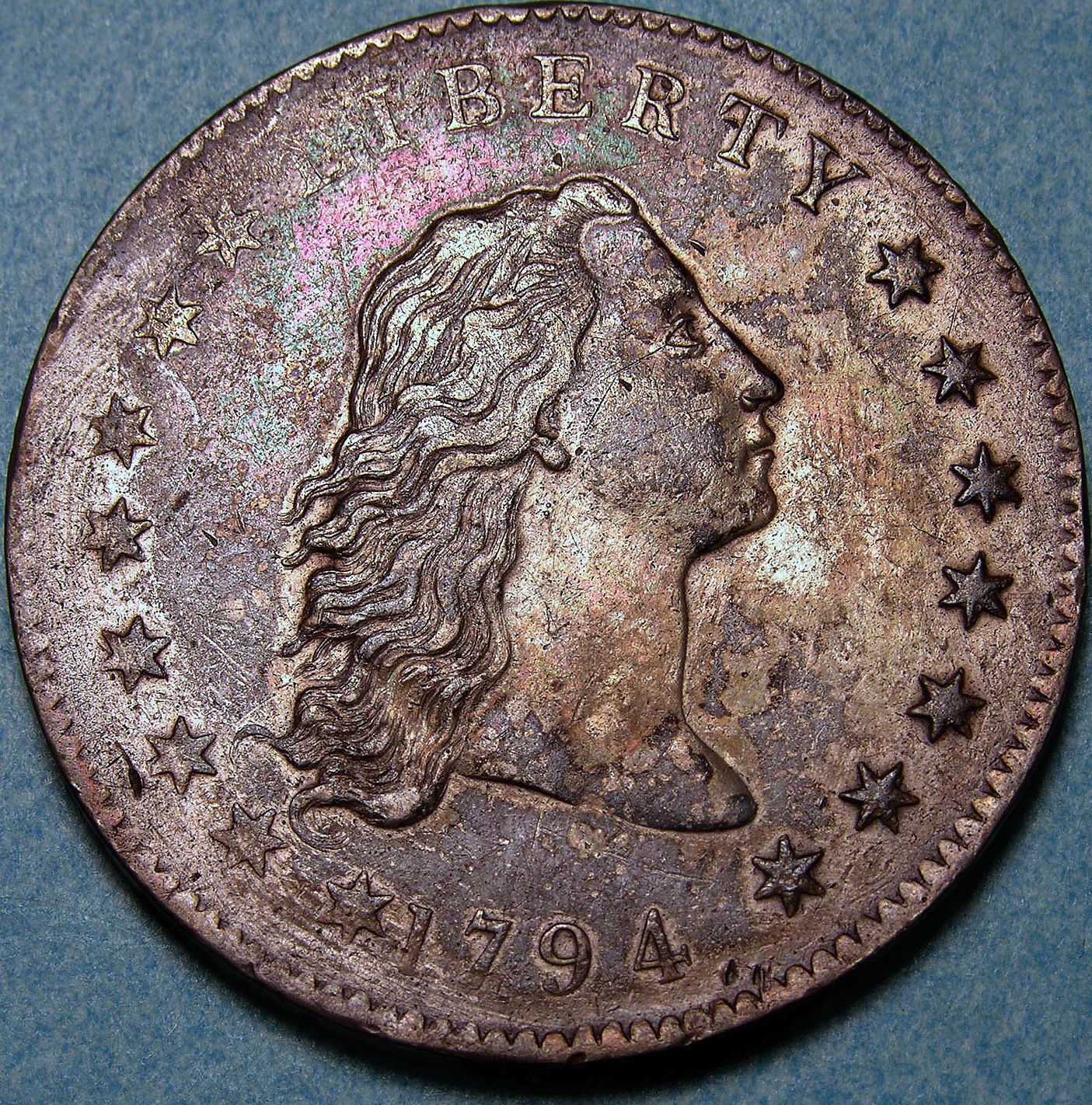
In this article I will discuss what the States can do to help liberate what I call the “credit commons” and restore “Constitutional” and honest money to various levels of our economy. The declaration by State governments of gold or silver as legal tender is important, not because metallic money will circulate widely, but because it establishes a proper measure of value and unit of account in which to denominate credit obligations which are the true media of exchange. Coins do not even need to be minted to serve that purpose, they only need to be defined, for example, as a specified weight of silver of some specified fineness. The definition that seems most appropriate to adopt is the original definition of the US Dollar that was established early in the history of the United States. I related that bit of history in the new, revised edition of my book, The End of Money and the Future of Civilization:
“To complete the task of defining the monetary unit for the United States in a way that would not disturb commerce, a committee was commissioned to survey the money stock and assay a representative sampling of Spanish dollar coins so that the American dollar would closely approximate those coins already in circulation. This was easily accomplished, and it was quickly settled that the United States dollar should be defined as a silver coin containing 371.25 grains of fine silver. Coins were subsequently minted according to that specification along with gold coins valued in dollars. As the country developed, various expedients were implemented to make money more abundant[4].”
Source: US Mint
Once such a standard gets established somewhere, it will be widely adopted elsewhere, and that may eventually lead to a more stable composite standard being defined and adopted[5].
Once a State defines a commodity like silver to be legal tender, it can then encourage municipal governments or private businesses enterprises within the state to issue, individually or collectively, their own credit voucher notes denominated in terms of said silver dollar units by spending them into circulation as partial or full payment to suppliers of material inputs to production, and to employees and other service providers who must be paid. Those vouchers can then circulate widely as money to settle the obligations that others in the economy have to one another. The state government could also accept said vouchers, in whole or in part, as payment for taxes, fees, and other obligations due to the state government, and the state government might even consider issuing its own modifiedTax anticipation warrants (TAWs) in the form of paper notes, ledger entries, or digital tokens denominated in terms of said silver dollar units.
People will accept these modified TAW and use them to pay one another because the warrants can be used to pay taxes and fees that are due to the issuing State government, or to pay private vendors of goods and services. When the government eventually accepts them back as payment for taxes and fees, the warrants are retired. In the interim period between their issuance and their retirement, the warrants can circulate among the population of the region as a means of payment that is independent of the federal Government, the Federal Reserve, and the banks that issue US dollars. As the TAW mature/expire, new series of TAW may be issued in amounts that are not excessive in relation to anticipated revenues.
As the people at large come to better understand and trust the validity and benefits of these payment media, they will increasingly use them in place of national fiat currencies in business dealings within the region, and in doing so will achieve a greater measure of local/regional self-reliance and control over their own affairs.
I don’t normally endorse political candidates, but given the dismal state of American politics, I think it is important to support anyone who is the least bit independent, especially anyone who is being censored because they don’t prate the mainstream narrative. I’ve long been aware of Kucinich’s career and track record, and I think he is one of the few honest politicians on the scene today. I believe he means what he says.
Covering the history of centralized banking, the danger of today’s concentration of wealth in the hands of a few who are working to completely control humanity; and the need to reinvent money, devolve power to local communities, and create honest “home-grown” means of payment (liquidity). His highly acclaimed book, The End of Money and the Future of Civilization, is being revised, updated, and expanded to reveal how the dysfunctional money system operates, and how to reinvent money to enable the honest exchange of value. New chapters are being posted serially on Future Brightly, on his website, as well as on his Substack and Medium channels. Almost all his writings and accumulated resources for researchers and monetary innovators can be downloaded free at BeyondMoney.net.
You can view or download the video here or on Podbean
In this interview I provide a succinct description of the present central banking, interest-based, debt money system and its dysfunctional nature, the global crisis that it has created, and what we can do to transcend it.
It may not be a basic necessity for life, but mobility surely is a basic necessity for living in a modern economy and for having a decent quality of life. This fact is increasingly recognized, and in response, many cities have been subsidizing public transit, and now many are considering making public transit completely free to all riders.
Kansas City, Missouri implemented fare-free rides in response to the pandemic and then made free rides generally available in 2021. Tucson, Arizona, where a large portion of public transit costs have long been covered by the city budget, and where discounted fares have been available to certain low income groups, responded similarly to Kansas City and is now considering making zero fare rides on its Sun Tran system permanent for all.
A recent article titled, Is Universal Basic Mobility the Route to a Sustainable City?, reports that the city of Oakland, California has recently begun a pilot project aimed at providing universal basic mobility (UBM), which according to the article, involves “a combination of policies, funding, and partnerships that aim to provide all members of society with a basic level of access to mobility.”
My own extensive efforts to help cities become more sustainable have been focused largely upon finding ways to provide them with locally created means of payment that are independent of the banking system and the federal government. Local currencies have a long record, hundreds of them have been created over the past few decades, and hundreds more appeared during the Great Depression of the 1930s. A properly issued local currency can help make a local economy, not only more sustainable, but more robust and prosperous, and enhance the quality of life for local community residents. It can do this by reducing the community’s dependence upon the centralized system of money creation and allocation and handouts from the federal government, and by using its own local production of goods and services as the basis for creating sound payment alternatives to fiat money.
Proper issuance requires a basic understanding of the essence of a currency and what is required to make it sound and acceptable as a payment medium. A sound local currency is a credit instrument that is spent into circulation by a trusted provider of goods and/or services that are in regular demand. The accepting party then has a claim against the goods and services of the issuer. The issuer must be ready, willing, and able to redeem the currency, not in cash, but by accepting it back as payment for goods or services that they already have available, or soon will have available for sale.
Mobility is extremely important not only to the local economy by helping people get from their homes to the shops and their places of employment, but also to people’s physical and emotional health. Low income and disabled people are the most dependent upon public transit, so making transportation easy and inexpensive is especially important to them. On the other hand, providing those services constitutes a major expense and the question of how those expenses are to be covered remains a stumbling block.
It occurs to me that a community currency can play a role in providing universal basic mobility (UBM). The public transit agency qualifies as a trusted provider of transit services that it is ready, willing and able to provide at all times. That qualifies it to spend a currency (“Transit Tokens”) into circulation, using it to pay for goods and services that it needs for its operations, or even for services that benefit the entire community. Transit Tokens could be spent into circulation by the city government in return for work done voluntarily by citizens, work that is in the public interest, like graffiti abatement, trash pick-up, street beautification, aiding the homeless and disadvantaged, and many other things that contribute to our quality of life but for which funding is generally hard to find.
Why not keep transit fares at some modest level but accept payment not only in dollars but also in Transit Tokens? Those riders who are able to work can easily earn them and at the same time gain a sense of purpose and participation in the community. Others who are willing to volunteer may not be able to donate dollars, but most are able to do some useful work to acquire Transit Tokens which they can then donate to homeless people or to nonprofit organizations that can then distribute them to others in need.
Further, if Transit Tokens are made generally transferable they can circulate amongst local merchants and throughout the local economy to provide an exchange medium that is supplemental to the supply of dollars, giving the community a source of homegrown liquidity that boosts the local economy and makes it more self-reliant. The issuance and circulation of Transit Tokens can be a good start toward reclaiming “people power” and rebuilding our local economies and a democratic society.
The first edition of my book, The End of Money and the Future of Civilization, was published by Chelsea Green Publishing in 2009. While it remains as relevant today as it was when first published the printed book has been out of print for several years. But, having had the rights reverted to me by my publisher, I am making the entire book available for free in PDF format. You can read it or download it HERE. If you would like a hard copy of the first edition used copies can still be found on Amazon.com, Abe books, Thrift books and elsewhere.
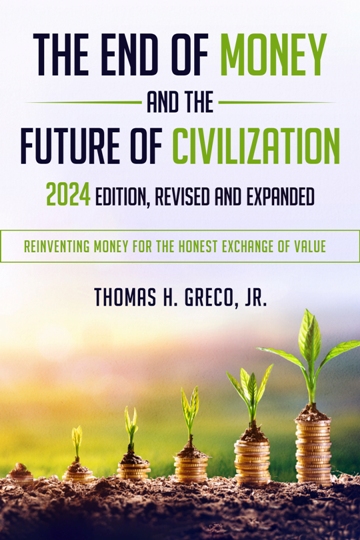
Better still, you can avail yourself of the new revised and expanded 2024 edition which I have been working on for almost two years and is almost complete. Eighteen chapters have already been posted and can be freely read or download HERE.
My previous books, as published, may be freely accessed in digital format by clicking the title below.




 Beyond Money