Tag Archives: newsletter

2015 Fall Newsletter

In this edition

  • Back in the USA
  • My latest article: 50 Ways to Leave the Euro: Greece and the Global Crisis
  • Raising the debt ceiling—again…, and again…, and..!
  • Seizing an Alternative—conference recordings
  • Homage to Peter Etherden
  • The case of Iceland – Is democracy more important than financial markets
  • Gates Foundation chooses Cyclos for E-pay Innovation Award

Back in the USA

I’ve been back in Tucson since early October, resting and recuperating from five months of travel and an exhausting summer tour of Europe. I’m corresponding, writing, advising and waiting to see what new opportunities might present themselves.

My tour of Europe included presentations, interviews, and/or workshops in Greece, Italy, and Ireland. As recordings of my presentations become available, I will be posting them on my website https://beyondmoney.net/. So far I’ve posted interviews from Athens and Sardinia, and the slide show from the workshop I conducted in Athens. The audio of my August 28 Dublin presentation, The Liberation of Money and Credit, can be heard at https://soundcloud.com/flanagankev/thomas-greco-dublin-august-28-2015.

_______________________________________________

My latest article

Common Dreams has just published my latest article, 50 Ways to Leave the Euro: Greece and the Global Crisis. In this article I provide my prescriptions for how Greece (and other countries) might relieve their impossible debt burden, and I describe ways in which domestic liquidity can be created apart from the euro regime and without inflation. You can read it here. I’ve also posted it on my website as a PDF file.

As an aside, in addition to Greece’s economic and financial problems, the country has been overwhelmed by a flood of refugees and migrants. It is reported that more than a half million have arrived on Greek islands just in the past 10 months. This refugee crisis that is now threatening all of Europe is a direct result of the destabilizing actions by the Western powers attempting over the past several years to reshape the politics of the Middle-east and North Africa. Their agenda goes way beyond oil, but few people are paying any attention. Former Reagan administration official Paul Craig Roberts is one of many sources that provide deeper insights, for example in his article, The Re-enserfment of Western Peoples.

______________________________________________

Raising the debt ceiling—again…, and again…, and..!

Every few years the U.S. Congress goes through the charade of debating whether or not to raise the limit on the government debt. In the end they always do. According to Wikipedia, “the US has raised its debt ceiling (in some form or other) at least 90 times in the 20th century.[11] The debt ceiling has been raised 74 times since March 1962,[12] including 18 times under Ronald Reagan, eight times under Bill Clinton, seven times under George W. Bush, and five times under Barack Obama.”

Why continue the pretense that there is any choice about it? Why can’t the government balance its budget and why does the national debt keep increasing? The real answer, which I wrote a quarter century ago, will probably surprise you. To learn what it is, see my recent post at https://beyondmoney.net/2015/10/15/why-cant-governments-balance-their-budgets/.

_______________________________________________

Seizing an Alternative—conference recordings

Recordings made at last June’s Seizing an Alternative conference at Pomona College are being compiled and made available at the Pando Populus website. These include several sessions from Track 6: Political Collapse in which I participated.

Session 1 featured presentations by John B. Cobb, Jr., Ellen Brown, and Thomas Greco. In this recording, John Cobb’s introduction is followed by Ellen Brown’s presentation (starting at minute 6:45) and Thomas Greco’s (starting at minute 22:24 and ending at minute 44:15). A Q&A session runs from minute 44:15 to the end. In my portion I provide a brief overview of private currencies and exchange systems and present some of my early prescriptions for addressing the Greek debt crisis.

Session 7 featured presentations by Ellen Brown, Thomas Greco, and Kevin Clark. My presentation begins at minute 27:18 and ends at minute 54:30. In it I answer the fundamental questions about money and the exchange process, and how to reclaim the credit commons. _______________________________________________

Homage to Peter Etherden

I was very sad to learn recently that Peter Etherden has passed away. Peter was one of my very good friends with whom I always enjoyed visiting and discussing our mutual interests. I’m glad that 2169889106PEI got to see him a few weeks ago in London just prior to my return to the U.S.
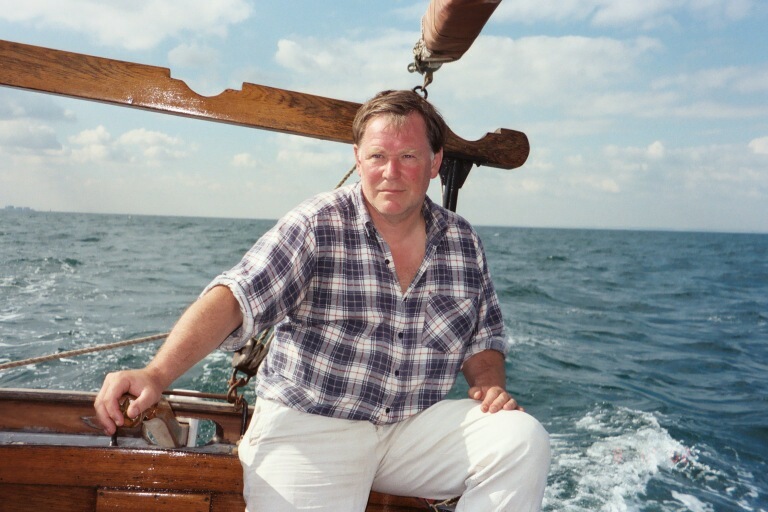
I first met Peter in 1986 in Zurich where we both attended the Fourth World Assembly that was organized by John Papworth. Over the subsequent years we corresponded regularly and we were able to meet several times during my visits to England. One of my fondest memories is of my visit in 2002 when he and his partner Connie lived aboard their boat in Rye harbor. During that visit the three of us sailed across the English Channel to Bologne where we spent a few days at mooring in the harbor. I also recall 2001 when my then partner Donna and I visited Rye and the four of us went off to explore Devon and Cornwall, a very beautiful part of Britain.

Peter was a diligent researcher and prolific writer whose interests were wide ranging. He will be greatly missed. Many of his research compilations and his writings under various pen names can be found at http://www.cesc.net/.

_______________________________________________

The case of Iceland – Is democracy more important than financial markets?

In his 2012 CBC interview, the President of Iceland very articulately describes the situation as it played out in his country during the global financial crisis that began in 2008. He describes the ways in which the failure of Icelandic banks was handled, the strong reaction from the British and Dutch governments, the reasons behind his government’s actions, and what really is at stake, not only for Iceland but for every country in the world. See it at https://youtu.be/7zlzC_X MQzI.

_______________________________________________

Gates Foundation chooses Cyclos for E-pay Innovation Award

In case you missed the news, as I did, the Social TRade Organisation (STRO) last year was chosen by the Bill and Melinda Gates Foundation to receive the prestigious E-pay Innovation Award for its Cyclos secure payments platform. Cyclos was chosen to receive the award over 9 other contenders from around the world. The $50,000 award was given at a ceremony at the annual conference of the Electronic Transactions Association in Las Vegas.

_______________________________________________

Finally, as Thanksgiving day in the U.S. approaches, I’m reminded of how blessed my life has been. It is in the spirit of gratitude that I thank you for your support and wish you all a happy holiday season.

Thomas

Newsletter — Summer 2015

Upcoming Ireland Events and My Remaining Tour Itinerary
My Activities in Greece, an abbreviated sketch
The Greek Crisis
Sardex

The summer has gone pretty much according to the plan I laid out in my Spring Newsletter, with of course the inevitable addition of things that have popped up spontaneously. I’m sorry I’ve been too busy to report about all of it, even though I’m sure many of my readers would want to know. My main reason for writing now is to highlight the agenda for the remainder of my summer tour in case some of you happen to be in the neighborhood of Ireland, Scotland or England. I hadn’t really planned to visit Italy but here I am—in Rome after visits to Tuscany and Sardinia (more on that below). I’m now in Ireland for the final events of my summer tour.

Here’s what I’ll be doing.
_________________________________________________
Ireland Events and My Remaining Tour Itinerary
25 to 27 August 2015. I’ll be at Cloughjordan Ecovillage to participate in the P2P Summer School program on The Art of Commoning. Then on Friday, 28 August, I will give a lecture at Trinity College, Dublin, followed by a panel discussion. And on Saturday, 29 August, I will conduct a workshop at the same venue. Here are the details.
Friday August 28th 19:00 – 21:00
Talk: The Liberation of Money and Credit
Where: CONNECT (Formerly CTVR) Dunlop Oriel House, 34 Westland Row, Trinity College Dublin, Dublin.
On the evening of Friday August 28th, Thomas Greco will give a presentation on The Liberation of Money and Credit, outlining the fundamental importance of reclaiming the credit commons and showing how communities and businesses can reduce their dependence on bank borrowing and conventional, political forms of money. After the talk Thomas will join a panel with Michel Bauwens and Kevin Flanagan of the P2P Foundation, Dr Rachel O’Dwyer of Trinity College Dublin and Graham Barnes of Feasta for a Q&A session.

Saturday August 29th 10:00 – 16:00
Workshop: The Exchange Revolution: Taking Complementary Currencies and Moneyless Trading to a New Level
Where: CONNECT (Formerly CTVR) Dunlop Oriel House, 34 Westland Row, Trinity College Dublin, Dublin.
On Saturday, Thomas will run a workshop for currency activists, practitioners, researchers, and social entrepreneurs on The Exchange Revolution: Taking complementary currencies and moneyless trading to a new level, also at the CONNECT venue in Dublin. Anyone with a specific interest in developing and extending the impact of community currencies, mutual credit, and other complementary exchange mechanisms is invited to attend.
Both events are sponsored and hosted by CONNECT (formerly CTVR – http://www.ctvr.ie/), at their Dublin city centre venue and supported by Feasta, the Foundation for the Economics of Sustainability (http://www.feasta.org) and P2P Foundation Ireland.
Both Dublin events are free but people are asked to register at:
http://www.eventbrite.com/e/beyond-money-events-with-thomas-greco-tickets-18131016358
Tuesday, 1 September, at Queens College, Belfast
Evening Lecture, Communities, Currencies and the Commons: Democratising money creation & enterprise after the Euro-Greek crisis, with Thomas Greco at Queens College, (Senate Room) at 7.30pm (registration at 7.15pm) hosted by the School of Law partnered by Positive MoneyNI. The talk will be followed by panel discussion.
Coordinator – William Methven, methvenwilliam@gmail.com

From Belfast, I will travel to Edinburgh, Scotland for a few days of exploring, then to London. I’m scheduled to fly back to San Francisco on September 9.
_________________________________________________
My Activities in Greece, an abbreviated sketch
Altogether, I spent a little more than three weeks at the Kalikalos Holistic Summer School during the months of June and July. Kalikalos is located on the Mt. Pelion peninsula where the views are spectacular, the mountain villages delightful, and the nearby beaches inviting, all of which provides a good balance of work, play and living in community with people from diverse places. In this ever-changing community of students, workshop leaders, volunteers, facilitators-in-residence, and staff, everyone pitches in to prepare meals, clean up, and share their special gifts. The daily program routine leaves plenty of time for recreation and many people choose to go down the mountain to the beach in the afternoons (about a 20 minute ride) or to hike the ancient donkey trails that connect the villages. Healthy living is a fundamental aspect of the Kalikalos experience with plenty of opportunity for yoga, meditation, tai chi and whatever other modes of centering people care to share. Meals are vegetarian and based mainly on fresh whole foods and traditional Greek ingredients—local olives. olive oil, feta cheese, locally baked bread, tomatoes, cucumbers, and vegetables from Kalikalos’ own gardens.
During my first week there I gave two presentations and conducted sessions in which we played two of my simulation games, Money Monopoly and Free Exchange. Then in July during the workshop on Solidarity Economy, I participated in most of the sessions and gave two presentations on the money problem and exchange altenatives.

While my work on exchange alternatives in Greece has been mostly with private groups and activists, I have developed proposals for creating domestic and community liquidity at all levels ranging from the bottom upward to include grassroots initiatives, business associations, municipal governments, and even the national government. I will be publishing specific details about these proposals in the near future. I am also continuing to work with colleagues in Volos on laying out the framework for a nationwide network of localized credit clearing exchanges.
During the last weekend in July I conducted a two day workshop in Athens for a sizable group of participants interested, or active in programs to create complementary liquidity. In the first session our discussions were based on my slide show on the Greek situation, and in the second, my presentation on the issues that need to be addressed in Taking Moneyless Exchange to Scale. That slide show is posted on my website at https://beyondmoney.net/wp-content/uploads/2015/07/workshop-athens.ppsx.

On Wednesday, July 29, I was interviewed on Porto Kali internet radio in Athens (in English with Greek translation). You can listen to it at http://wp.me/a43RA-Ge. _________________________________________________
The Greek Crisis
The Greek debt crisis has been all over the news lately so most everyone is aware of it, but most people are not aware of the underlying causes or what is being done to the Greek nation by the financial and political powers-that-be. Several of my recent posts at http://beyondmoney.net have dealt with that topic. In addition, there have been some very good recent articles that clearly explain it. These three are especially enlightening:
GREECE’D: We Voted ‘No’ to slavery, but ‘Yes’ to our chains, by investigative reporter Greg Palast.
The Rest of the Story About Greece: EU’s economic demands seek to derail small business and local communities, paving the way for multinational corporate giants.

• Ellen Brown’s fine article “Guerrilla Warfare Against a Hegemonic Power”: The Challenge and Promise of Greece

And if you want to understand the larger agenda of which the Greek situation is indicative, be sure to listen to Ellen Brown’s interview with Dr. Paul Craig Roberts, Greece-y Mess – 07.08.15, at http://itsourmoney.podbean.com/e/greece-y-mess-070815/
_________________________________________________
Sardex
Last week I had occasion to visit the Italian island of Sardinia and spend a few hours meeting with the founders and managers of a commercial trade exchange called Sardex.
I’ve known about Sardex since almost its beginning five years ago and have corresponded over the past few years with Giuseppe Littera, one of its founders, but this was the first opportunity I’ve had to get an inside look at their operation. I came away with a better understanding of how they operate and the impression that the Sardex structures, procedures, and protocols come closer to optimal than any other trade exchange I’ve seen. It appears to be a developing model that can be both scalable and replicable.
You can read my brief but more complete report here, and. you can get a pretty good picture of the distinctive features of Sardex by viewing Giuseppe Littera’s presentation (in English) that was made at a conference in Volos, Greece, in 2014. You can view it here.
_________________________________________________
All best wishes for a playful and enjoyable summer,
Tom

2015 Spring Newsletter

In this issue:

  • Summer in Greece (and elsewhere in Europe)
  • The Greek Debt Crisis, an Opportunity for Innovation
  • California Events
  • African Currency Projects Proliferating
  • Good Reading, Listening, and Viewing

IMG_2099 Summer in Greece (and elsewhere in Europe)

The fates have conspired to draw me back to Greece this coming summer. I’ve recently had a lot of interesting correspondence with people in Europe who are working, in one way or another, on solutions to the intensifying global financial crisis. The eastern Mediterranean seems to be at the leading edge of the global debt tsunami so that’s the place to be.

I have been invited to serve as a Scientist in Residence at the holistic Kalikalos Summer School on the mythical Pelion peninsula near Volos, Greece. I will be there during the periods 12 to 19 June and 10 to 17 July, and possibly some other times in between or after those dates. During the 12-19 June period, Kalikalos will also feature a course, The Big Picture: Toward a new way of relating to self, community and planet, led by Jennifer Hinton and Theoharis Tziovaras, and during the 10 to 17 July period, Jonathan Dawson of Schumacher College (UK) will be offering a course, Economics of Solidarity, in which I will assist. My residency there will provide lots of opportunities for idea sharing and collaboration.

The school’s website describes it as follows: “The Kalikalos living learning centers in Pelion, Greece are dedicated to demonstrating the power of authentic community as a vehicle for building a new holistic world of peace, partnership and sustainability. Our three campuses offer an educational programme of workshops, retreats, workcamps, conferences and living-in-community guest weeks in the summer months that include healing (self, society & planet), creative arts, communication science, and Self-enquiry. For the latest information about the Centres, please subscribe to our bi-monthly newsletter at: www.kalikalos.com/eNews.”

In addition to my stay at Kalikalos, I expect to be spending some time elsewhere in Greece during June and July. Besides Athens and Volos, Crete and Cyprus are also possibilities. At the moment, August is open, but I plan to remain in Europe until early September. My return flight is booked from London, so I will be spending at least a few days in England prior to my departure. As always, I am open to visiting, presenting, and conferring in places along my routes. Proposals can be sent to me at thgreco@mindspring.com.

_____________________________________________________

The Greek Debt Crisis, an Opportunity for Innovation

Since the January elections there, and in anticipation of my summer visit, I’ve been looking closely at Greece,—researching its history, politics, and economy. A lot of media attention has been given to the new government of the Syriza Party and its populist agenda. Especially prominent in the news has been their new Finance Minister, Yanis Varoufakis who has been wrangling with Angela Merkel and the rest of Greece’s European creditors over restructuring the countries debt and relaxing the austerity conditions that were accepted by the previous administration.

Varoufakis has an impressive background and some unorthodox ideas about how to address the debt crisis that threatens to not only crush Greece, but to unravel the entire Eurozone. He is to be admired for his courage in standing up to the “troika” (the European Commission (EC), International Monetary Fund (IMF), and European Central Bank (ECB)), and for exposing the failures and pretense of the economics profession. Varoufakis’ blog provides links to many of his interviews and presentations, and his book, The Global Minotaur: America, the True Origins of the Financial Crisis and the Future of the World Economy, published in 2011 and updated in 2013, is now gaining wide attention.

That is not to say that he gets everything right. He may have the right approach to dealing with the immediate crisis of national insolvency, but he seems to be lacking when it comes to understanding the more fundamental flaws of money that is created by banks on the basis of interest-bearing debt, nor does he seem to appreciate the vast potential of innovative exchange mechanisms like mutual credit clearing and private currencies issued by trusted domestic producers.

He has however posted one currency idea on his blog that might be of some help if some features were to be changed. I have posted my suggestions about that as a comment to his post. You can find both his proposal and my comment at http://yanisvaroufakis.eu/2014/02/15/bitcoin-a-flawed-currency-blueprint-with-a-potentially-useful-application-for-the-eurozone/#comment-148955.

Besides accessing many web sources, I discovered, quite by accident in a local bookshop, a new book that is proving to be invaluable in providing me with essential background and insights into how things operate in Greece in the post-WWII era. The book is, The Thirteenth Labour of Hercules: Inside the Greek Crisis, authored by journalist Yannis Palaiologos (Portobello Books, 2014). Reading it has shown me the many dimensions of Greek politics and the domestic and foreign basis of the present crisis. It seems that there is plenty of blame to go around.

_____________________________________________________

California Events

I will spend the month of May going back and forth between California and the East Coast to visit family and friends. Then in early June prior to my departure for Europe, I will be occupied with events in California. On June 2, I will lead a discussion in Martinez (San Francisco Bay area). This event, sponsored the Mt. Diablo Peace Center and Friendly Favors, is titled, Between the Devil and the Deep Blue Sea: What Greece needs to do to extricate itself from its economic and financial predicament. We will discuss the various options that Greece and other debtor nations might employ, both in dealing with their immediate problem of insolvency, and in rebuilding their sovereign domestic economies. Please see Details and RSVP at the Events page of www.favors.org.

Then, from June 4 thru 7, I’ll be participating in the conference, Seizing an Alternative: Toward an Ecological Civilization, to be held at Pomona College in southern California. This is shaping up to be a huge event with 12 sections and 80 tracks. I’ll be playing a major role in Section 1, The Threatening Catastrophe: Responding Now, Track 6: Political Collapse (http://www.ctr4process.org/whitehead2015/section-1-track-6/). I will be providing input on how the geopolitical order is determined by elite control of money and banking, and outline some promising strategies for empowering people and communities by reclaiming the credit commons.

_____________________________________________________

African Currency Projects Proliferating

We are finding great cause for optimism as we see successful programs in Africa being replicated and expanded. Will Ruddick and his team are continuing their excellent work, helping people to discover their own power by collaborating to establish exchange mechanisms based on the value of their own production. In a recent message Will reported that, in Kenya and South Africa, they are “in the process of implementing 8 community currency programs effecting [sic] well over 100,000 people.” Building upon their success with the Bangla-Pesa currency in Mombasa and the Gatina-Pesa in Nairobi, they expect these community currency projects will unlock the potential for local producers to greatly expand their trading with each other and to pull themselves up out of poverty. Will says, “We will be launching a 2nd community currency in Nairobi’s slums (Kangemi-Pesa) on April 4th… It will be a large event with marches through that area…These programs represent the foundation of what is rapidly becoming a global movement toward democratic and decentralized monetary systems. Creating resilient networks of markets across Africa is the path toward truly sustainable development”

Will also reports that they “have recently made the move to develop a non-profit foundation called Grassroots Economics to house these programs, and are looking for partners that really understand the seriousness of the monetary problem and the urgent need for community based solutions.” A quick update on the currency projects can be found here.

_____________________________________________________

Good Reading, Listening, and Viewing

Richard Werner is one of the few academic economists worth listening to. I recently read his

paper, How do banks create money, and why can other firms not do the same? An explanation for the coexistence of lending and deposit-taking. This is an excellent and clear explanation of the accounting sleight-of-hand that enables banks to create deposits (money) without the vast majority of people, even most bankers, realizing what is happening. Of course, many of us in the alternative exchange movement have long recognized that banks do this, but Richard’s explanation of HOW they are able to do this must be compelling even to his academic colleagues. This paper is a very important contribution to the literature of monetary and banking reform and transcendence because it also outlines the positive implications of some small changes in banking laws and regulations that could be made if there were the political will to do them.

Of course, understanding how the flawed money system operates is only the beginning, and political approaches to reform seem very unlikely. That knowledge must be used as a departure point from which to design and implement innovative market oriented approaches to extra-bank exchange. Mutual credit-clearing circles and private currencies spent into circulation by trusted issuers, can be organized by businesses and communities to provide “home-grown” liquidity. To my knowledge, there are at present no major legal obstacles in most countries that would impede such innovative technologies from being widely deployed. The Swiss WIR and the existing commercial “barter” exchanges are imperfect models that provide proof of concept. In the US at least, commercial barter exchanges are officially regarded as “third party record keepers” which are not subject to banking and money transfer regulations.

You might also enjoy viewing the documentary video, Princes of the Yen, which is based on Richard’s book by the same name (subtitled, Japan’s Central Bankers and the Transformation of the Economy). It makes me wonder if there might be a place for directed investment and allocation of credit by central governments in temporarily addressing the worst effects of the European debt crisis (other than bank bailouts, that is).

Students of innovation will be interested in The Innovators: How A Group of Hackers, Geniuses, and Geeks Created the Digital Revolution by Walter Isaacson. The audio version, which I have just finished, held my attention throughout the entire 15 CD set.

Since listening to his Black Swan in audio format a few years ago, I’ve been a fan of Nassim Taleb, so I’m now in the process of listening to his book, Antifragile: Things That Gain From Disorder. This is another work that is both iconoclastic and filled with original ideas. Highly recommend.

Finally, if you really want to understand what’s happening in the world, you need to follow Dr. Paul Craig Roberts, former Assistant Secretary of the Treasury in the Reagan administration. Dr. Roberts is one of the few commentators today who see what is really going on and is willing to tell about it. His recent interview by Greg Hunter is especially timely. View it in my post at BeyondMoney.net.

#     #     #

Newsletter – March, 2014

Contents. (This edition will be timely but brief).

Back to America

My latest article

Degrowth Conference on Social Equity and Ecological Sustainability

Malaysia

Hi, Well it’s just a matter of hours now before I board my flight that will take me back to the United States. I always find other places and cultures interesting, but four months abroad has been long enough and I’m looking forward to being back in more familiar territory, seeing friends and family, and discovering what the universe has to show me next. To begin with, I’ll be enjoying the relative calm and quiet of the Arizona desert, then looking for a more permanent place to hang my hat.

_____________________________________________________

My latest article

I spent a good amount of time over the past few weeks writing an article that I was invited to submit for publication in an online journal, Transformation, published by Open Democracy. I’m pleased to announce that my article, Money, debt and the end of the growth imperative was published yesterday. You can read it here,

_____________________________________________________

Upcoming Degrowth Conference on Social Equity and Ecological Sustainability. Call for papers extended to March 14th

A recent message from Birte Ewers announces that the 4th International Degrowth Conference to be held in Leipzig Sept 2-6, and that the original deadline for submissions of short papers has been extended. The deadlines for other formats have expired but deadline for “short papers” is now March 14th. The review process will be concluded by the end of April. See the conference website at http://leipzig.degrowth.org/en/http://leipzig.degrowth.org/en/ and the Call for Papers at  http://leipzig.degrowth.org/en/call-for-papers/ for details.

About The Conference:

4th International Degrowth Conference on Social Equity and Ecological Sustainability – Bridging movements and research for the great transformation.

The International Degrowth Conference has reached its fourth venue. Since Paris 2008 the debate on how to move away from a growth-oriented economy towards a more sustainable society has drawn world-wide attention. The fourth international conference will take place in a country that is considered as the European engine of economic growth.

Different traditions of growth critique, such as the concept of a post-growth society stemming from the German-speaking community and the French and Southern European degrowth debate, are invited to a fruitful dialogue. The conference seeks to bring practitioners, activists and scientists together and encompasses various formats for presentations, interaction, workshops, and exchange.

The 4th conference will address following thematic threads (abstracts for short papers can be submitted to any of them):

– Organizing Society (Emancipatory politics, participation, institutions)

– Building a social and ecological economy ((Re-)productivity, commons, society-nature relations)

– Living conviviality (Buen vivir. Open knowledge. Convivial technology)

_____________________________________________________

Malaysia

For my current journey in Southeast Asia, Malaysia (Kuala Lumpur) serves as both my entry point and exit point. Flights to and from KL tend to be cheaper even than Bangkok, and I always enjoy spending some time in Penang, which is only about a 4 ½ hour bus ride from KL Thailand is easily reached from there.

Malaysia is quite a developed country, though it still has some third world charm, as well as annoyances, like the roar of motorbikes zipping around through every available space, making it difficult and dangerous for pedestrians to cross the streets. Sidewalks, if they exist at all are usually obstructed by parked motorbikes, or food stalls, or even workshops that flow out into the public spaces.

One interesting thing about Malaysia is language. Almost everyone speaks some English and signage is usually in both English and Bahasa Melayu, or Malay language, which derives many words from English. Malays have developed what seems to me to be a very reasonable pattern of phonetic spelling.

Here are a few familiar English words with their phonetic Malay spelling, which I think we should adopt.

Complex

Kompleks

Bus

Bas

Central

Sentral

College

Kolej

Bicycle

Bisikal

Community

Komuniti

Counter

Kaunter

My pictures from my November visit to Penang

https://picasaweb.google.com/112258124863172998784/201311Penang?authuser=0&authkey=Gv1sRgCMnztYHzp4268gE&feat=directlink

Pictures from my February/March visit to Penang and Kuala Lumpur have not yet been uploaded.

_____________________________________________________

Joke of the month

Certainly not original, but here it is; some of you may appreciate it.

You know you’re old when you and your teeth no longer sleep together.

May you enjoy this season when life springs anew,

Thomas

Newsletter – January 2014

Hi, This is my first newsletter since mid-October. An excuse, if I need one, is that I’ve been traveling. To be truthful, I’ve been lacking in motivation and I’ve felt the need to reassess both the scope and the methods of my work. Pondering the question, “What makes an old man grumpy,?” I think I’ve begun to figure it out—

Despite a half a lifetime of work and dedication, the world has yet to heed my advice and conform itself to my view of how it ought to be.

So there it is. There’s the root of my late-life discontent. My muse tells me that I ought to lighten up and enjoy whatever time I might have left; the world will muddle through, with or without me. Maybe I’ll take up the challenge to become a stand-up (or sit-down) comedian. In the meantime, while I try to hone that skill, I offer below a few bits of hopeful (and not so hopeful) news and an overview of my recent travels, including links to my photos which you can browse at your leisure.

_____________________________________________________

Bangla-Pesa officially relaunched in partnership with the Kenyan Government.

You may recall earlier reports about the Bangla-Pesa community currency project that launched in Kenya last May. One of the most promising community currency projects on the current scene, Bangla-Pesa quickly ran into a major roadblock in the form of government interference that included unfounded criminal charges against the organizer and five board members. We are extremely pleased to learn that all of that nonsense has been sorted out and the Bangla-Pesa project is now back on track. According to project founder, Will Ruddick, Bangla-Pesa has just been relaunched, this time with official government support. Ruddick states that the relaunch celebration included several government representatives who have unanimously requested that the program be replicated in other areas in the county as a means of reducing poverty. You can read the details at http://koru.or.ke/bangla-pesa-relaunch.

_____________________________________________________

Ending the Growth Imperative

Richard Heinberg, in his recent article, Shutdown and default: the worst-case scenario (http://www.resilience.org/stories/2013-10-10/shutdown-and-default-the-worst-case-scenario ), stated that, “Almost nobody in the commentariat mentions that the US economy is currently being held together by deficit spending and quantitative easing. Rapid economic growth as experienced during the mid-20th century is over and done with.”

Heinberg is surely right about that, but how are we to get out of the predicament we are in? I have said repeatedly that our financial system is set up to require continuous and accelerating growth, that creating money based on banks’ lending at interest results in exponential growth of debt, which, in turn, forces exponential growth in economic activity to justify further growth in debt to prevent financial collapse. All of the major central banks, the Federal Reserve, the Bank of England, The Bank of Japan, and the European Central Bank, have been buying government bonds to keep the system going and avoid the inevitable shift to a steady-state, resource efficient, non-polluting economy.

CentralBanksInflating

How long can the monetary authorities continue to inflate their currencies under the euphemistic rubric of “quantitative easing” (QE), without causing prices to spin out of control? If they were to stop, however, that would cause a cascade of defaults, financial market chaos, and major global economic depression. They are between a rock and a hard place.

Heinberg goes on to say, “In 2008 it became clear that, as limits to growth are encountered, the inherent instability of financial systems can precipitate a much faster crash than would otherwise be the case. It also became clear that governments and central banks will undertake extraordinary measures to avert a fast-crash scenario. The rapid expansion of household debt, which had kept the growth balloon inflated since 1980, effectively ceased with the advent of the Great Recession. The balance sheet of the Fed stretched dramatically, and the Federal Government’s debt levels soared, as policy makers strove to keep the economy from imploding.”

He concludes with this advice: “Pass a new debt limit and re-open the government, no conditions attached. Then get to work designing a post-growth, post-fossil fuel economy that protects people and planet. Do it in that order. Simple.”

Well, not quite so simple. The debt limit has been raised and the government shutdown ended as everyone knew it would be, but there is still no sign that the powers-that-be have any interest in promoting a “post-growth, post-fossil fuel economy.” To undertake such a mission would require that they give up the “usury game” and the central banking system that has enabled them for so long to centralize power and concentrate wealth in their own hands, and that they surrender power to the people in a government that is truly democratic. No, the massive changes required must come from the bottom, from creative efforts that result in new structures, especially of exchange, finance, and cooperative enterprise, that reduce our dependence upon the dominant systems and make them irrelevant.

The prescription I’ve provided in my books and presentations for creating a new world order in which the people govern instead of a global elite oligarchy is to Share, Cooperate, and Restructure. We must recognize that the seat of sovereignty is the individual, not in isolation, but as a free moral agent within a convivial community, we must assert our independence from the dominant political, economic, and financial power structures, and we must organize new structures, under local control, that empower people and provide for the basic needs of all.

Our urgent need is to transcend the global interest-based debt money system, but digital commodities like Bitcoin are not the answer any more than a return to using gold, silver or other real commodities as payment media. The better and more complete answer to the money problem in the one I’ve been proposing in my books and presentations for many years. What I foresee is a global network of small credit clearing exchanges that proved a means of payment that is locally and cooperatively controlled, yet globally useful.

_____________________________________________________

ReinventingMoney.com website redesign and relaunch

Thanks to the good graces and enormous efforts of Matthew Slater, my ReinventingMoney.com website has been redesigned and relocated to WordPress. The url remains the same, http://reinventingmoney.com/.

ReinventingMoney.com is mainly an archival site for researchers that was compiled several years ago. If you are aware of any useful material, such as case studies, correspondence, or academic treatises that are particularly important, please send us a description and the link or file. Also, I’d be grateful to have a volunteer willing to help maintain that site. My active site is https://beyondmoney.net/.

_____________________________________________________

Travels

My current odyssey began on Nov 13 when I boarded a plane for Istanbul where I gave a presentation at the Green Economy and Commons conference. After spending a few more days exploring the city, I flew on to Kuala Lumpur, then a couple days later went by bus to Georgetown on the island of Penang, a world heritage city and my favorite place in Malaysia. On December 5, I began my month-long Cambodia adventure, making stops in Phnom Penh, Sihanoukville, Otres Beach, Kampot, Kep, and Siem Reap where I visited the amazing ruins of Angkor Wat. Since January 3, I’ve been in Thailand. Chiang Mai is one of my old haunts and a good place to get my teeth cared for at very reasonable prices.

My Cambodia visit got off to an inauspicious start. After checking into my hotel, I decided to take a stroll down by the river. While crossing the street through relentless traffic, I got sideswiped by a motorbike that went roaring past in the far lane. I managed to get to the other side and sat down on a convenient bench where I almost passed out. My left shin was skinned and bruised in a couple places, but needed no stitches. I got some aid from a British friend I had been traveling with for some days, and a Polish couple who happened to be passing by. My wounds have fortunately healed well by now and I seem to be none the worse for it.

Siem Reap and Angkor

One should not miss an opportunity to visit Siem Reap and Angkor. The ruins of Angkor are numerous and cover a vast expanse. Angkor Wat is only part of it. Exploring them requires a lot of walking and climbing, though, as vehicles can take you only so close.

Cambodia is certainly a third world country with much inferior infrastructure but it is rapidly developing with help from outside and gearing up to be a major tourist destination. The people are friendly and helpful, and you can find accommodations at every level from backpacker hostels to luxury hotels. In Kampot I had a nice clean room with private bath, hot shower, free Wi-Fi, and cable TV for $8 per night.

No coins in Cambodia

One thing that is noticeably strange about Cambodia is the fact that I had no coins jingling in my pocket. Strange, too, is the fact that market transactions are conducted mostly in U.S. currency. Yes, Cambodia has its own currency, called the Riel, with an exchange rate of about 4,000 riels to the dollar, but ATMs dispense dollars, and riel notes are used only as small change. Prices are typically stated in whole dollars and quarter dollars. So, if I buy a restaurant meal for $3.75 (not an uncommon price there) and I tender a five dollar bill to pay, I’ll generally get back in change a one dollar bill and a 1,000 riel bill. The smallest denomination note I saw, though not a very common one, is 100 riel, which is considered to be worth one fortieth of a dollar or two and half cents (and we in North America quibble about keeping the penny).

If you want to see images from the places I have visited, my photos can be viewed at the following links:

Istanbul: https://picasaweb.google.com/112258124863172998784/201311IstanbulTurkey?authuser=0&authkey=Gv1sRgCJv3nPOd34igcQ&feat=directlink

Malaysia: https://picasaweb.google.com/112258124863172998784/201311Penang?authuser=0&authkey=Gv1sRgCMnztYHzp4268gE&feat=directlink

Cambodia: https://picasaweb.google.com/112258124863172998784/201312Cambodia?authuser=0&authkey=Gv1sRgCL_hyunb-fnu4gE&feat=directlink

_____________________________________________________

Contact

By the way, I’m keeping my Verizon wireless account active. The number is 520-820-0575.  I don’t keep that phone turned on while I’m abroad so you won’t reach me directly that way, but you can leave a voice message (I cannot retrieve text messages) and I will get it when I check messages every few days.

I do have another mobile phone with me and as long as I’m in Thailand, you can reach me at +66 93 170 2910.

_____________________________________________________

Events Upcoming

The New Economy Coalition is convening a gathering at Northeastern University in Boston, MA from June 6-8, 2014. You can get more information and signup here: http://neweconomy.net/content/june-6-8-2014-national-gathering-new-economy-movement?utm_source=New+Economics+Email+List&utm_campaign=2a4c2d8654-New+Economy+Newsletter+-+October+2013&utm_medium=email&utm_term=0_6f7a9ab0ed-2a4c2d8654-18189817

Wishing you a happy and productive New Year,

Thomas

Newsletter – late winter, 2012

In this issue

  • David Cobb, Creating Democracy & Challenging Corporate Rule
  • Catherine Austin Fitts, The global financial system and the power of people to overcome it.
  • Camilo Ramada, Can the Latin American C3 Model of Complementary Currency work also in the USA?
  • Occupy how?
  • The U.S. is already at war with Iran
  • Investing in yourself and your communities
  • Building our social capital
  • My 2012 U.S. Tour

Greetings!

Hanging out in the San Francisco Bay area has provided me some great opportunities for networking and enrichment. Over the past few weeks I‘ve had the privilege of hearing three excellent presentations. One of these was by David Cobb, titled Reversing Citizens United: Amending the Constitution to abolish corporate personhood. David is a lawyer and a fiery speaker who ran for President in 2008 on the Green Party ticket and has been traveling the country telling people about the history of corporations and how they have managed to usurp the political rights of real people. It is unfortunate that his presentation was not recorded, but you can get more information at the website, http://movetoamend.org/, and you can get involved, and perhaps find a group in your area by going to http://movetoamend.org/calendar. Amending the Constitution is one strategy for reigning in the power of corporations over our lives, but there are others that we can take directly that may have more immediate results. We first need to recognize our dependence upon corporations, then act to lessen it. We can also take concerted action to pressure them into being more responsible through organized boycotts and local ordinances, and we can work to get our pension fund manages to vote our corporate share holdings in ways that promote the public interest. None of these is a panacea, but as we the people unite to change the status quo, we will come up with even more creative approaches.

Another excellent spokesperson on this issue is Bill Quigley, a law professor at Loyola University. I highly recommend his article, Occupy Corporations: How to Cut Corporate Power.

Another recent event was a fascinating presentation by Catherine Austin Fitts. Catherine is an investment advisor and entrepreneur who once held a high level position in the federal government, having served from 1989 to 1990 as Assistant Secretary for Housing, responsible for the operations of the Federal Housing Administration during the first Bush administration. Her experience close to the center of power in Washington gave her a unique vantage point from which to view government malfeasance at the highest levels. She has some amazing stories to tell.

Here are a few important sound bites from Catherine’s presentation:

  • Over the past three decades, America has experienced a “financial coup d’état.”
  • The financial system is actually a centralized control system.
  • Americans have a traditional respect for individual rights. We need to globalize our covenant with one another regarding that.
  • Money follows trust.
  • Life is more valuable than metal (gold, silver, etc.)
  • “The beginning is near.”
  • The most likely economic and financial scenario is not sudden collapse, but a “slow burn.”
  • Invest your time in things that are both fun and productive.
  • Invest in things that provide a positive return to the commonwealth.
  • Some of the Occupy tactics have had a negative return to the commonwealth.

Catherine is the publisher of the Solari reports. I highly recommend Catherine’s website Solari.com, and her blog. These can help you to cut through establishment propaganda and provide critical financial planning information.

Still another major event was a presentation on January 30 by Camilo Ramada at the Foundation for the Future in Palo Alto. Camilo is central figure in a Dutch non-profit called STRO, The Social Trade Organization. STRO has projects in various countries around the world and has a history of developing effective models for local economic development. Camilo gave a description of “C3,” a local currency project that has been operating successfully, with government support, in Uruguay. The Commercial Community Circuit (C3) creates a digital means of payment that is fully backed by cash reserves, financial guarantees and/or credit insurance.

Here is the official description of C3.

This digital currency is managed through the Cyclos software that offers all the functionalities of traditional on-line banking software:

  • a set of accounts through which users can make and receive payments
  • payments through Internet, cards or text messages
  • wide array of functionalities for users and administrators

The C3 works as a set of contracts between key partners that focus on their specialties. It does not require new skills or departments.

In a C3, a partner such as a community bank offers digital credit to be used locally as a means of payment. This digital credit will be more flexible because it does not require an immediate outlay of cash. It is cheaper than cash credit because it can charge less interest.

Entities with designated budgets for particular purposes, such as foundations, public agencies, and large construction projects can channel their budgets through a C3 to increase its local multiplier effect.

The C3 is self sustaining through transaction fees that, once costs are covered, can be reinvested in local social projects.

STRO’s websites are:

STRO www.socialtrade.org

Cyclos software project site www.cyclos.org

Camilo’s presentation was recorded and you can view the complete proceedings at http://vimeo.com/36120270

Occupy how?

I’ve recently posted several important items that relate to the Occupy movement on my blog, BeyondMoney.net, which I encourage you to read. The latest of these is: The Occupy movement at risk from violent protesters A key point that I make in that post is that, “The real threat to the powers that be, (and the most promising path toward our goals) is intelligent, non-violent, empowering actions that make them and their systems irrelevant. The way forward, as I see it, is to assert our fundamental rights and to organize better ways of providing for our basic needs.”

Other recent posts that may be of interest are:

*   The 100% solution: non-violent organizing for the common good

*   Taking Cashless Trade to a Higher Level

Just scroll down until you find them, or enter a portion of the titles in the search box.

The U.S. is already at war with Iran

There are many ways to fight a war that don’t require air strikes or military invasion. As Jim Rickards points out in his article, Iran, The Dollar And Financial Warfare (Tue, Feb 7), “The U.S. has applied financial and economic sanctions to Iran for over 30 years,” but what is new is President Obama’s recent move to prevent international banks from doing business with Iran’s central bank. “The result,” Rickards says, “was an immediate isolation of Iran from the dollar system and an acute shortage of dollars in Iran. The Iranian currency, the rial, crashed in value 40% against the dollar in a few days. Since many goods in Iran are imported, local prices doubled as merchants demanded more rials in order to acquire whatever dollars might be available on the black market to buy imported goods. Iranian banks responded by raising local interest rates to over 20% in order to keep rials from flooding out of the Iranian banking system.

In a matter of days, the U.S. had isolated Iran from the world banking system, destroyed the exchange value of Iran’s currency, injected hyperinflation into the local economy and caused a stratospheric increase in interest rates.”

But that’s not the end of the story. Rickards article also mentions the sabotage and assassinations that the west has recently carried out against Iran. But Iran may have some weapons of its own, and they have nothing to do with nuclear weapons. Please read the entire article. I don’t know Rickards, but he seems to be uncommonly knowledgeable and insightful in the realm of money and international finance. He is the author of Currency Wars: The Making of the Next Global Crisis, and author of numerous articles, two of which are:

The Real Agenda Behind The Fed’s Easing.

The Pending Currency War And What We Can Do About It.

Investing in yourself and your communities

I’ve been reading a pre-publication copy of Michael Shuman’s book, Local Dollars, Local Sense which is due to be released within the next few weeks. This book is a valuable addition to the literature about local investing and community empowerment. You can order it from Chelsea Green Publishing, but in the meantime, check out Michaels article, 5 Ways to Make Your Dollars Make Sense, in the February issue of YES! Magazine.

Building our social capital

We should all be working to build social capital in our communities because it is the social fabric that provides the foundation for political and economic empowerment. How to do that in our highly mobile and impersonal society is a crucial question. One example given by Bill McKibben in his best-selling book, eaarth, is that of a couple in Burlington, Vermont who printed up 400 flyers that they distributed throughout their neighborhood. The flyers invited people to use an email forum they created to inform one another of their news, events, problems, needs, etc. The emails would be assembled periodically and sent out as a single message to everyone on the list. Participation grew steadily and eventually reached 90% of the neighbors. McKibben relates some remarkable things that occurred as a result. Now the idea is spreading quickly and gave rise to FrontPorchForum.com that within two years “reached thirteen thousand households, participating in more than a hundred neighborhood forums…” That number has now grown to 33,000 households. FrontPorchForum describes itself as a free community-building service. Your neighborhood’s forum is only open to the people who live there. It’s all about helping neighbors connect. FrontPorchForum  makes it easy for anyone to create a forum for their own neighborhood or group.

My 2012 U.S. Tour

I’m planning a tour of the U.S. that will begin sometime in March and take me through the southern tier of states from California to Florida, then up the eastern seaboard. I hope to balance work with leisure and will be conducting a few workshops, presentations, and consultations along the way.

I’ll be spending some time in Tucson, then commence the tour from there. On the docket so far are a presentation and workshop to be held in San Diego, March 19 and 20, and a presentation at the Public Banking in America Conference in Philadelphia, April 27–28. That event is a “response to the growing demand for monetary and banking reform in the public interest,” and is being sponsored by The Public Banking Institute.

If you would like me to consider making a stop in your area, please contact me.

Let’s make 2012 the breakthrough year we’ve all been hoping for.

#     #     #

November Newsletter

Newsletter — November 23, 2009

Whew! The past two months have been a whirlwind—on-tour with appearances, conferences, and interviews, first in Pennsylvania, North Carolina and Texas, then following 10 days rest in Tucson—on to California, Oregon, Washington, BC, and Michigan. Now back in the San Francisco Bay area, I’ve been resting up as I contemplate what might come next.

An account of my eastern tour was included in my October message, so I’ll begin with a brief report on The Economics of Peace conference (http://www.economicsofpeace.net/) that was held in Sonoma, California during the fourth week in October. I was one of the featured speakers at that conference, presenting an illustrated talk titled, The Economics of Peace, Justice and Sustainability: Toward a New Convivial World Order.

The conference was one of the best I’ve ever attended, with regard to not only the program but the organization and the setting, as well.

Praxis Peace Institute Director, Georgia Kelly informs us that videos of The Economics of Peace conference are for now being uploaded to the Vimeo website http://vimeo.com/channels/theeconomicsofpeace. Among those available for immediate viewing are the presentations of Vandana Shiva, A. T. Ariyaratne, and David Korten. Later, the presentations will all be on the Praxis Peace home website http://www.praxispeace.org/.  DVDs and audio CDs will also be available sometime in December.

While in the Bay area, I also gave a presentation at San Francisco State University. This was at the invitation of long-time correspondent and friend Kenn Burrows who teaches in the department of Holistic Health Studies.

Noticing a two week gap between my California and Michigan commitments, Brian Allen offered to organize a tour of the Northwest. After deliberating about the pros and cons, I agreed to take him up on it. It turned out to be a very interesting and productive tour, with Brian skillfully handling the details every step of the way.

In Portland I worked with the Community Exchange Network (CEN/PDX) currency organizing group, putting on a workshop for them on Saturday, then on Monday afternoon we gave a presentation to city officials, among them, the Mayor’s economic development policy advisor. Adding a bit more substance to our presentation was William Underwood, organizer of a successful rebate program called Locals Care that has been operating in northern New Mexico for the past three years (https://www.locals-care.com/lcindex.php). That program has worked out some of the operational details associated with accessing existing payments infrastructure for use of with alternative currency.

The capstone of my Portland visit was a public lecture I gave on Monday night at the Unitarian church, which was well attended and successful in a variety of ways. The Portland people, like those in Asheville, inspired me with their dedication, commitment and intelligence. I’ve agreed to be on their advisory board.

In Seattle, I enjoyed the hospitality of the Ramer family, which afforded an opportunity for me to get a deeper understanding and an update on the Interra rebate project which Jon Ramer, with Greg Steltenpohl, helped to organize (http://www.interraproject.org/). That project utilized existing card reader technology and point of sale devices, but at rather high cost. If a greater scale of operation can be reached, the overhead might be bearable.

On Wednesday evening (Nov. 4), I gave a lecture on The End of Money and the Future of Civilization at the landmark Elliott Bay Bookstore. That presentation was video-recorded by Todd Boyle who has done a great job of merging the slide graphics with the video to create a movie that has been posted on vimeo. I’ve also added a link to it on my blog http://beyondmoney.net (in the sidebar to the right under My Audio-visual Presentations).

Canadian Visit

Taking a leisurely drive up the coast on November 5 with Brian and Carolyn, we arrived around dusk at the border crossing into Canada. I remember the days when going into Canada was almost as easy as crossing the street. Now, one needs to show a passport and submit to sometimes intensive interrogation and searches. Still, we managed to reach the dock at Tsawassen just in time to catch the last ferry to Salt Spring Island.

Salt Spring Island dollars were launched eight years ago. The nicely-designed notes, which are sold for cash, have had some success in raising funds for local charities but they have not circulated widely on the island. Many tourists acquire the notes and take them home as souvenirs. The Board members are now seeking ways to make their currency more meaningful to island businesses and residents. In my meetings with them, and in my public presentation, I proposed that they change the method of issuance to monetize the local value-added by Island businesses, preferably within a mutual credit clearing association, as I’ve outlined in my recent book. That message seems to have been well received and I’m hopeful that the Salt Spring Island local exchange project may soon evolve into a good model for other communities to follow.

While on the Island, I had occasion to meet Paul Grignon, creator of the excellent videos, Money as Debt, (parts I and II). Paul came to my presentation on Salt Spring Island and brought with him a new short video called The Essence of Money, a Medieval Tale. In less than eight minutes, this video explains as well as anything I’ve seen how simple and effective a community-created currency can be. I highly recommend it. You can view it here: http://www.digitalcoin.info/The_Essence_of_Money.html

Back to the USA

Upon returning to the U.S., I gave presentations on both Whidbey Island and Vashon Island. Whidbey has recently launched a currency and Vashon people are considering one. In both cases, I stressed the importance of scale and of starting by recruiting “trusted issuers,” i.e., the popular businesses in the community where everyone wants to shop. These are the members that should be first to have the overdraft privilege (lines of credit) that allows them to spend before they earn. Individual members should initially be required to earn before they spend.

On Whidbey, I gave a presentation at the Whidbey Institute and had substantive discussions with the founders of the currency project. On Vashon, I was the guest of the Vashon Co-housing community. The talk I gave at the Red Bicycle Café was imbedded in an evening of enlightenment and entertainment that included songs sung and played by a local entertainer, a different kind of format that everyone seemed pleased with.

Last Stop

The final stop on the tour was Traverse City, Michigan where I was a presenter at the Conference on Michigan’s Future Energy, Economy & Environment (Nov. 13-15, 2009, http://futuremichigan.org/). My presentation on the first day of the conference (Friday) was billed as “Why the Economy is Collapsing.” My coverage of that topic was contained in my slide show that I titled, The Economy: How Did we Get Here and Where are we Going?

My second presentation (Sunday afternoon) provided a more detailed outline of how to design, manage, and issue complementary credits or currencies. The listed title was “Local currencies and credit currencies,” but I ended up calling it The Exchange Revolution: Taking Cashless trading to a new level. The narrative (MP3) and slide show (pptx) for each of these presentations are currently posted separately at http://www.mediafire.com/?sharekey=b3d291f68f7542fdab1eab3e9fa335ca80431dd425797f76 (files 140 and 141, and 595 and 596, respectively). You can download a free Power Point viewer for pptx files from the Microsoft website.

At the end of my stay in Traverse City, I met with the Board of the Bay Bucks local currency project, two members of which are old friends from the Bioregional gatherings of the 1980s. They, too, are looking for ways to make their currency more significant to their local economy. I offered them the same advice I gave to the others—show the most popular businesses in town the advantages of spending their own currency jointly into circulation. With a little seed money, Traverse City could become another good model for community exchange.

I could give lots of interesting details on all of these experiences but for the sake of brevity I’ll refrain.

Priorities

My main priority at this point is to show alternative exchange entrepreneurs in both the grassroots and for-profit realms where the real liberating power lies. It’s in reclaiming the credit commons by monetizing the value-added by local industries, farms, and other businesses. What that means is organizing the productive enterprises in a community to pool their credit and to allocate it to one another in proportion to each business’s ability to provide valuable goods and services to their community. This is accomplished by their participation in mutual credit clearing exchanges and/or by jointly issuing a local currency and spending it into circulation. It can also be accomplished by participation in well-managed commercial “barter” exchanges.

I’m encouraged to see that this approach is increasingly understood and gaining ever greater traction. Several promising projects are either nearing launch or are shifting over from less empowering designs. There is an urgent need now for (1) grant funding or investment capital to build optimal exchange models that can be quickly scaled-up and replicated, and (2) a “space” for collaboration where developing exchange projects can learn from and assist each other. We don’t have time to reinvent any wheels. Solutions that have already been worked out and tested in one place can be applied or adapted for use elsewhere. There are plenty of good tools available for web-based collaboration and information sharing. It remains only for someone with the requisite knowledge and skills to show how they might be effectively combined and applied.

In the coming months, I am also looking forward to shifting my attention back toward more creative work—writing articles and, perhaps, another book, while exploring new realms, physical, cultural, and spiritual.

As I’ve said many times of late, I think society is going through a metamorphic change. It is something unprecedented, something that requires us to be responsible, creative and open to possibilities. It means a shift away from economic growth and the consumerist rat-race, toward a sustainable, steady state economy and a dignified life for all. Those who try to cling to the caterpillar economy are bound to be sorely disappointed. With sharing and cooperation we can make the transition to the “butterfly economy” both exciting and rewarding.

Happy Holidays,

Tom