If the BRICS ever hope to escape the orbit and dominance of the Western Empire they will need to organize an international clearing Union under their own control, along the lines of the Bancor proposal of John Maynard Keynes which he put forth in 1944 at the Bretton Woods conference. If that proposal had been adopted it might have saved the world 80 years of grief and violent conflict.
Further pertinent information from Alistaire Crooke
Real economic growth cannot continue forever in a finite world; we can no longer afford to waste limited resources on wars, destructive competition for dominance, and other wasteful projects undertaken by political leaders and idealogues. It is time we learned to work together peacefully and to live within the Earth’s energy budget.
Tim Morgan makes the case in his writings about Surplus Energy Economics.
What can we do about it? The first necessity is to take action to transcend “the engine of destruction” that is the global, usury-based, debt-money regime. How that can be done is outlined in my various writings, especially my book, The End of Money and the Future of Civilization.
This post by Dr. Peter Breggin may help you to decide. Caught Up in a Conspiracy—My Personal Experience In 1994, I was hired and confirmed by a federal judge to be the sole scientific researcher to examine the secret files of Eli Lilly on behalf of a consortium of attorneys representing about 150 lawsuits against the company for allegedly hiding the harmful effects of Prozac. … [more].
After describing that shameful case of fraud and cover-up, Breggin extends his conclusions about conspiracies to international affairs saying what I also have long ago concluded and written about, “All empires are inherently evil and are inevitably started and controlled by the worst human beings among us. And so, we must fear and resist all attempts to build empires!”
As long as empires remain in competition with one another for political and economic dominance there will be no peace in the world. The necessary solution that I have long propounded is to deprive politicians of the power to create money and pseudo-money at their whim; that is their primary tool for further enhance their power and to pay for their inevitabe wars. I have fully articulated my arguments about that in my revised and expanded edition of my book, The End of Money and the Future of Civilization, especially the chapter titled, The Separation of Money and State.
There is a bill pending in the Idaho legislature to make gold and silver legal tender. A recent article describes the bill and mentions that, “The passage of H177 would make Idaho the sixth state to recognize gold and silver as legal tender, as they always should have been doing.” The article also states that “Utah led the way, reestablishing constitutional money in 2011. Wyoming,Oklahoma, Arkansas, and Louisiana have since joined.” If six states can do it, why not every state?
Simply citing these examples should pique the interest of people everywhere to learn about our national money system and why the States are taking such actions. What is the point of declaring gold or silver to be legal tender? Isn’t the US dollar already legal tender? What’s wrong with that? It is questions such as these that have been the focus of my work for the past 45 years, questions that I have answered in great detail in my various books, articles, lectures and interviews, all of which have been posted on my website and on my various other channels[1]. The bottom line is this—our national system of money and banking, along with that of virtually every other country in the world, is deeply flawed and destructive[2]. But there is plenty that can be done about it—by we the people, by small- and medium-sized businesses[3], and by lower levels of government.
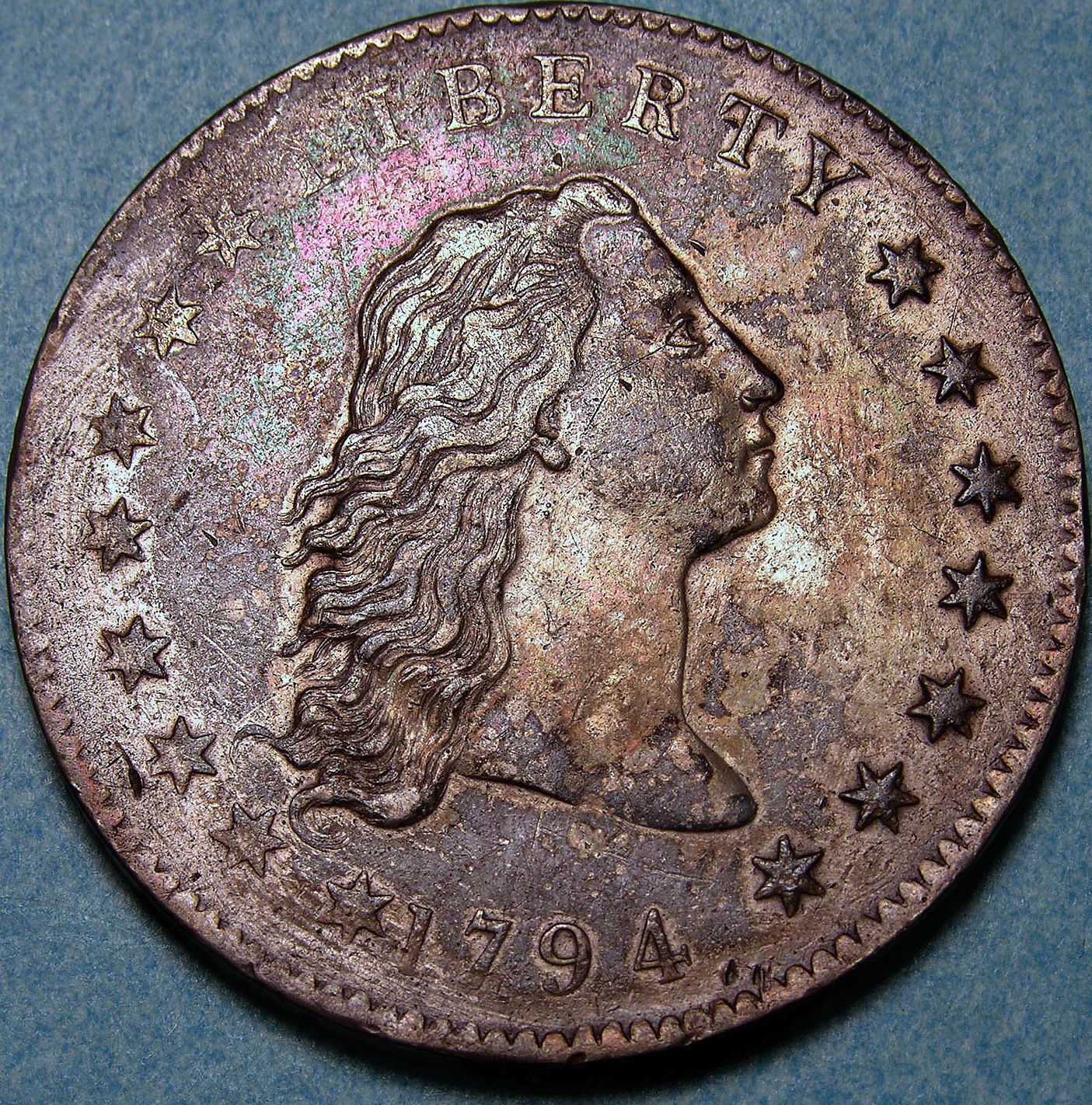
In this article I will discuss what the States can do to help liberate what I call the “credit commons” and restore “Constitutional” and honest money to various levels of our economy. The declaration by State governments of gold or silver as legal tender is important, not because metallic money will circulate widely, but because it establishes a proper measure of value and unit of account in which to denominate credit obligations which are the true media of exchange. Coins do not even need to be minted to serve that purpose, they only need to be defined, for example, as a specified weight of silver of some specified fineness. The definition that seems most appropriate to adopt is the original definition of the US Dollar that was established early in the history of the United States. I related that bit of history in the new, revised edition of my book, The End of Money and the Future of Civilization:
“To complete the task of defining the monetary unit for the United States in a way that would not disturb commerce, a committee was commissioned to survey the money stock and assay a representative sampling of Spanish dollar coins so that the American dollar would closely approximate those coins already in circulation. This was easily accomplished, and it was quickly settled that the United States dollar should be defined as a silver coin containing 371.25 grains of fine silver. Coins were subsequently minted according to that specification along with gold coins valued in dollars. As the country developed, various expedients were implemented to make money more abundant[4].”
Source: US Mint
Once such a standard gets established somewhere, it will be widely adopted elsewhere, and that may eventually lead to a more stable composite standard being defined and adopted[5].
Once a State defines a commodity like silver to be legal tender, it can then encourage municipal governments or private businesses enterprises within the state to issue, individually or collectively, their own credit voucher notes denominated in terms of said silver dollar units by spending them into circulation as partial or full payment to suppliers of material inputs to production, and to employees and other service providers who must be paid. Those vouchers can then circulate widely as money to settle the obligations that others in the economy have to one another. The state government could also accept said vouchers, in whole or in part, as payment for taxes, fees, and other obligations due to the state government, and the state government might even consider issuing its own modifiedTax anticipation warrants (TAWs) in the form of paper notes, ledger entries, or digital tokens denominated in terms of said silver dollar units.
People will accept these modified TAW and use them to pay one another because the warrants can be used to pay taxes and fees that are due to the issuing State government, or to pay private vendors of goods and services. When the government eventually accepts them back as payment for taxes and fees, the warrants are retired. In the interim period between their issuance and their retirement, the warrants can circulate among the population of the region as a means of payment that is independent of the federal Government, the Federal Reserve, and the banks that issue US dollars. As the TAW mature/expire, new series of TAW may be issued in amounts that are not excessive in relation to anticipated revenues.
As the people at large come to better understand and trust the validity and benefits of these payment media, they will increasingly use them in place of national fiat currencies in business dealings within the region, and in doing so will achieve a greater measure of local/regional self-reliance and control over their own affairs.
This is the latest chapter to be published of my new 2024 edition of The End of Money and the Future of Civilization. It continues the story about “credit clearing” that was begun in the previous chapter and shows how it will revolutionize trade and payments and make money, as we have known it, obsolete.
Here is a brief excerpt:
If there were no money, any system of crediting sellers and debiting buyers would be fully competent to accomplish the work now performed by money. – Hugo Bilgram, 1914
In Chapter 10 we explained that the highest stage in the evolution of reciprocal exchange is “credit clearing,” and that banks have been using it for the past few hundred years to settle obligations amongst themselves. In this chapter we will further describe the history and applications of credit clearing, and we will show how clearing can be used to offset claims among not only groups of banks, but also among any persons or entities that have financial claims against one another. Most significantly, it is a process that may be applied among buyers and sellers of goods and services to directly offset their respective claims without involving banks as middle-men and without the need for conventional bank- or government-created currencies.
Direct Clearing Among Buyers and Sellers
Credit clearing is actually an ancient process. During the Middle Ages, credit played a major role in the various European “market towns” which hosted, at regular intervals, trading fairs in which merchants from widely scattered areas would gather to trade their goods. It is reasonable to conclude that the process of credit clearing would have been fundamental in their trading activities. This is evidenced by the fact that these market towns typically provided market courts for settling disputes under “merchant law” that was separate from common law and could be adjudicated in a matter of hours or days. James Davis points out that, “At the pettiest level of sales credit, many traders appear to have acted both as creditors and debtors, and there is evidence for running accounts, reciprocal dealings and a ‘complex of claims and counterclaims,’” and that, “Credit oiled the wheels of trade, and market courts dealt in small-scale sales debts that were integral to local retail and wholesale commerce. A market court ostensibly lowered transaction costs and thus attracted more traders by aiding a perception of the market as ‘fair, affordable, efficient’”.
The possibilities of direct credit clearing among buyers and sellers have long been recognized. In modern times, as early as 1914, Hugo Bilgram and L. E. Levy noted that, “If there were no money, any system of crediting sellers and debiting buyers would be fully competent to accomplish the work now performed by money.” They further suggested that:
“Were a number of businessmen to combine for the purpose of organizing a system of exchange, effective among themselves, they could clearly demonstrate how simple the money system can really be made. The greater the number of businessmen that would thus cooperate, the more complete would be their own emancipation from the obstruction to commerce and industry which existing currency laws impose.”
They then went on to propose such a system and describe how it might operate, which I summarized in one of my previous books and in a website post. I’ll not repeat that here because the context today is much different from what it was in 1914, but we will present a similar proposal based on what has since been learned and tailored to our current realities. I believe that it is no exaggeration to say that the creation and operation of such credit clearing systems is crucial to reversing the present trend toward economic ruin and global tyranny and changing the course toward realizing our human potential and the emergence of a peaceful, convivial civilization in which all can thrive.
You can read or listen to the entire chapter here.
I am pleased to present this guest editorial by my long-time friend and correspondent, Christopher Quigley. Christopher in an expert in market analysis, and a proponent of the Social Credit philosophy of C. H. Douglas. I think you will find it useful. — T.H.G.
Excerpt:
Social Credit and the End of Meta-Feudalism
The King is dead long live the King” so goes the feudal aristocratic mantra establishing power continuity. Death and birth are a part of reality and amidst the pain of death the love of life must prevail. Currently many say that American society is dying but in fact it is experiencing a transformation. — Major Clifford Douglas
The quote above, made in 1934, perhaps would have been more correct if Douglas had said that America was going through a “paradigm shift” rather than a transformation. This shift was in essence a revolution at the time, a revolution based on growing consciousness, labour unrest, social dysfunction and expanding poverty. Today this trend is still emerging with other forces driving the trend, forces such as the growth of internet learning networks and the diminished effectiveness of mass broadcasting. Thus, average Americans are finally starting to think as sovereigns again. Their enlightened thinking had stopped following the disaster of the civil war of 1861-1865. This national cessation of practical awareness allowed the then Federal micro-system to usurp the Union macro-system through credit power. As a result, today the Federal Government is now macro, and the Union of States micro, but this could change over the next 50 years.
The global elites want the real American economy to contract. They desire a constrained and hobbled society which is more dependent and demanding, more complex, more controlled, more diverse, more fractured, more locally ineffective— In a word, meta-feudal. To understand a world that is meta-feudal you should watch movies such as “Brazil,” “Rollerball,” and “Blade Runner.” These worlds are technologically advanced but disintegrated and astonishingly unequal.
The meta-powers work through fabricated “crises.” The elite set up the last economic “crisis” through the “originate to distribute” Basel banking agreement of 1998. From this model evolved the hyper property bubble of post-2000, the “credit” collapse of 2007-2008, and the market-fixing credit derivative system and asset laundering off-balance-sheet accounting protocols currently in place. The credit collapse eventually led to the new “improved” post-Covid, bailed-out banking oligarchy now in place. This club involves far fewer players than existed heretofore but the financial club that is in power is now manifestly more globally influential.
The latest chapter in my new 2024 edition ofThe End of Money and the Future of Civilization, has now been widely published. Here is an excerpt:
Erecting the ‘wall of separation between church and state’… is absolutely essential in a free society. — Thomas Jefferson
The established beliefs about money in today’s world have become a sort of religion in which a fundamental tenet holds that government must, either directly or indirectly, have power over the system of money creation and circulation. This erroneous belief has taken the world to the brink of disaster which will surely ensue unless we take steps to depoliticize money by achieving the separation of money and state.
It should be obvious by now that there will never be peace in the world so long as those who control our national governments are able to conjure up out of thin air the seemingly endless amounts of pseudo-money they need to pay for wars and whatever else might bolster their political and economic interests.
Inflation is always and everywhere a monetary phenomenon. — Milton Friedman
Bankers, politicians, and pundits talk about inflation as if it were something mysterious and difficult to understand, but the truth about inflation is really quite simple. If you want to cut through the fog of obfuscation, read the latest chapter, Chapter 7— The Nature, Cause, and Consequences of Inflation, in my new 2024 edition of The End of Money and the Future of Civilization. You can find it here, and here, and on my Substack channel.
Further chapters will continue to be posted as they are completed on my website and Substack channel, as well as on Future Brightly. Watch for Chapter Eight to be posted in about two weeks.
As always, your comments and suggestions will be welcomed, Thomas ___________________
The first edition of my book, The End of Money and the Future of Civilization, was published by Chelsea Green Publishing in 2009. While it remains as relevant today as it was when first published the printed book has been out of print for several years. But, having had the rights reverted to me by my publisher, I am making the entire book available for free in PDF format. You can read it or download it HERE. If you would like a hard copy of the first edition used copies can still be found on Amazon.com, Abe books, Thrift books and elsewhere.
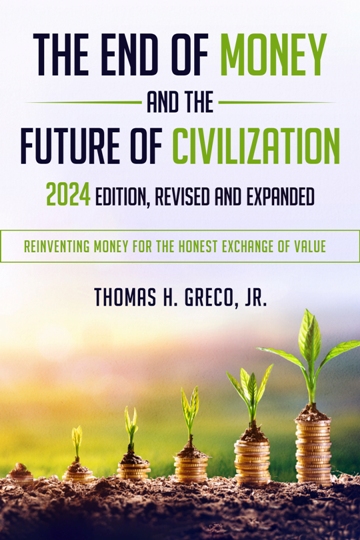
Better still, you can avail yourself of the new revised and expanded 2024 edition which I have been working on for almost two years and is almost complete. Eighteen chapters have already been posted and can be freely read or download HERE.
My previous books, as published, may be freely accessed in digital format by clicking the title below.



 Beyond Money