Category Archives: General interest

What happens when the spirit leaves the body?

Have a look at this link in which a related question is answered, and read the replies to that answer. The departure of the spirit is clearly observable as I can attest from my own experience.

https://qr.ae/pCXWRS

It’s All About Faith

Browsing today through past posts on one of my other websites I rediscovered one that inspired me anew. Published shortly before Christmas in 2006, it was a personal and heartfelt report from my friend and long-time correspondent, Sharif Abdullah, who at that time was recovering from an attack of appendicitis that nearly killed him. Here is what he said:

Howdy— I want to share something with you, something that’s been so personal to me that I don’t think I’ve shared it with anyone before.

Last Thursday, 14 December 2006, while sitting at my computer, I suddenly burst into tears. Tears of joy. On the radio, I heard a holiday song sung by the Mormon Tabernacle Choir. This put me into a time tunnel — back to two holidays ago, when my appendix blew on Thanksgiving Day, and I was rushed into two emergency surgeries. (There’s nothing like being wheeled into a second surgery, with the nurses asking for your next of kin, to get you focused on how serious your situation is.) I lingered in the hospital for days, my other organs failing.

Because my adrenals had completely disrupted my sleep cycle, I found myself awake at around 2 am, flicking around the TV channels in my hospital room, trying to find something non-offensive. I settled on a PBS documentary of the Mormon Tabernacle Choir, specifically because I assumed that they would end with the “Hallelujah Chorus” from Handel’s “Messiah”. The “Messiah” is the Choir’s signature piece and was my paternal grandfather’s favorite piece of music. He sang bass professionally, so he would sing along with a recording of the Choir. I would love watching his Adam’s apple bob up and down as he sang.

Anyway, I’m watching this documentary, Walter Cronkite narrating. I’m learning a lot more than I ever knew about the Choir, and about the Mormons in general. (As a student of religions, I already knew a lot.) About 3/4 through the show, they played the “Messiah”. Now I was intrigued: what could they possibly sing that could top the “Hallelujah Chorus”?

As the program draws toward its end, Cronkite says something that I did not know – that every member of the Choir is an unpaid volunteer. They not only have to take unpaid leave from their jobs in order travel with the Choir… they have to pay their own transportation and expenses. Singing with the Choir is an act of faith for each of them. I am witnessing their faith, their sacrifice, and their glory.

Although the “Hallelujah Chorus” is their signature song, the song that they ended with was the song that was most meaningful to the Choir – the song that Mormons sang while they pulled hand-carts 2,000 miles, across the Rockies, to their promised land. It’s an American folk song called “Come, Thou Fount of Every Blessing”. (I had never heard it before.)

Right before the song, Walter Cronkite said, “When they sing the words, “Here’s my heart, Lord, take and seal it” – they really mean it.” I cried all the way through that song. I’m still crying.

There I was, lying in a fairly comfortable hospital bed, nurses on call at the push of a button – if the Mormons could cross the country on foot, carried by that song, my faith could get me out of that hospital bed and on with the rest of my life. Their song became my touchstone for my faith. The next day, I checked myself out of the hospital.

Having faith means everything. There is a gene, hard-wired into our very being, that demands our faithfulness. When we live our lives as though faith is some outmoded or silly concept, or can be replaced by THINGS, or (worse yet) by REASON, we do so at our own peril. Faith doesn’t mean that things are going my way, or that I’m going to get the pony that I’m praying for.

Faith means that I GIVE MYSELF to the Divine, that IT’S NOT ABOUT ME. Faith to the Mormon pioneers didn’t mean that they were going make it as they walked (walked!) across the country to Salt Lake City. Many of them didn’t make it. Faith meant that their every step was dedicated to God, not to themselves.

Faith is tied to sacrifice. Sacrifice is pain… elevated to the level of the Sacred. Sacrifice is to find the MEANING in the pain. The Choir has to give up so much in order to sing – their time, their paychecks. It is their giving up that sweetens their voices. Ask yourself: what is it that you have given up? Not giving up alcohol, drugs or overeating… you are doing that for YOU. What are you giving up for humanity? For the Earth? For God? Where is your sacrifice?

Faith has nothing to do with whether or not you make it. Faith has nothing to do with what’s written in the Bible, the Qur’an, the Bhagavad-Gita… or the Book of Mormon. Faith has nothing to do with “playing it safe” and not taking risks. The purpose of your life is not to make the next mortgage payment (regardless of what the bank tells you). The purpose of your life is not to put your kids through college. Your life goes DEEPER than that. You can’t find that purpose while clinging to the surface of things.

There are times when I forget this. There are times when I question whether giving all of my time, efforts and money for this path to a new society is “worth it”. Then I remember: it has nothing to do with whether or not I “succeed”. Here’s my heart, Lord…
Prone to wander,
Lord, I feel it,
Prone to leave the God I love.
Here’s my heart, Lord, take and seal it, Seal it for thy courts above.

Peace,
Sharif

*************************************************************************
Sharif Abdullah
COMMONWAY INSTITUTE
P.O. BOX 12541 Portland, OR 97212 (503) 281-1667
www.commonway.org

Listen to this from RFK, Jr.

The Senate conformation hearings, if allowed to proceed, will be interesting indeed.

RFK Jr. Exposes Bill Gates’ criminal, anti-human, agenda

One of my most popular posts–There once was a river …an allegorical tale of money and credit

One of my most popular posts has been, There once was a river …an allegorical tale of money and credit, in which I’ve tried to show how we have all become slaves to money and those who control money. Using water in this little fable to represent money, I’ve also tried to show that we the people can free ourselves by thinking outside the box to overcome our fixation on the sort of money that has been provided for us and over which we have lost all control.

Every metaphor of course is limited and what I am hoping that readers/listeners will come to understand is that there are alternatives to conventional money that we can use to reduce, and eventually eliminate our dependence upon conventional political money. It is credit that is the foundation of an honest system of exchange and we have the power to give credit to each other in accordance with our own values and objectives, outside of conventional banks and without charging interest.  

You can access the story on my website (audio with transcript) or on YouTube (audio).
Or listen here.

You are welcome to post comments.

What’s coming and how to prepare?

SURVIVAL STRATEGIES FOR TROUBLED TIMES

By Thomas H. Greco. Jr.

For years I’ve been saying that we are being led, actually “driven,” toward a new global paradigm that is at once financial, economic, political and social, and I’ve been urging people to prepare for it. They naturally ask me what sorts of changes to expect and what they ought to do to be prepared. I first compiled a list of my ideas on that way back in the mid-1980s, a list that I’ve revised slightly from time to time and republished in various places. Since then the times have become increasingly “troubled” and I am convinced that the situation is quickly approaching a climax during which we-the-people who are not included in the super-class will be hard pressed to maintain any semblance of normality in our lives. We will be challenged as never before to adapt and to find ways to survive (and thrive) in the face of what I’ve been calling the global “mega-crisis” the dimensions of which include global warming, climate change, pandemics, terrorism, and financial and political malfeasance that are causing inflation, depressions, wars, loss of freedom, and that will ultimately enable the super class to engineer a “great reset” and usher in their New World Order.

Here is my latest revision of my Survival Strategies for Troubled Times.

General Strategies
Do what you can to enhance your own health, resiliency and independence, but don’t try to “go it alone;” our safety, survivability, quality of life, and happiness lie in our relationships and mutual interdependence. It pays to be kind, helpful, and cooperative with those around us and to work together to build a new human-centered convivial civilization.

HEALTH, SAFETY, AND SELF-RELIANCE
Learn healthy living and acquire a diversity of practical skills. Cultivate a low input lifestyle. Secure your own material needs as much as possible, and find a safe place to live.

COOPERATION AND MUTUAL SUPPORT
Build mutually supportive relationships. Nurture the development of networks and self-contained, cooperative communities.

DISENGAGE
Reduce your dependence upon conventional systems and structures, governments and institutions, especially those that are being used to drain away our wealth, like political fiat money. Get out of the debt trap and reduce your financial obligations, Shift yout financial resources from Wall Street investments to investments in Main Street. 

BE ALERT AND BE INVOLVED
Keep attuned to the changing global conditions of humanity and its habitats. Consult a variety of news sources, not just the ones whose views you typically agree with. Participate in local politics. Ask tough questions. Work with others to help solve local, regional, national, and global problems.

SPECIFIC POSSIBILITIES TO CONSIDER:

1. Food. Grow at least some of your own food, store staple food items, save seeds, plant perennial food plants, especially fruit and nut trees. Learn how to forage for wild foods – many “weeds” are edible. Support local (preferably organic) farmers.

Participate in “Community Supported Agriculture (CSA), also known as “subscription farming.” This is an arrangement in which a group of consumers contract to support an area farmer who in turn delivers their produce to the contracting group. The farmer is guaranteed a market and the consumers are guaranteed a supply of fresh wholesome food.

2. Collect valued items and useful commodities that are likely to retain their value and can be used as exchange media. Some favor gold and silver coins. In modest amounts, these may be useful in the event of hyper-inflation or collapse of the currency. I prefer to hold things that are more useful, like tools, equipment, materials, and books.

3. Get out of the large cities, if possible. Locate a country place that you can retreat to if and when it becomes necessary. Buy productive land that can support you and your family. Choose land that can provide food, clean water, and fuel. Ideally, locate near small towns where you have access to helpful neighbors and common facilities. If you lack the resources to buy land on your own, consider buying in partnership with others or organizing a Community Land Trust, a legal arrangement in which a trustee organization holds title to land while assuring secure tenure, but limits individual speculative gains.

4. Build community where you are. If you must live in a city, get to know your neighbors and organize neighborhood cooperatives and mutual-support structures. Large cities depend on a complex and well maintained infrastructure, and the importation of tremendous amounts of resources from distant places. In hard times these systems may fail, in whole or in part. Learn about critical systems like water, electricity, gas, sewage disposal, health care, and police protection. With your neighbors, plan back-up strategies and create back-up systems that will assure at least minimal life-support. Get involved in local politics and hold officials accountable.

5. Disengage financially. Begin to disengage from the conventional financial systems as much as possible. Don’t depend too much on banks or other fiduciaries, and avoid, as much as possible, the use of the conventional money system. If banks fail, you may lose your deposits, while finding that your debts remain. Convert most of your financial assets to real (tangible) assets while holding some in liquid form for payment of taxes, utilities, and other necessities that require monetary payment. Support the emerging decentralized economy that promotes humane values, equity, social justice, sustainability, and local self-determination. Help to organize and use properly issued community currencies and credit clearing exchange systems.

6. Become debt-free; kick the credit habit; pay as you go. Don’t get caught in the “usury trap.” Especially, avoid borrowing from predatory lenders and credit card companies. Do not borrow to buy consumer goods; purchase these only when you can pay for them in full. Get out of debt as quickly as you can and stay out of debt. If you must borrow, borrow from people, not banks. In a crunch, it’s better to have your debts in friendly hands, someone who won’t take advantage of your distress or press for foreclosure. If you have a home which is mortgaged or are making payments on a major durable item such as a car or truck, you might consider the following possible options:

a. Accelerate your repayment schedule by making extra principal payments out of current income.

b. Refinance using funds obtained from individuals-relatives, friends or associates to pay off the bank. You might obtain from them non-interest-bearing loans or, better yet, negotiate a contract that will allow for sharing of both the risks and benefits of ownership. You might give the new funds providers a part-ownership in the property. You, the user/occupant, would pay rent on a lease and they would receive a part of the rent in proportion to their investment. You would also buy back their investment over time.

c. In the case of a farm or multi-unit residential property, you might create a “community land trust” or LLC to hold title to the property which you would then lease back on a long term basis. Others would put up enough money to repay the bank mortgage in return for equity in the buildings or a lease hold on the land.

d. Another possibility is to sell the property and buy one you can afford to hold free-and-clear.

e. If you are in extreme debt, filing personal bankruptcy may be an option. Consult a financial advisor or lawyer for advice, which can often be obtained through non-profit organizations like councils on aging or legal aid.

7. Simplify your lifestyle and reduce your needs. Learn how to live better with less. Do it yourself, fix what you have, reuse, make-do, or do without. Share with others. Kick the shopping habit and emphasize non-material satisfactions and gifts.

8. Learn to share and cooperate. Secure your basic necessities like food and shelter by creating community and cooperative arrangements. Possibilities to consider are neighborhood associations, buying clubs, food cooperatives, shared or co-op housing, barter clubs, trade associations or mutual credit clearing exchanges.

9. Finally, engage with others to work out your own ways of securing access to the basic necessities–water, food, shelter, energy, clothing, tools and equipment, transportation, and health care, and through it all keep a positive, hopeful attitude, and make time to play, meditate, and pray.

Follow my websites: BeyondMoney.net and ReinventingMoney.com.
Read my article, Confronting the Power Elite.
Subscribe to my YouTube channel, and follow me on Facebook and Twitter.
Thomas H. Greco, Jr.

This article has also been published on Expert Click and Medium

To Jab or not to Jab, That is the Question

I published this article yesterday on Medium. Today I’ve been notified that Medium has suspended it because it was “found in violation of the Medium Rules,” nothing specific, just the usual boilerplate. I have no idea what the find objectionable about it. Everything in the article is factual and correct.
Regular followers of my site may find in it echoes of previous posts, but this article is mostly new, an expanded and much improved version of what you may have seen here before. I hope you will take the time to read it.
— thg

Daniel Pinchbeck is an author, journalist, publisher and self-described “bohemian outsider.” I’ve known Daniel for several years, we’ve corresponded on and off, and in 2009 he interviewed me and recorded my views on “The End of Money and the Future of Civilization,” views that I expressed in my newly published book by that same name. Daniel is a brilliant thinker and prolific writer whose knowledge covers a broad scope, and he digs deep when researching topics of fundamental and universal concern. For those reasons, I tend to pay attention to what he says.

I was surprised to read in his recent newsletter that he had chosen to take one of the experimental Covid injections. His rather lengthy essay, From Vacillation to Vaccination: Why, despite uncertainty, I got the Johnson shot, cites many diverse sources of information that he has consulted in weighing the pros and cons of the various options, and then describes his somewhat contorted process of reaching his decision. He raises all of the pertinent questions about the pandemic, its cause(s) and official reactions to it, the likely motivations of the various actors, and their eventual outcomes and long term consequences. He provides numerous useful links for any who wish to become more fully informed.

As I read through his essay from start to finish, it occurred to me that one’s decision to take the injection or not is less a matter of the “science,” and more a question of one’s particular values, attitudes and beliefs, which are, for better or for worse, heavily influenced by each person’s cultural conditioning and the information sources they are aware of and choose to follow. That is something I know from my own experience, having had my own mind-changing “wake up call” that pulled me out of the “matrix” more than 45 years ago. Am I on the right track now? I think so but I’m no longer so adamant in my beliefs and I have a greater tolerance for ambiguity. I try to keep tabs on my internal compass of conscience and compassion by daily meditation, and I remain open to hearing different points of view. I think my conclusions are correct, but I acknowledge that I may be wrong, and that is why I refrain from telling others what to do. I can share information that I think may be important, and I may give advice when asked, but I will not presume to decide the proper course of action for someone else.

In regard to the subject at hand, I will never coerce anyone to take off their mask, nor will I do anything to prevent them from being injected if that is their choice. Uncertainty is a constant in life and everyone has a right to decide what the right choice is for them. It is my responsibility to take care of myself as best I can based on what I know, and it is your responsibility, likewise, to take care of yourself. I will never knowingly put others in jeopardy, but I cannot allow your fears or mine to damage my personal integrity.

Despite the many alarm bells about the various Covid injections that Daniel acknowledges and references in his essay, he went ahead and took one anyway. There are three things that appear to have ultimately tipped the balance for him. First, I detect a sense of helplessness and resignation in his statement that, “Perhaps one reason I finally acquiesced, sadly enough, is my sense that we have gone too far down this road at this point to be able to pull the brakes.” That is difficult for me to fathom, coming from someone I’ve long considered to be a free thinker who has for a long time demonstrated courage in swimming against the current.

Second is his need to be perceived as a responsible member of mainstream society, which he reveals in saying, “Even though the vaccines are leaky and imperfect and I don’t trust the entire apparatus that creates them, I also desired to participate in society and do my little part.” His part in what, what does it mean to participate in society, to go along to get along? Many scientific studies of human behavior have revealed that people will, more often than not, disregard the evident facts and choose to do what everyone else is doing, especially when the group behavior is prescribed by some authority figure.

Third is his fear (of fear) regarding the possible impact of Covid on himself or others. He says, “I didn’t want to be afraid that my failure to get a vaccine would cause my mother, or other elderly people, to get sick, or that I would get a more severe case of the Delta variant in the next months — considering its hyper-infectiousness, nearly everyone is going to get it at some point.” That final point indicates that he believes that asymptomatic people can spread the illness and that nearly everyone is going to get it anyway, So what that boils down to is a “cover my ass” move, as if to say: “I did what I was asked to do so when you catch the illness and die it will not be my fault.”

At the same time, Daniel tried to hedge his bets by seeking out the particular variety of injection that he thinks may be less dangerous because it is more conventional and not an mRNA treatment like the others. He says: “I find it a bit ironic that I finally got vaccinated just as we discover that the vaccines may be more dangerous and of much less value than was originally touted. In fact, one of my main reasons to avoid the shot was concern over ADE, particularly when it comes to the experimental mRNA vaccines from Pfizer and Moderna. That is why I chose the less popular Johnson & Johnson one, which relies on more traditional mechanisms, even though I had to spend a day asking in pharmacies around Manhattan to find it.” ADE stands for Antibody-dependent Enhancement, a phenomenon where the presence of antibodies makes a disease worse.

Many people, examining the same information as Daniel, have made different choices. One need not be totally against vaccinations to reject a specific injection or treatment. When it comes to bodily sovereignty, everyone’s personal choice needs to be respected. In the wake of the Nuremburg Nazi war crime trials, as well as some notorious medical experiments and studies that were conducted by American scientists, the principle of “informed consent” became established as the rule for any medical study or procedure. In one such case, prisoners, soldiers, and mental patients were intentionally infected with syphilis without their knowledge or consent.

According to the National Center for Biotechnology Information, “informed consent” is both an ethical and legal obligation of medical practitioners in the US and originates from the patient’s right to direct what happens to their body.” In considering the questions of personal choice, vaccine mandates, and medical passports, the question before us is this: Shall we allow our present fear to drive us backward into that dark realm of inhumane coercion? Who, after all, owns your body?

As I approach my 85th birthday, I know that statistically I am in the high risk group, but I’m also aware that the human immune system, having evolved over thousands of generations and tens of thousands of years, is the most powerful defense we have against disease. My own personal immune system has been informed and trained by a severe case of the Hong Kong flu in 1968, a disease that reportedly caused over one million deaths worldwide, and by a bad case of typhoid while I was in India in 2007, and by numerous colds and sinus infections over the years, not to mention all of the usual childhood diseases that we all experienced when I was in my early formative years in the 1930s and 40s. So I’m inclined to trust my immune system now. I will take reasonable precautions to keep it strong and to avoid pathogens that might cause serious disease. I believe that if I do fall ill to this infectious disease I will survive it, as the vast majority have, especially if I can get access to proven treatments that if administered early can help me to recover. And if I don’t survive it, so be it, I’m ready to accept my mortality and embrace my fate.

I trust my natural immunity more than I trust experimental inoculations that were rushed through the development process that usually requires much more extensive testing and takes from 5 to 10 years to complete, and I trust it more than I trust the present global power elite that seem intent on getting every person on the planet to accept inoculation and to conform to whatever further dictates they care to impose in advancing their plan for a “Great Reset,” a plan that sounds benign until you look deeper into it. Is all this really about protecting public health? Do huge pharmaceutical companies that are given immunity from liability put my health and yours ahead of their profits? Their past record of frequent malfeasance causes me to greatly doubt that they put anything ahead of profit maximization. I also have serious doubts about the safety of these inoculations. The numbers of adverse effects and deaths from the various “vaccines” that are being reported is extremely troubling. In a recent presentation at the America’s Frontline Doctors summit, Dr. Lee Merritt, reported the numbers that have been compiled by the CDC’s own Vaccine Adverse Event Reporting System (VAERS) and they are staggering. One must wonder why the vaccination program has not been halted in the face of such a miserable record, and why any informed person would agree to be a “guinea pig” in such an experiment.

As far as spreading the virus to others, The World Health Organization itself has now concluded that asymptomatic spread of the disease is “very rare.” That being the case, why have we not been advised to isolate the ill and let the healthy go about their business? If and when I do manifest symptoms, I will then act according to common sense and self-isolate to avoid spreading disease to others.

But most importantly for me it comes down to this: Life is more than breath and pulse, flesh and blood, muscle and bone. The fear of death inhibits true life which goes beyond the physical aspect; it is spiritual — free, adventuresome and spontaneous, and open to unknown possibilities. Perhaps this is what Jesus meant when he said, “For whosoever will save his life shall lose it: and whosoever will lose his life for my sake shall find it” (Matthew 16:25). And this same essential truth, from the more secular point of view has been stated by W.H. Auden: Life is the destiny you are bound to refuse until you have consented to die. I pray that whenever fear arises, I might find the courage to push through it, embrace my destiny, and choose to truly live.

# # #

Ivan Illich and the Coming Cultural Revolution

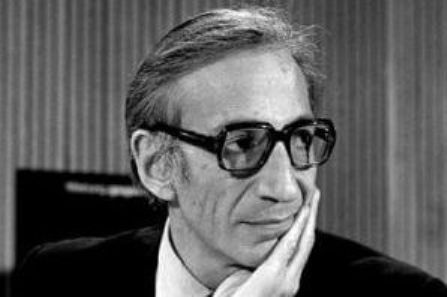
Ivan Illich

Do educational institutions make people stupid? Do medical institutions make people sick?

Such questions may at first glance seem preposterous, but they were raised in all seriousness a few decades ago by Ivan Illich, and strongly argued in his books, Deschooling Society (1971) and Medical Nemesis (1975). In both cases his arguments stem from his overarching belief that as institutions become too large and too centralized they end up doing the exact opposite of what they are intended to do. Over the subsequent decades, we’ve seen mounting evidence that Illich was correct in his assessments. In our attempts to improve efficiency, eliminate uncertainty, and get more done in less time, we have allowed everything to become too big, too rigid, too fast, and too centrally controlled. In the process the individual has become ever more helpless and alienated and more dependent on impersonal institutions that are being corrupted by their power and inherent conflicts of interest. As Illich argues, we have become slaves to our institutions and our myths about who we are and how the world works. George Bernard Shaw spoke similarly in declaring that all professions are “conspiracies against the laity.”

Ivan Illich (1926–2002) was a Catholic priest, theologian, philosopher, and social critic, who became famous in the 1970s and 80s, and although his fame may have faded a bit in recent years, his ideas and works have been, and remain highly influential and are now more relevant than ever. Notable in this regard are such resources as The International Journal of Illich Studies, the upcoming, The Philosophy of Ivan Illich: An 8-Week Course, being offered by Nina Power, PhD, and a brand new book by noted journalist and broadcaster, David Cayley, titled, Ivan Illich:An Intellectual Journey (2021).

Cayley has followed the work of Illich since the 1960s, and in 1989 he visited Penn State University where Illich was then teaching, to record a series of interviews that were then used in a five part series in Cayley’s Ideas program that aired on CBC (the Canadian Broadcasting Company). That series titled, “Part Moon, Part Travelling Salesman: Conversations with Ivan Illich,” was comprised of one hour segments that included biographical information and comments about Illich and his ideas by others who knew him. The series is now available online and can be accessed here.

I became an instant admirer of Illich and his work in the early 1980s after reading both of the above mentioned books, as well as his prescriptive work, Tools for Conviviality (1973). In the latter he points out what Wikipedia calls “the institutionalization of specialized knowledge,” and “the dominant role of technocratic elites in industrial society.” Illich argues in favor of “appropriate technology” and the reacquisition of practical knowledge and simple tools that empower people and help to build community. In short, he calls for a general deinstitutionalization of society and a reconceptualization of what it means to be human.We have, by and large, internalized the belief that we are, in Illich’s words, “poor, sick and ignorant,” and in need of institutional services to remedy that situation.

In August of 1989 I had the honor of welcoming Illich to give a presentation at the 8th Assembly of the Fourth World and Decentralist Congress that was held in Toronto, Canada. As President at that time of the School of Living, the sponsoring organization, I served as moderator of the event which also included presentations by such insightful thinkers and activists as Leopold Kohr and John Papworth.  

Both Cayley and I have taken Illich’s insights to heart in our personal responses to the ongoing crisis of civilization and to its latest manifestation, the “pandemic” and official reactions to it. Cayley’s sentiments are expressed in his recent post, Concerning Life, in which he delves deeply into Iliich’s expressions of what the word “life” actually means and what Illich meant when he said that life has become “an idol” and “a fetish.” He and I seem to share the view that the concept of life has been distorted in the public mind as Christendom, and religious institutions in general, have tried to accommodate with a materialistic civilization that is now unraveling.

For me it comes down to this: Life is more than breath and pulse, flesh and blood, muscle and bone. The fear of death inhibits true life which is more than physical, it is spiritual– free, adventuresome, and spontaneous and open to unknown possibilities. Perhaps this is what Jesus meant when he said, “For whosoever will save his life shall lose it: and whosoever will lose his life for my sake shall find it” (Matthew 16:25). And this, from a more secular point of view states the same essential truth: Life is the destiny you are bound to refuse until you have consented to die. –W.H. Auden.

God grant that I might find the courage to push through my fear whenever it arises, to embrace my destiny, and choose to truly live.  

# # #

The Great Asset Grab

One does not need to scratch very deep beneath the surface to see what is actually going on in the world or why it is being done. Look around, which companies have been thriving through the “pandemic,” which business have been shut down or forced into bankruptcy, who is buying up residential real estate in every city, who is the biggest owner of farmland in the United States?

In a recent interview with Greg Hunter, my friend and long time correspondent Catherine Austin Fitts clearly and concisely explains what I’m calling The Great Asset Grab  This brief excerpt sums it up.

Investment advisor and former Assistant Secretary of Housing Catherine Austin Fitts contends CV19 and vaccines to cure it are all part of the “Going Direct Reset.”  Fitts explains, “This is so simple at the root.  The central bankers are using the government to shut down the main street economy, and then they are going direct and injecting money into the private equity firms and Wall Street who are running around the country buying things.  Think of this as a leverage buyout of the world.  We are being purchased with our own money.  Also, we are liable.  If you look at all the debt the government is issuing, our assets are liable for that debt.  This is a continuation and consolidation of the financial coup that we have been taking about.”

It is all part of the Great Reset that World Economic Forum founder and its mainstay, Klaus Schwab has been promoting, and gives real credibility to his contention that, in the New World Order, “you will own nothing…,” adding, “and you will be happy.” Well, I will not be happy living as a powerless farm animal or house pet. Will you?

Fitts and her team have also provided some forms to help you resist demands that violate your rights. Visit Solari.com and/or click the links below.  

Employer & School Disclosure Forms for Covid-19 Injections

Form for Employees Whose Employers Are Requiring Covid-19 Injections

Form for Students Attending Colleges or Universities Requiring Covid-19 Injections

#     #     #

The time is now for a new civilization

In 1997 I produced a monograph titled, The Cooperative Community Commonwealth: A Prospective Outline for a New Socioeconomic Framework. Over the ensuing years I’ve revisited and edited it a few times. It was when written and until now ahead of the wave, but the peculiar turn of events of the past few years, and especially those of 2020, have intensified both the urgency and the opportunities for the kinds of actions described in this visionary plan. After making a few additional minor edits I’ve published it on this site and on Medium.

The Cooperative Community Commonwealth: A Prospective Outline for a New Socioeconomic Framework

The present state of civilization, even in so-called “democratic” or “free” countries, is one of dominance by massive hierarchical structures which are centrally controlled by a relatively small group of people. These individuals wield enormous power by virtue of their control of the established structures and mechanisms, especially those of money and finance, and through their ownership of the vast majority of the land and capital.

The further development of civilization and the fuller realization of the human potential depend upon the further liberation of people within a context of increasing global awareness and concern. This, in turn, requires broader, more democratic access to land and capital, the devolution of power to the community level, and progress beyond familiar modes of domination and coercion. Such a process will require reliance upon the gentlest of means, higher levels of awareness and personal responsibility, the creation of new, inclusive structures, and their implementation under popular control.

…. Read the full article here.

Newsletter February 2021 — The Impending Failure of Wikipedia and other news

In this issue:

  • “Artificial Intelligence,” Bots, and Censorship: Why Wikipedia can no longer be trusted
  • Censored on Facebook
  • Consolidating and Preserving my Legacy
  • The Farm
  • Now, for your edification and amusement

Read it on my Mailchimp site.