This podcast featuring Michael Shuman, Jenny Kassan, and Elizabeth Ü, is a “must watch.” It clearly explains the options available to savers, investors, and entrepreneurs.

This podcast featuring Michael Shuman, Jenny Kassan, and Elizabeth Ü, is a “must watch.” It clearly explains the options available to savers, investors, and entrepreneurs.
Bitcoin is analogous to gold in that it is hard to produce and acquire, its supply is limited, it can be exchanged anonymously, and it’s path cannot easily be traced. That has some good socio-political implications and some bad ones. Here is an article that sketches a fairly clear picture of some of that. http://www.bloomberg.com/news/2013-04-05/bitcoin-really-is-an-existential-threat-to-the-modern-liberal-state.html
Part of the socio-economic transformation that needs to occur lies in shifting business motivation from profits for a few, to benefiting the common good. Cooperatives are not the full answer, but may have a useful role to play. A recent article, Six Ways to Fuel the Cooperative Takeover, provides some useful ideas in that direction.
Here is a summary of the Six Ways:
1. Find Money
2. Convert to a Co-op
3. Hook Up With Big Partners
4. Be Co-op Curious
5. Shop Co-op
6. Make Co-op Friendly Laws
The details can be read here.
As governments around the world struggle to manage their soaring debt burdens, the wisdom of E. C. Riegel rings ever more true. The masters of the political debt-money regime are pressuring Cyprus to confiscate part of the savings of their citizens, and Greece and other countries to impose budgetary cuts that burden the poor and middle class. Argentina wants to grab their people’s savings by nationalizing their pension funds. All the while, the purchasing power of national currencies shrinks as governments inflate them to enable deficit spending.
Riegel’s call for monetary freedom must no longer be ignored. –t.h.g.
LET FREEDOM RING THE CASH REGISTER
[by E. C. Riegel, written circa 1940s]
Old Liberty Bell rang out the political freedom that we cherish. But unless we learn how to make freedom ring the cash register, bureaucracy will ring down the curtain on our liberties.
What is the strange power that makes the government at Washington grow stronger and our state and local governments grow weaker while the people suffer the torment of war and the travail of insecurity and the shadow of dictatorship falls across the land? It is the same power that oppresses the people of all the world — the political money power.
The political money power is the power of national governments to buy the people’s sweat and blood with scraps of paper – paper that falls like a blotter upon our production and our freedom. Each day our
wealth diminishes and more of our liberties vanish. Inflation that threatens to bring chaos is just around the corner. As our sons bleed and our mothers weep, the same grinding power throws its pall over other lands. Yet our chains are paper – paper money that, through our ignorance, binds us to the treadmill of our own destruction.
We can be masters of our destiny; we are all powerful, if we but realize it. In each of us resides the power to assure liberty, prosperity, security and peace. In each of us lies the money power, which, when springing from us, is democratic and virtuous; when springing from government is authoritarian and vicious. As we liberate our inherent money power we curb the political money power, for the more we use our self-created money, the less we need political money. Thus we defeat dictatorship. Thus we reconstruct the shattered world on a free democratic basis. Thus we save civilization.
Parchment freedoms are but taunts and mockeries without money freedom. A people dependent upon their government for money is a subject people regardless of the form of their government. No people can declare their independence and govern their government unless they assert their money freedom. A government that is not dependent upon its people for money supply is a tyranny regardless of its professions. Government must be made to beg the people for money; the people cannot be sovereign while petitioning government for money. The citizen must command both government and business through his money power. Political democracy is a delusion without economic democracy and economic democracy can function only through the power to issue money – the power to ring the cash register – the power to support and the power to withhold support. To prevent political dictatorship the citizen must himself be a dictator. To prevent centralization of power, power must be reserved by the people. Money power is sovereignty; without it democracy is impossible.
# # #
From Money Freedom, organ of The Private Enterprise Money Movement.
More monetary wisdom from E. C. Riegel, including his book, Private Enterprise Money, can be found at http://www.newapproachtofreedom.info/, and via my website https://beyondmoney.net/.
— Thomas H. Greco, Jr.
Posted in The Political Money System, The state of democracy
Tagged democracy, money power, Riegel
The graphics below capture the essential nature of western civilization today–everything is for sale, the main source of revenue for businesses and governments is advertising, everyone is trying to colonize your mind.
Corporations say, “buy, buy, buy.”
Religious organizations say, “believe, believe, believe.”
Governments say, “obey, obey, obey.”
— t.h.g.


Posted in Geo-politics, The Political Money System, The state of democracy
Tagged advertising
Greg Palast is a well-respected investigative journalist, one of the few media people who for me retains some credibility. In his recent article, Hugo Chavez and the Global Poverty Conspiracy, he tells the story of why he was so reviled by the U. S. and why an attempt was made to assassinate him. If you want to understand current geopolitics, you must read this article.
A recent article by James Howard Kunstler begins: “History has a special purgatory where it sometimes stashes feckless nations punch drunk on their own tragic choices: the realm where anything goes, nothing matters, and nobody cares. We’ve surely crossed the frontier into that bad place in these days of dwindling winter, 2013.”
And concludes: “the rule of law extinct in this country, but so are public figures of principle and credible news organs.”
Read it, and other insightful pieces by Kunstler on his blog.
Here are some astounding facts about inequality, clearly presented and easy to understand, but very disturbing.
Thanks to the New Economics Institute for sending it along.
Compiled by Thomas H. Greco, Jr.
There are two fundamentally different but related aspects of the “money problem” that urgently need to be addressed. One is exchange problem, the other is the finance problem. Recent history has made it clear that in both realms, existing structures and institutions are serious flawed.
The exchange problem stems from the monopolization and misallocation of credit by the banking cartel and the perverse and improper issuance of political currencies (dollars, euros, pounds, yen, etc.). Solutions to the exchange problem are intended to provide liquidity, i.e., a means of payment, wherever it is needed so that markets can continue to function, so that producers can continue to sell and consumers can continue to buy despite the shortage or abusive issuance of conventional money.
The finance problem is the shortage of investment capital to small and medium sized and locally-owned business. That shortage stems from bank investment policies and preferences and government regulations that favor the channeling of everyone’s savings into corporate and government securities. Solutions to the finance problem seek to enable savers to directly allocate their savings to enterprises and projects that enhance the resilience and sustainability of their communities, provide real security, and contribute to the common good.
Decentralization, relocalization, and disintermediation are the emerging trends leading to a new economic paradigm. “Crowdfunding” is raising investment capital from large numbers of small investors. This may be in the form of donations, loans, or equity shares.
This is needed today because,
1. People (justifiably) do not trust banks and Wall Street,
2. People are looking for better returns than can be had from banks and the stock market,
3. People are looking for ways to protect their savings from inflation,
4. People are looking for ways to assure their access to basic necessities through direct ownership of enterprises that produce them.
5. People are seeking security by making their local community economies more resilient and sustainable.
Unfortunately, there are legal obstacles that currently limit those possibilities. The Jobs Act that was passed into law in April of 2012 is intended to remove some of those obstacles, but the Securities and Exchange Commission (SEC) has yet to act on its mandate to come up with new regulations that relax those restrictions.
____________________________________________________
Among the leading organizations in the field, and one of the best sources of information about funding options, is Cutting Edge Capital. Their mission is “to develop tools that will make it easier and more affordable for businesses and nonprofits to do legally-compliant community capital raising.” Their website is http://www.cuttingedgecapital.com. /
A very useful article from their website, authored by Nathan Hyun, is titled, The Direct Public Offering – The Original Securities-Based Crowdfunding Model. Here is the concluding paragraph.
Ultimately, the new crowdfunding exemption (when it becomes legal) will provide companies with another option for accessing securities-based capital from the crowd and it could prove even more exciting for those wishing to build platforms and tools to offer issuers. In the meantime, the original crowdfunding model, the DPO, continues to provide companies with an effective way to conduct a self-underwritten and self-administered public securities offering. If you are a small or medium sized business, startup or nonprofit and are looking to immediately raise capital from the crowd through a public securities offering, a DPO is presently your only option and may be the best option even when the new crowdfunding law goes into effect.
Several informational resources related to crowdfunding are listed below.
_____________________________________________________
What is Crowdfunding and JOB’s Act?
http://www.rysalisbury.com/announcements/what-is-crowdfunding-and-jobs-act
This site provides a thorough overview of the present regulatory situation. It specifically states that, “Crowdfunding, or to be more specific, ‘equity-based crowdfunding’ is not yet legal.”
_____________________________________________________
Crowdfunding Predictions for 2013
2012 was quite a year for the crowdfunding industry. In April, President Obama signed the JOBS Act into law, which will open up equity-based crowdfunding for unaccredited investors. In May, the Pebble E-Paper Watch set a crowdfunding record and gained national media headlines, raising over $10 million on donation-based crowdfunding site Kickstarter. Research firm Massolution estimates the crowdfunding industry (equity + donation + lending +reward crowdfunding) will grow from $1.5 billion in 2011 to $2.8 billion in 2012.
Complete article at:
http://www.forbes.com/sites/ryancaldbeck/2012/12/11/crowdfunding-predictions-for-2013/
_____________________________________________________
4 Signs A Company Is NOT A Good Candidate For Equity Crowdfunding
1. The company is a tech company.
2. The company will need multiple rounds of financing.
3. The company is built on Intellectual Property, not brand.
4. The company is difficult to understand.
Read the entire article here: http://www.forbes.com/sites/ryancaldbeck/2012/10/16/4-signs-a-company-is-not-a-good-candidate-for-equity-crowdfunding/
_____________________________________________________
Why 84% of Kickstarter’s top projects shipped late
http://money.cnn.com/2012/12/18/technology/innovation/kickstarter-ship-delay/
http://money.cnn.com/2012/12/18/technology/innovation/kickstarter-ship-delay/
____________________________________________________
More About Legal Issues
U.S. Securities and Exchange Commission (SEC)
The SEC updated its home page (http://www.sec.gov/), with info re: JOBS act (http://www.sec.gov/spotlight/jobs-act.shtml)
with a specific reminder
“On April 5, 2012, the Jumpstart Our Business Startups (JOBS) Act was signed into law. The Act requires the Commission to adopt rules to implement a new exemption that will allow crowdfunding. Until then, we are reminding issuers that any offers or sales of securities purporting to rely on the crowdfunding exemption would be unlawful under the federal securities laws.”
http://www.sec.gov/spotlight/jobsact/crowdfundingexemption.htm
_____________________________________________________
Selected sites
Indiegogo
Kickstarter
Propel Arizona
Propel Arizona is on the front page of the Arizona Republic business section on February 14, 2013. They did a good job of explaining what crowdfunding is, too.
Online version: http://www.azcentral.com/business/arizonaeconomy/articles/20130213arizona-crowdfunding-propel-arizona.html
Gofundme
http://www.gofundme.com/crowdfunding-websites/
____________________________________________________
Other related articles
SEC uses JOBS Act to set up new roadblocks to crowdfunding
Read more at http://venturebeat.com/2012/08/31/sec-uses-jobs-act-to-set-up-new-roadblocks-to-crowdfunding/#xOwOvdrWaKqW3Ysi.99
‘Rich Man’s Crowd Funding’
http://www.forbes.com/sites/groupthink/2013/01/15/rich-mans-crowd-funding/
By John Keane, University of Sydney
Everybody warned this would be no ordinary invitation, and they were right. Three hundred metres from Knightsbridge underground station, just a stone’s throw from fashion-conscious Harrods, I suddenly encounter a wall of police. I try to remember my instructions. Look straight ahead. Avoid eye contact. If asked my name, reply with a question. Ask who authorised them to ask. Climb the stone steps. Act purposefully. Appear to know exactly where you’re heading. I don’t.
Through a set of double doors, I’m confronted by more police officers, this time armed, with meaner faces. “Good afternoon”, I say politely, as I edge towards the receptionist. “I’ve an appointment at the Ecuador embassy. Am I at the correct address?” “Ring the brass bell”, grunts the bored-looking man squatting at his desk. A few minutes later, after some confusion about whether or not my name’s on the appointments list, I’m ushered inside. I’m greeted by the personal assistant of the most wanted man in the world. “Julian is taking a call,” says the well-spoken and debonair young man in black-rimmed glasses. “I’m terribly sorry. Please do have a seat. Would you like some tea, or coffee, or polonium, perhaps?” There’s a smile, but it’s pretty faint. I know I’ve reached my destination: a prison with wit and purpose.
The deadpan irony sets the tone of the lunch and dinner to come. The silver-haired “high-tech terrorist” (Joe Biden’s description) appears quietly, dressed in crumpled slacks, a V-necked pullover, socks. He’s relaxed, and welcoming. The quarters are cramped. We shuffle down a corridor into his office, where we occupy a desk covered in laptops and cables and scraps of paper. It’s black coffee for him and tea for me. I offer gifts that I’m told he’ll like. Popular delicacies from down under: a couple of honeycomb Violet Crumbles, chocolate biscuit Tim Tams, a bottle of Dead Arm shiraz from my native South Australia. I know he likes to read. Lying on his desk is a biography of Martin Luther, the man who harnessed the printing press to split the Church. To add to his collection, I hand my pale-skinned host a small book I’ve mockingly wrapped in black tissue paper with red ribbon, tied in a bow. The noir et rouge and dead arm pranks aren’t lost on him. Nor is the significance of the book: José Saramago’s The Tale of the Unknown Island. Inside its front cover, I’ve scribbled a few words: ‘For Julian Assange, who knows about journeys because there aren’t alternatives.’
I’d been told he might be heavy weather. Fame is a terrible burden, and understandably the famous must find ways of dealing with sycophants, detractors and intruders. People said he’d circle at first, avoid questions, proffer shyness, or perhaps even radiate bored arrogance. It isn’t at all like that. Calm, witty, clear-headed throughout, he’s in a talkative mood. But there’s no small talk.
I tackle the obvious by asking him about life inside his embassy prison. “The issue is not airlessness and lack of sunshine. If anything gets to me it’s the visual monotony of it all.” He explains how we human beings have need of motion, and that our sensory apparatus, when properly “calibrated”, imparts mental and bodily feelings of being in our own self-filmed movie. Physical confinement is sensory deprivation. Sameness drags prisoners down. I tell how the Czech champion of living the truth Václav Havel, when serving a 40-month prison spell, used to find respite from monotony by doing such things as smoking a cigarette in front of a mirror. “Bradley Manning did something similar,” says Assange. “The prison authorities claimed his repeated staring in the mirror was the mark of a disturbed and dangerous character. Despite his protestations that there was nothing else to do, he was put into solitary confinement, caged, naked and stripped of his glasses.”

Life in the Ecuador embassy is nothing like this. It’s a civilised cell. After eight months, Assange tells me, the embassy staff remain unswervingly supportive, friendly and professionally helpful. They get what’s at stake. When delivering messages, they knock politely on his office door, as they did more than a few times during our time together. Yet despite feeling safe, Assange feels the pinch of confinement. He says the “de-calibration” (he uses a term borrowed from physics) that comes with “spatial confinement” is a curse. That’s why he listens to classical music, especially Rachmaninov. He has boxing lessons (gloves are on his study shelf) and works out several times a week (“just to get the room moving around”) with a wiry ex-SAS whistleblower. The need for variety is why he welcomes visitors and why, judging from the long and animated conversation to come, he’s desperately passionate about ideas.
Assange begins to enjoy the moment. Nibbling a chocolate biscuit and sipping coffee, he springs a surprise. “Truth is I love a good fight. Many people are counting on me to be strong. I want my freedom, of course, but confinement gives me time to think. I’m focussed and purposeful.” It sounds implausible. Entrapment wounds; it’s painful. Psychic defences are needed to ward off the unbearable. But striking is his utter defiance. “Never, ever become someone’s victim is a golden rule,” he says. In graphic detail, he then sketches his ten days in solitary confinement, in the basement of Wandsworth Prison, in south-west London, in late 2010. “I had expected to be completely out of my depth. But I felt no fear. I was tremendously enthusiastic about the challenge to come. I learned to adapt on my feet.” He means what he says.
I’m keen to talk about courage and its political significance. We do so for well over an hour. Lunch arrives: soup and a vegetable wrap from the local Marks and Spencer. His boxing mate appears. Assange says “it will be a while” and politely asks him to wait in the adjoining room. I remind Assange that he’s holed up in the right-wing Royal Borough of Kensington and Chelsea, home to one of the safest Tory seats in Britain. So, just for fun, I play devil’s advocate by repeating the well-known remark of Winston Churchill that success is never final, failure is never fatal, and that what really counts in life is courage, the ability of people to carry on, despite everything. Assange lights up. “That’s undoubtedly true.” He’s never written or spoken at length about courage, but our time together convinces me he’s thought deeply and in sophisticated ways about the subject. He’s been forced to.
We discuss the detention without trial and torture of Bradley Manning. Assange mentions how the authorities are “picking off people all around me” (he’s referring to the ongoing FBI investigation and arrests of WikiLeaks activists). There’s no maudlin wobble. He understands the traps of “obsessive self-preoccupation” and speaks of the vital importance of cultivating a strong personal sense of “higher duty” to carry on. Courage is for him something that’s more important than fear because it involves putting fear in its place. I quote Aristotle at him: courage is the primary virtue because it makes all other virtues possible. “Yes, and that’s what’s worrying about present-day trends. We’re losing our civic courage.”
So where does courage come from, I ask? What are its taproots? Some people evidently draw breath from spiritual or religious sources, I say. He frowns. “My case is quite different. It’s hardship that makes or breaks us. True courage is when you manage to hold things together, even though most people expect you to fall to pieces.” The words ooze resilience. They could easily be his personal anthem, the proverb engraved on his Knightsbridge prison walls. He goes on to explain that although courage may or may not be a quality within human genes, a good measure of it is always learned. Courage is cultivated. It’s infectious. “Women on average have more of it than men,” he says. We discuss examples: on our list are Raging Grannies, Pussy Riot and the Greenham Common Women’s Peace Camp. “These women show men what courage is. Treated as outsiders, women have learned the hard way how to deal with structural power. They’re consequently much more adaptable than men. The world of men is structured force.”
The phrase catches me by surprise, but it captures in the most concise way exactly what the prisoner sitting across the table has done, in style, with great courage: he’s confronted structured force head-on. Julian Assange could be described as the Tom Paine of the early 21st century. Drawing strength from distress, disgusted by the hypocrisy of governments, willing to take on the mighty, he’s reminded the world of a universal political truth: arbitrary power thrives on secrets. We run through how WikiLeaks perfected the art of publicly challenging secretive state power. This “intelligence agency of the people” (as Assange calls his organisation) did more than harness to the full the defining features of the unfinished communications revolution of our time: the easy-access multi-media integration and low-cost copying of information that is then instantly whizzed around the world through digital networks. WikiLeaks did something much gutsier. It took on the mightiest power on earth. It managed to master the clever arts of “cryptographic anonymity”, military-grade encryption designed to protect both its sources and itself as a global publisher. For the first time, on a global scale, WikiLeaks created a custom-made mailbox that enabled disgruntled muckrakers within any organisation to deposit and store classified data in a camouflaged cloud of servers. Assange and his supporters then pushed that bullet-proofed information (video footage of an American helicopter gunship crew cursing and firing on unarmed civilians and journalists, for instance) into public circulation, as an act of radical transparency and “truth”.
We’re at the several hours mark, but everybody around me remains gracious. Nobody looks at watches; in fact, there’s not a clock to be seen. The debonair assistant pops in and out of the office, sometimes squatting at our table, tapping out messages on his laptop, fielding phone calls, several times handing his mobile to Assange. “It’s the latest crisis,” he whispers during the first of them. “We handle on average at least four or five a day.” He looks undaunted. This one’s just to do with the FBI investigation.

When Assange comes off the phone, I change topics. I ask him about his pre-Christmas speech from the embassy balcony, when he predicted that in the next Australian federal parliament an “elected senator” would replace an “unelected senator” (he was referring to Foreign Minister Bob Carr, appointed through the casual vacancy rule). Now that the federal election date (September 14th) has been announced, is he still seriously intending to stand as a candidate?
Our conversation grows intense. For several years, Assange has been serious about entering formal politics. A new WikiLeaks Party is soon to be launched. He’s sure it will easily attract the minimum of 500 paid-up members required by law. The composition of its 10-member national council is decided. There’s already a draft election manifesto. The party will field candidates for the Senate, probably in several states. And, yes, Assange is certain to be among them, probably as a candidate in Victoria, where (conveniently) three Labor senators face re-election.
Assange bounces through the probable scenarios. Ecuadorian President Rafael Correa will be re-elected, for another four years. He’ll stand firm in his personal and political support for Assange. This will ramp up pressure on the Swedish authorities, whose case against him is “falling apart”, with the two women plaintiffs looking for a way to extricate themselves from the protracted messy drama. “The Swedish government should drop the case. But that requires them to make their own thorough investigation of how and why their system failed.” The man’s not for turning. He’s certainly no intention of apologising for things he hasn’t said, or done. If he wins a seat in the Senate, he says, the US Department of Justice won’t want to spark an international diplomatic row. The planet’s biggest military empire will back down. It will drop its grand jury espionage investigation. The Cameron government will follow suit, says Assange, otherwise “the political costs of the current standoff will be higher still”. So the obvious question: what are the chances of that happening? Can bytes and ballots trump bullets? Can dare claim victory in his personal battle for political freedom?
What he has in mind has never before been attempted in Australian federal politics. Eugene Debs ran for the US presidency from prison (in 1920). Sinn Fein MP Bobby Sands was elected to Westminster while on hunger strike (in 1981). Under house arrest, Aung San Suu Kyi won a general election (in 1990). In defiance of Israeli occupation and prison confinement, Wael Husseini was elected to the Palestinian Legislative Council (in 2006). There are plenty of similar examples, so why shouldn’t Julian Assange attempt to do the same, and in style?
By now the boxing mate, kept waiting several hours, has gone home. The young assistant has left for another appointment outside the embassy. Dinner is nowhere in sight. We reach for chocolate biscuits and spend the last hour drilling down into the barriers Assange might well face. We start with nagging questions about his eligibility to stand. He’s characteristically upbeat. The technical objections (raised by Graeme Orr and others) aren’t real, he says. He’s no traitor to his country, and most definitely not under the “acknowledgement of allegiance, obedience or adherence to a foreign power” (section 44 of the Australian constitution). Truth is he was let down by a gutless Gillard government and forced into political asylum, under threat of extradition. “I’m safe here inside the embassy walls,” he mocks, “protected by more than a dozen police, including one stationed night and day right outside my bathroom window.”

The man of courage clearly relishes the thought of being the first Australian senator catapulted from prison into a debating chamber. I crack a bad joke, telling him that he’d better hurry up, reminding him that the Commonwealth Electoral Act stipulates that people who’ve been sentenced for more than 3 years in prison don’t have the right to vote in federal elections while they’re serving their sentence. His eyes twinkle, before laying into those who insist that the federal electoral laws are against him, that he’s ineligible because candidates must already be registered to vote. “That’s untrue,” he notes. “The Act specifies only that candidates must in principle be qualified to become a voter.” Assange is right, but since he’s not currently on the electoral roll much turns on whether his preferred strategy of registering as an overseas voter will work. Courtesy of legislation pushed through by John Howard, I know from bitter experience, having once lived abroad for more than three years, what it means to lose the right to vote. Assange says his case is different. He’s been overseas for less than three years (he was last in Australia in June 2010) and intends to return home within six years – that’s why he’s just applied to be on the electoral roll in Victoria.
That leaves two final snags. If victorious, some advisors speculate, Assange might need to take oath before the Governor-General. For this to happen he’d have to be set free, naturally, but it could also be done, “for the first time ever, by video link”. Whatever the situation, continued confinement, he says, would breach the rule that he must take up his Senate seat within two months. “In that case, the Senate could vote to evict me. But that would trigger a big political row. Australians probably wouldn’t swallow it. They’ve learned a lesson from the controversial dismissal of Gough Whitlam.”
I’m curious about the kind of political party WikiLeaks will launch. “The party will combine a small, centralised leadership with maximum grass roots involvement and support. By relying on decentralised Wikipedia-style, user-generated structures, it will do without apparatchiks. The party will be incorruptible and ideologically united.” I flinch at his mention of ideological unity. He explains that the party will display iron self-discipline in its support for maximum “inclusiveness”. It will be bound together by unswerving commitment to the core principles of civic courage nourished by “understanding” and “truthfulness” and the “free flow of information”. It will practise in politics what WikiLeaks has done in the field of information. It will be digital, and stay digital. Those who don’t accept its transparency principles will be told to “rack off”. That’s the ideological unity bit.
Assange agrees the WikiLeaks Party must address and respond creatively to the creeping local disaffection with mainstream politicians, parties and parliaments. “I loathe the reactiveness of the Left,” and that’s why, he says, much can be learned from clever new initiatives in other countries. We discuss Beppe Grillo’s 5 Star movement (it could well win up to 15% of the popular vote in Italy’s forthcoming general election). On our list is the Pirate Party in Germany (it practises “liquid democracy” and has representatives in four state parliaments). So is Iceland’s Best Party. It won enough votes to co-run the Reykjavik City Council, partly on the promise that it would not honour any of its promises, that since all other political parties are secretly corrupt it would be openly corrupt. Assange lets out a laugh. “Parties should be fun. They should put the word party back into politics.” The WikiLeaks Party will try to do this, and to learn from initiatives in other democracies. Supported by networks of “friends of WikiLeaks”, it will be seen as “work in progress” designed “to outflank its opponents”.
He and his party supporters are bound to attract hordes of detractors. Tom Paine was cursed by foes; he even suffered the dishonour of being called a “filthy little atheist” by Theodore Roosevelt. Assange is similarly facing an army of spiteful enemies. In Britain and the United States, there are signs they’re now closing in on him with new arguments. He used to be denounced as a “cat torturer”, a “terrorist” and “enemy combatant” and accused of committing “an illegal act” (Julia Gillard). He was attacked as both an “anti-Semite” and a “Mossad agent”. There were murderous calls to “illegally shoot the son of a bitch” (Bob Beckel). These days the language is milder but no less vicious. He’s said to be ‘paranoid’, all ‘alone’ in his gilded prison, abandoned by his supporters, at the British taxpayers’ expense. He and WikiLeaks are guilty of the same “obfuscation and misinformation” (Jemima Khan) they claim to expose. Swedish media and politics are meanwhile crammed with crass epithets: “rapist”, “repugnant swine”, low-life “coward”, “Australian pig” and “pitiful wretch” hooked on sex-without-a-condom.

Auguste Millière’s portrait (1880) of the great English champion of liberty of the press Tom Paine. Auguste Millière/Wikimedia
I can’t tell from our time together whether any of this stuff hurts. It’s clear he’s aware that going into parliamentary politics will involve permanent fire-fighting, but unflappable he sounds. “I’ve had to deal with the FBI, the British press and more than a few rank functionaries. The Australian press are decent by comparison. No doubt the Australian Tax Office will show an interest in our campaign. Old enemies may make an appearance.”
Assange knows that in the age of surveillance and media saturation little remains of the private sphere. I put to him a prediction: the way he dodged questions about the Swedish allegations during a recent video-link appearance before the Oxford Union (“I have answered these questions extensively in the past”) isn’t sustainable, that avoiding the subject when running for the Senate will be blood to the hounds of the press pack. He asks what he should do. I put to him a positive alternative, which is to come clean on his alleged misogyny. “I’m not interested in softening my image by planting attractive women around me, as for instance George W. Bush did. I like women. They’re on balance braver than men, and I’ve worked with many in exposing projects that damage women’s lives. An example is the scandalous practice of UN peacekeepers trading food for sex that we exposed. Our WikiLeaks Party will attract the support of many women.” But what about the charge of misogyny, I ask? Isn’t Julia Gillard’s use of the word to attack the Leader of the Opposition worth widening? The reply is very Julian Assange: “Let’s just say I prefer miso to misogyny.”
There are moments when Assange seems much too serious, nerdish even, yet one thing’s very clear: prison hasn’t ruined his deadpan humour. He’s smart, and he’s shrewd; he’s a fox, not a hedgehog. That’s why he’s counting on lots of public support down under. “When people speak up and stand together it frightens corrupt and undemocratic power”, he says. “True democracy is the resistance of people armed with truth against lies.” I wonder whether he’s right. Australians can be a politically lazy bunch, but we’re also known for our cheeky cheerfulness, our taste for the matter-of-fact, plus our strong dislike of bullshit. We respect hard work and admire courageous achievement. We’re mawkish in the company of Ned Kelly underdogs. And so, if a political fight over his election to the Senate were to break out, strong public support for Assange might suddenly surface.
Time’s up. Not wanting to overstay my welcome, I slip on my coat, prepare to say goodbye, to pass back through the wall of mean-faced police. Assange shakes my hand, twice in fact. Both of us are pretty tired and stuck for words, so I let myself loose by asking him to ponder a wild southern hemisphere fantasy, a hero’s welcome later this year, a rapscallion’s reunion with spring sunshine, fresh ocean air, flowers, banners, tweets, whistles, haunting sounds of didgeridoos. For a few seconds, he smiles, then draws back, looks down, and glances sideways. It’s the reaction of a man who knows in his guts there are no easy solutions in sight. The cards are stacked, piled high against success. He’s trapped. He knows his fate will be decided not by legal niceties, or diplomatic rulebooks, but by politics. That’s why he’s aware that in the great dramas to come, nothing should be ruled out.
The Irish bookmaker Paddy Power lists his odds of winning a Senate seat as seven-to-two. The cautious fortune telling may be significant. Down under, nationwide polls conducted by UMR Research, the company used by the Labor Party, show (during 2012) that a clear majority of Australians think he wouldn’t receive a fair trial if extradited to the United States, and that in any case he and WikiLeaks shouldn’t be prosecuted for releasing leaked diplomatic cables. Green voters (66%) and Labor supporters (45%) are sympathetic to Assange. Significant numbers of Coalition supporters (40%) think the same way. In the most recent UMR poll, Assange tells me, around 27% of voters say they’ll vote for him.
That should be enough to slingshot him from Knightsbridge to Canberra. Set aside the cheap diatribes and what you think of Julian Assange as a person, or whether he’s done this or not achieved that. The fact is that electoral victory for him later this year would be one of those rare political miracles that make life as a citizen worth living. In a country weighed down by sub-standard politicians, sub-standard journalists and sub-standard freedom of information laws, the political triumph would be great. It would breathe badly-needed life into Australian democracy. And, yes, if the miracle happened, from that very moment the fun party down under would begin.
John Keane does not work for, consult to, own shares in or receive funding from any company or organisation that would benefit from this article, and has no relevant affiliations.
This article was originally published at The Conversation.
Read the original article.
The first edition of my book, The End of Money and the Future of Civilization, was published by Chelsea Green Publishing in 2009. While it remains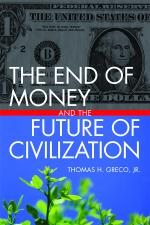 as relevant today as it was when first published the printed book has been out of print for several years. But, having had the rights reverted to me by my publisher, I am making the entire book available for free in PDF format. You can read it or download it HERE. If you would like a hard copy of the first edition used copies can still be found on Amazon.com, Abe books, Thrift books and elsewhere.
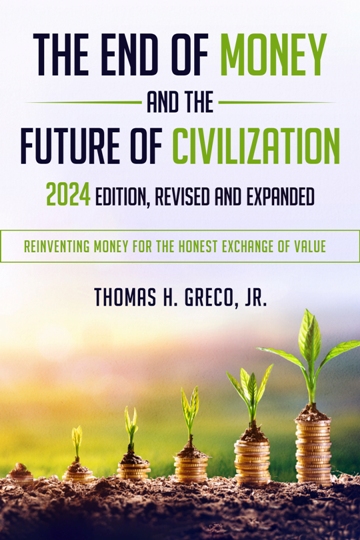 Better still, you can avail yourself of the new revised and expanded 2024 edition which I have been working on for almost two years and is almost complete. Eighteen chapters have already been posted and can be freely read or download HERE.
My previous books, as published, may be freely accessed in digital format by clicking the title below.
Money: Understanding and Creating Alternatives to Legal Tender (2001)
New Money For Healthy Communities (1994)
Money and Debt: a Solution to the Global Crisis (1980)
Collectors may find used and some new print copies of my books as published, on amazon.com and elsewhere online. Start by clicking on the title below:
Money: Understanding and Creating Alternatives to Legal Tender (2001)
 Beyond Money
 Beyond Money