Category Archives: Exchange Design

Is Cash Outdated or a Necessary Feature of our Economy?

Watch this brilliant video by Brett Scott about the role of cash yesterday, today, and tomorrow.

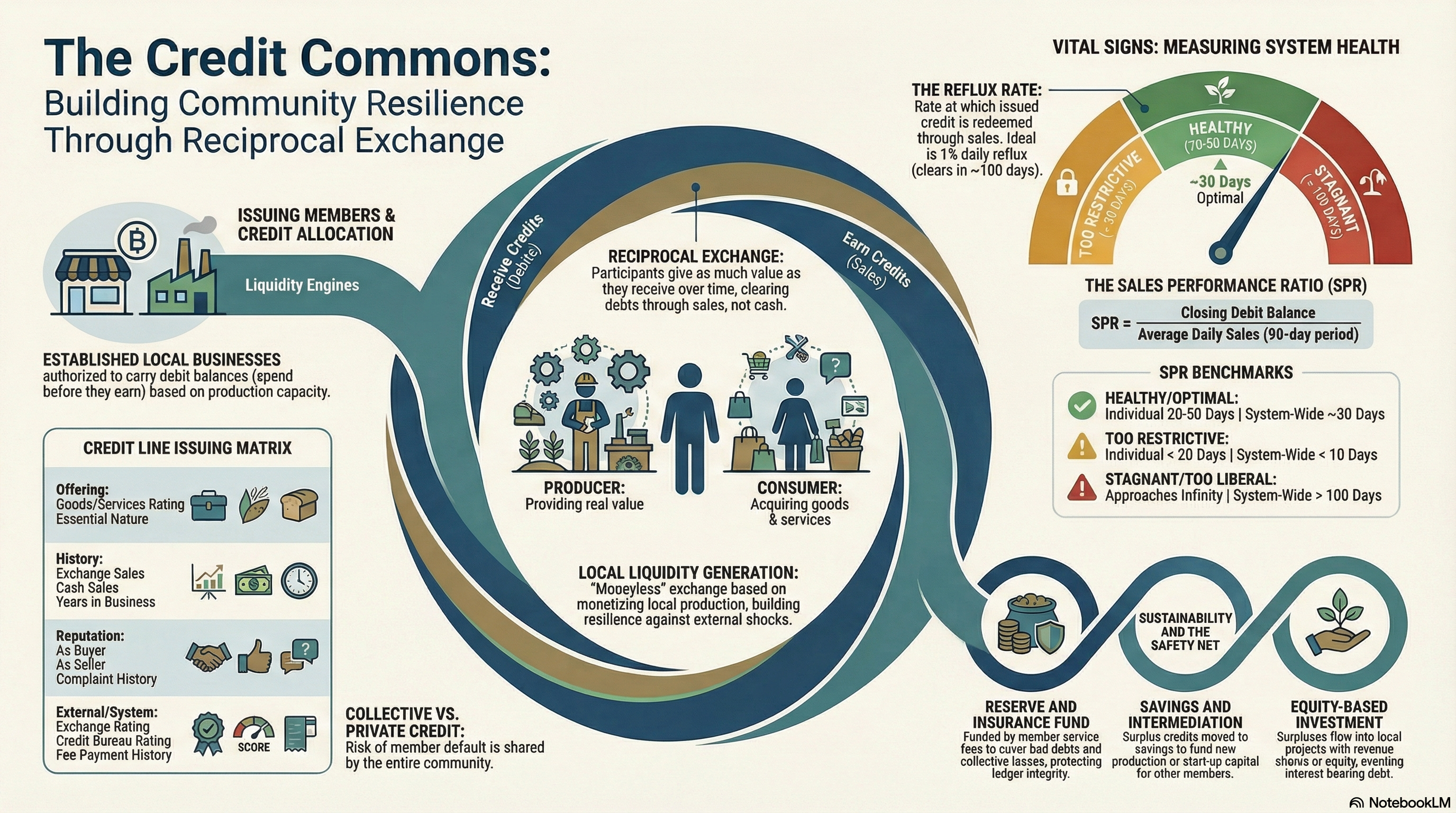
Now published: Chapter 15—Commercial Trade Exchanges—Their Present Limitations and Promising Future-Text

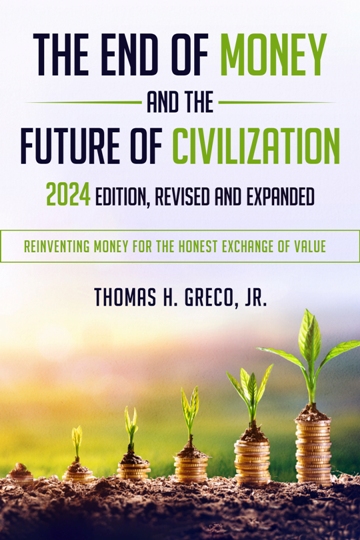
Chapter 15 is the latest Chapter in my new updated and expanded edition of The End of Money and the Future of Civilization. The link to this chapter is now listed along with the other previously published chapters on the book page along with links to the audio narrations by Ken Richings. Scroll down to find Chapter 15 there or click here to go directly to the PDF file.

Here are the Chapter contents:

  • Limiting Factors
    • Limited Scope and Scale
    • The Value Proposition
    • Operations and Agreements
    • Proposed Remedies
    • Credit Allocation Criteria
  • Tapping the Vast Potential Market
  • What About Taxes?
  • The Story of Sardex
  • An Eventual Moneyless Trading Network

As always, your comments are welcome.

Your Money Power

Worth repeating, from my August 2012 Newsletter

Your Money Power

The vast majority of people remain unaware of it, but the fact is, we have in our own hands, right now, the power to create or completely transcend money. As I’ve been preaching for many years, money is nothing more than credit, i.e., the willingness to trust that the value we provide as sellers of goods and services will be reciprocated when we become buyers. But, as we are now becoming so painfully aware, our trust in conventional political currencies and banks has been misplaced; we have been betrayed. It’s not only a matter of fraud and malfeasance, bad as that is, rather, the entire system was designed from the very start to enable the few to exploit the many.

There are two parasitic elements that are built into the central banking, debt-money system—interest and inflation. Every national currency is supported by the collective credit of the people. It is our own credit that we entrust to the bankers, then beg them to lend it back to us, and pay interest for the privilege. Besides that, the national government gets first priority in the allocation of credit. Banks like to lend to governments instead of to producers, because government securities are relatively risk-free and provide a guaranteed profit. When our collective savings prove insufficient to satisfy government’s spending demands, the banks will create enough new money to enable deficit spending, which is the essence of inflation. It is a hidden tax that eventually shows up as higher prices in the markets.

All of that will continue until the people are able to take back the reins of government, but that cannot happen until the people take back control of their economy, and that requires that we adopt new ways of mediating the exchange of goods and services that puts control in the hands of the people. E. C. Riegel eloquently expressed that prospect:

“To trade goods and services is a natural right of all people. To issue the money necessary to make these exchanges is also the natural right of all people who are intelligent enough to do so. We need not beg for money. We do not need to be money slaves: we can be money masters. When we have become money masters we shall master all our economic and political problems.

Dig up this treasure, your money power, that has been lying dormant in your consciousness and express it for wealth, health, peace and happiness by associating with others who are similarly awakened.”

The way to express our “money power,” and to achieve true democracy is to organize businesses and individuals into credit clearing associations and networks for the direct allocation of credit and payment without the use of political money. My writings, and those of E. C. Riegel, provide directions on how to do that.

I am currently in the process of publishing a major rewrite of my book, The End of Money and the Future of Civilization (Chelsea Green Publishing, 2009). The first nine chapters are already available for free download on this website here, and the works of E. C. Riegel are available on this website in the Library.

2012 was a very busy year for me, which included a five-week tour of Europe and the UK during which I gave a total of 15 presentations and workshops to various groups, in addition to consultations, discussions, and meet-ups with many kindred spirits and colleagues working in the realm of societal transformation. If you’re interested, you can read my report about it in my November 2012 Newsletter.

#   #   #

Upcoming interview Saturday on TNT Radio

I am scheduled to be interviewed by Bruce de Torres on his World Stage program on Saturday, February 24, 2024 during the first segment of the program from 2 PM to 3 PM Eastern time (11 AM to Noon Pacific time, Noon to 1 PM Arizona time). You can tune in to listen live at https://tntradio.live/.

2023 August Newsletter — Monetary Tyranny, the End of Dollar Dominance, and a World in Crisis

In this issue:

  • The Tyranny that is the Global Money System
  • The Final Chapter for Dollar Dominance
  • From Wall Street to Main Street
  • Col. Douglas Mac Gregor
  • In case you missed it…

The Tyranny that is the Global Money System
My new video has emerged out of the power point slide presentations I gave earlier this summer. It is a greatly improved description of the tyrannical nature of the global political money regime, how it has evolved, how it operates, and how we can free ourselves from its grip. Based on my more than 40 years of research, experience, and innovation in the realm of value exchange and finance, it succinctly reveals the truth about the money power, and more importantly, outlines tried-and-true exchange mechanisms by which people, businesses, and communities everywhere can transcend their dependence upon political money and bank borrowing by taking control of their own credit and using it in ways that can bring about a world of peace, justice, and freedom in which everyone can thrive.  

Read the entire newsletter  here or here, and you can Subscribe to receive my future occasional newsletters.

What can AI do?

To satisfy my curiosity about AI, and ChatGPT in particular, I’ve been posing certain questions to it and been pleasantly surprised by the results. ChatGPT uses information that was publicly available online up to September 2021, so the responses that it generates will not include recent changes.

Here is one of my requests which, while much shorter, pretty well summarizes what I myself have written about the matter. I present it here for your information and your comments.

THG: Summarize the unique features of the work of Thomas H. Greco, Jr. on money and economics.

ChatGPT:

5/5 Thomas H. Greco, Jr. is known for his groundbreaking work on money and economics, focusing on alternative monetary systems and local economies. Some of the unique features of his work include:

  1. Decentralized Monetary Systems: Greco advocates for the development of decentralized and community-based monetary systems that empower individuals and local communities to create their own means of exchange. He emphasizes the importance of currencies that are not controlled by centralized authorities like governments or banks.
  2. Complementary Currencies: Greco promotes the idea of complementary currencies, which are designed to work alongside national currencies to facilitate local transactions and trade. These currencies are often tailored to specific communities or regions and can help stimulate local economies.
  3. Democratization of Money Creation: He challenges the conventional model of money creation by banks and governments. Greco believes in the democratization of money issuance, allowing communities to create their own money based on real value and resources.
  4. Mutual Credit Systems: Greco’s work includes the concept of mutual credit systems, where participants can extend credit to one another within a network. This can foster cooperation and exchange without the need for traditional banking intermediaries.
  5. Localized Economies: He emphasizes the importance of localized economies that prioritize community resilience and sustainability. Greco’s work encourages communities to rely more on local production and resources to reduce dependency on distant supply chains.
  6. Interest-Free Economics: Greco criticizes the conventional practice of charging interest on loans and believes that interest-free systems could lead to more equitable distribution of wealth and resources.
  7. Advocacy for Change: Through his writings and lectures, Greco advocates for individuals, communities, and governments to explore and implement alternative economic and monetary systems. He believes that a shift away from the current monetary paradigm could lead to more just and sustainable economies.

In summary, Thomas H. Greco, Jr.’s work revolves around reimagining money and economics by proposing alternative monetary systems, promoting decentralized currencies, advocating for interest-free economies, and encouraging the development of localized, community-based economic structures. His ideas challenge conventional economic thinking and aim to create more resilient, equitable, and sustainable societies.

#   #   #

Update: Monday, August 28, 2023
This iteration is a bit more complete:

Thomas H. Greco, Jr. is known for his unique contributions to the fields of money and economics, particularly in the realm of alternative currencies and monetary systems. Some of the key features of his work include:

  1. Local and Complementary Currencies: Greco emphasizes the importance of local and complementary currencies as tools for promoting economic resilience and community development. He advocates for the creation of currencies that are tailored to specific communities or regions, helping to stimulate local economic activity and reduce dependence on centralized national currencies.
  2. Decentralization of Money Creation: A central theme in Greco’s work is the decentralization of money creation. He believes that allowing communities to create their own currencies empowers them to meet their specific needs, bypassing the traditional centralized banking system and enabling greater control over their economic destiny.
  3. Credit Clearing Systems: Greco explores the concept of credit clearing systems, which facilitate transactions without the need for traditional currency. These systems work by enabling participants to exchange goods and services directly based on mutual credit agreements, reducing the reliance on scarce official currency.
  4. Integral Theory and Economics: Greco integrates principles of integral theory into his economic thinking, considering not only economic factors but also social, ecological, and cultural dimensions. He emphasizes the need for a holistic approach to economics that takes into account the interconnectedness of various aspects of human life.
  5. Monetary Reform Advocacy: Greco is an advocate for monetary reform, particularly in response to issues such as inflation, financial instability, and wealth inequality. He proposes alternative monetary systems that prioritize stability, fairness, and sustainability.
  6. Educational Efforts: Beyond his academic work, Greco is involved in educational efforts to raise awareness about alternative currencies and monetary systems. He has authored books and conducted workshops to help individuals and communities better understand and implement these concepts.
  7. Focus on Empowerment: One of the overarching themes of Greco’s work is empowering individuals and communities to have a greater say in their economic affairs. He believes that by rethinking the way money is created and circulated, people can gain more control over their economic lives and reduce their vulnerability to systemic financial crises.
  8. Sustainability and Resilience: Greco’s work aligns with the principles of sustainability and resilience. By promoting local economies and alternative currencies, he aims to create systems that are more environmentally friendly and less susceptible to the boom-and-bust cycles of traditional monetary systems.

In summary, Thomas H. Greco, Jr.’s work on money and economics revolves around the development of local and complementary currencies, decentralization of money creation, credit clearing systems, integral theory integration, monetary reform advocacy, educational initiatives, empowerment, and a focus on sustainability and resilience. His ideas challenge conventional economic thinking and offer potential solutions for creating more equitable and community-driven economic systems.

#   #   #

My conversation with Emily Peyton and Jim Hoag

In this conversation we discuss our collective predicament and what people are doing to preserve our freedoms, assert our rights, and build a better world.

2023 April Newsletter — The state of the world, and what’s being done about it.

In this issue:

  • Private and complementary currency systems: purposes, principles, practices, and performance.
  • Peace or Empire?
  • Disturbing Thoughts (about the economy)

Private and complementary currency systems: purposes, principles, practices, and performance is now online.
 
            In October of last year (2022) I gave a remote presentation to the 6th Biennial RAMICS International Congress in Bulgaria. RAMICS is the Research Association on Monetary Innovation and Community and Complementary Currency Systems, which includes both academics and practitioners. In my illustrated presentation titled, Private and complementary currency systems: purposes, principles, practices, and performance, I provided a concise summary of key points and fundamental principles that need to be understood in order to transcend the dysfunctional and destructive political money system by decentralizing the control of credit and creating honest and effective, non-political exchange media. Here is an abstract of its contents.  
 
Through the generous assistance and editing work of Ken Richings, the presentation is now available for viewing on YouTube.
______________
Peace or Empire?
 
            Dennis Kucinich at Rage Against the War Machine
At the February 19 anti-war rally in Washington, DC, former US Congressman Dennis Kucinich made an inspired call for peace, justice, compassion, and an end to corruption in government. I don’t believe that any reasonable person of good would disagree with his message. In a subsequent message, Can they ‘repeal’ the dead? Ask Orwell, Kucinich recounts the criminal invasion of Iraq by the US in 2003, the lies which were used to justify it, and its tremendous cost in material resources and lost lives. Another major consequence has been an erosion of trust in the US government both at home and abroad.
 
            Graham E. Fuller, in this recent post, outlines the Long Term Implications of the US destruction of Nordstream 2 Pipeline.
 
            The achievement of peace in the world requires mutual respect and good faith negotiations, but unfortunately, peace is not the goal of those who have for some time been in control the US government under administrations of both parties, rather, they are bent on achieving “full spectrum dominance” and have chosen to restart the Cold War in hopes of weakening Russia and forcing it into line with the agenda of the New World Order in which the Western powers control all the Earth’s resources. If you want to get a more accurate picture of what’s actually been going on in eastern Europe, pay attention to former Marine and UN nuclear weapons inspector, Scott Ritter starting with his post, Give peace a chance.
 
            Economist Michael Hudson adds his voice to the matter, arguing that Germany has become an economic satellite of America’s New Cold War with Russia, China and the rest of Eurasia.
 
            And to round out the story of why the world is now on the brink of an unprecedented catastrophe, listen to the ever insightful Noam Chomsky, still sharp and coherent at age 94, speak about Putin, Ukraine, China, and Nuclear War.
______________________
Disturbing Thoughts (about the economy)
 
            John Mauldin is “a visionary thinker, a noted financial expert, a New York Times best-selling author.”  I’ve been a subscriber to his Mauldin Economics newsletter for at least a couple years. This edition seems particularly important, especially the section titled, “We’re Going to Have a Crisis.”
 
Citing the recent bank failures and the government’s decision to insure even the uninsured depositors, Mauldin observes that deposits will inevitably be withdrawn from smaller banks and placed in banks that are considered “too big to fail.” He argues that a major change is needed but that, “Our political system is sadly not up to the task. The current structure is all we have, and it won’t improve until a crisis forces change.” He quite emphatically concludes that “…the situation demands changes. Which means—and I don’t say this lightly—we’re going to have a crisis which will give us that change.”
 
Mauldin continues with an analysis of the developing crisis, particularly with regard to small banks’ exposure to declining asset values in commercial real estate.  You can read the entire newsletter at Mauldin Economics.
___________
 
            In April the Sonoran desert blooms, the fragrance of orange blossoms fills the air along with that of creosote bush, Palo Verde and a host of other plants. The winter chill has gone and the summer heat has not yet arrived. It is a particularly pleasant time to be here. I hope you are enjoying your home turf as much as I am mine.
 
Thomas

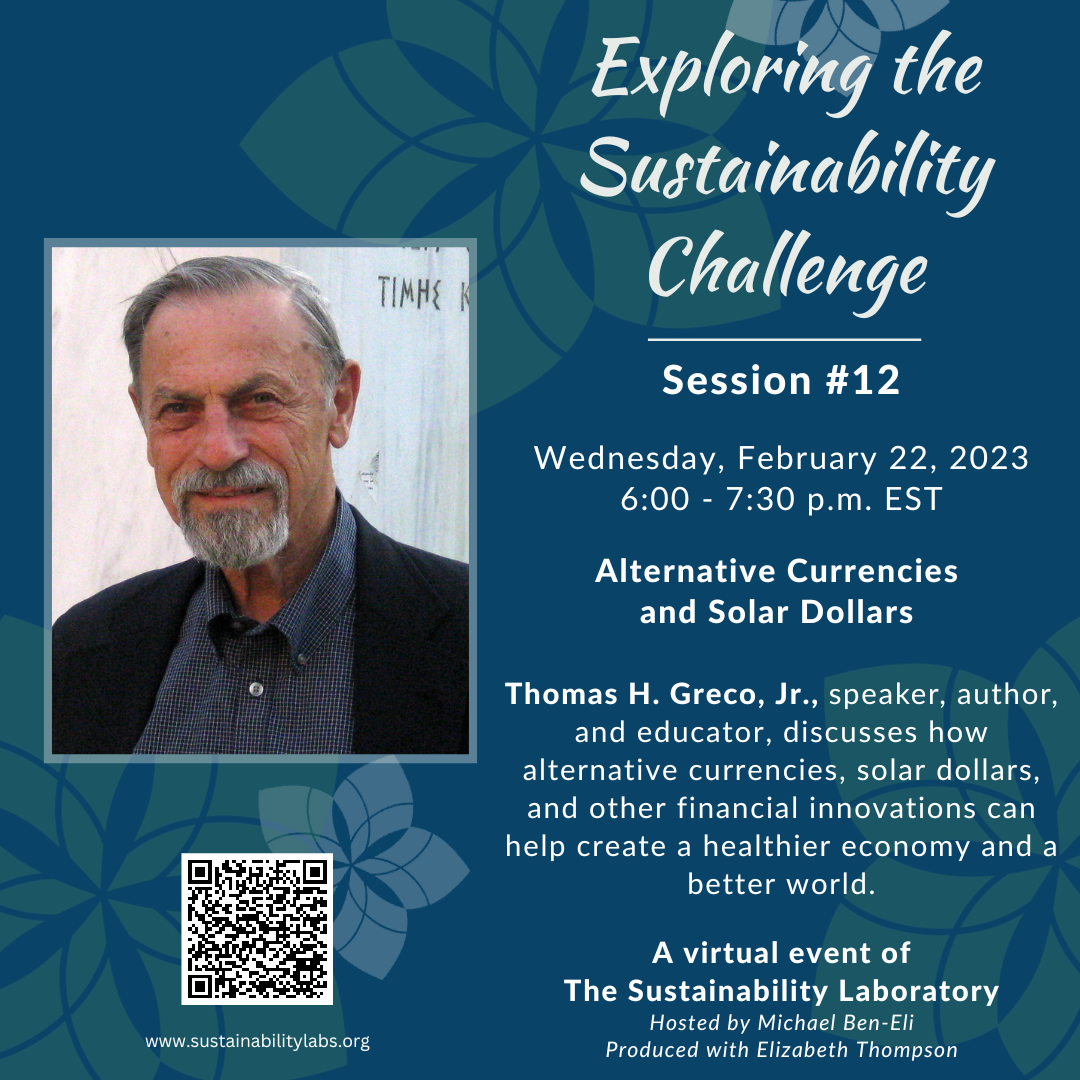
Upcoming event: Exploring the Sustainability Challenge with Thomas H. Greco, Jr.

It should be clear by now that there are many aspects of our present civilization that are neither just and equitable nor sustainable. But in the midst of the deepening global mega-crisis we have the opportunity to re-imagine and reinvent the systems and structures that are failing us, particularly those of money and the exchange of value. In this event we will discuss practical ways to pay and be paid without the need to use the kind of money that we are accustomed to, ways that can empower our communities by rewarding those who produce and provide real value. Sign up today at Eventbrite.

2023 Winter Newsletter–Answers to the Money Problem, and the state of the World

In this isssue I describe what private currency vouchers are and how they can help solve the money problem that I’ve been writing about for the past 35 years. Here’s the full table of contents:

  • Private Currency Vouchers, an Answer to the Money Problem
  • History and current events
  • Other Historical Documentaries
  • Taming the corporate beast
  • It is 90 seconds to midnight
  • Pasta with broccoli

You can read the entire newsletter here or here. Subscribe to receive my future occasional newsletters.
____________________