50 ways to leave the Euro: Greece and the global crisis

My two month visit to Greece last summer prompted me to develop some proposals that might be applied in Greece and other countries where the government has become insolvent. I’ve written these up in an article that was recently published in the online journal, Common Dreams.  You can read it there or here below. It was also republished on Resilience and can be found there.

50 ways to leave the Euro: Greece and the global crisis
By Thomas H. Greco, Jr.

The problem is all inside your head, I told the Greeks
The answer is easy, you need only stop the leaks
The power is yours to claim the freedom that you seek
There must be fifty ways to leave the Euro
(Apologies to Simon and Garfunkel)

Following the resounding “NO” vote by the Greek people on the bailout conditions in the July referendum, the negotiations between the Greek government and “the institutions” resumed with the expectation that a better deal for Greece would ensue. The outcome was quite the contrary. Greek negotiators ended up agreeing to a bailout deal that was far more onerous than the one the voters had rejected. Why?

The harsh reality is that the Greek government is insolvent. Having been lured into the debt-trap and the shared euro currency by western oligarchs using a combination of measures, including outright fraud, Greece was forced to accept the onerous conditions attached to the first two bailouts. Now it has been bludgeoned into accepting a third. The weapon of choice is the euro currency itself which is being wielded by the European Central Bank (ECB). By throttling the flow of euro currency into the country, the ECB last summer created near chaos in the Greek economy. This, and the threat of even more severe punishment in the future, was enough to bring the Greek government to heel.

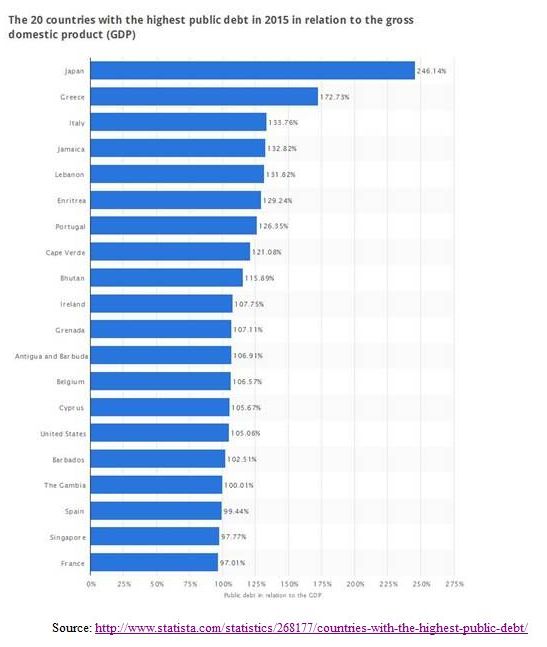
With sovereign debt up around 180% of GDP, there is no way that the Greek government will ever be able to grow its way out of the current mess. The draconian measures demanded by the creditor institutions will just make it worse. Even the IMF has acknowledged (with apparent reluctance) that some debt relief is necessary for the Greek economy to recover. The new agreement forces the Greek government to yield even more sovereignty and to open its economy and its people more fully to exploitation by corporate interests and transnational banking institutions. Read the entire article…

State of Texas passes bill to establish a gold depository bank

In a landslide vote Texas lawmakers approved (by a margin of 140 to 4 in the Texas House and 27 to 4 in the state Senate) a bill to establish a gold depository bank. The bill was signed into law in mid-June by Republican Governor Greg Abbott.

In this interview Texas State Representative Giovanni Capriglione, author of the bill explains how this new law came into being and what it does.

The full interview can be heard here.

This is a surprising turn of events that is reminiscent of the private NCBA (National Commodity and Barter Association), a gold depository that was harassed and finally put out of business by government thirty years ago.

This bank, if it ever comes into being under the aegis of the Texas state government, will not so easily be quashed by the feds, After all, you “don’t mess with Texas.” It could lead to a payment system that is independent of the Federal Reserve and provide depositors with some protection against the continuing inflation of the US dollar.

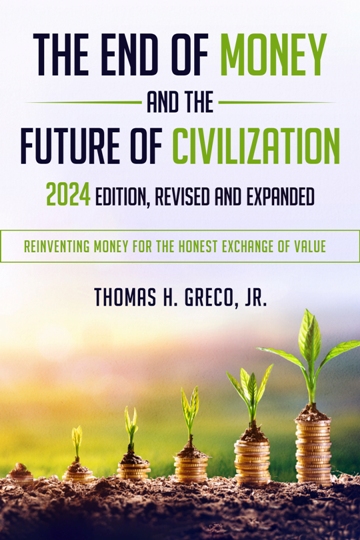
But the gold market is very much manipulated and controlled by the big holders, the various central banks and national governments around the world. It would be better to hold an assortment of basic commodities on deposit to better assure that depositors’ purchasing power will be maintained. Better yet, state governments should support the creation of credit clearing exchanges that enable buyers and sellers to trade with one another without using money at all but simply offset each trader’s payments for purchases against their receipts from sales. In that case, the commodity assortment need only be used to define a unit for denominating members’ account balances. This and other innovative approaches to exchange are all explained .in my books, especially The End of Money and the Future of Civilization, and in my various interviews and presentations on this website.

#     #     #


Why Can’t Governments Balance Their Budgets?

This is a question I answered more than a quarter century ago in Part I of my book, Money and Debt: A Solution to the Global Crisis. It is a question that gets scant attention from politicians and economists who are willing to speak only about the need for perpetual economic growth and keeping the government debt at “manageable” levels, never asking why government debt is necessary or how it might be eliminated.

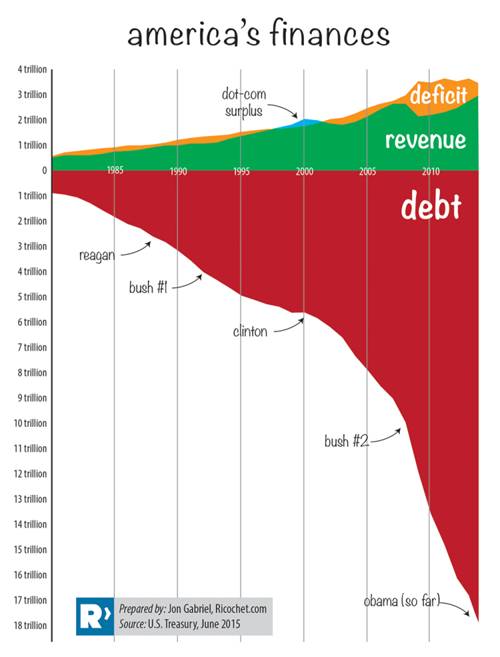
When I first undertook to answer this question, the debt crisis was already well underway and global in scope. Since then the situation has become more critical with debt levels reaching astronomical levels.USDebt&deficits

What I said in 1990 began with this:

The whole world today seems to be awash in a sea of debt which threatens to drown us all. Many Third World countries, despite their huge increases in production for export, are unable to pay even the interest due on their accumulated indebtedness to Western banks and governments. In the U. S., the levels of both public (government) and private debt are increasing at alarming rates. The Federal budget deficits of recent years far exceed anything thought possible just a decade ago. Why is this happening and why is it a problem? In order to understand that, one must first understand some financial facts of life.PublicDebt

Here are the essential points of my argument:

  1. Almost all of the money in every country is created by commercial banks when they make loans either to the private sector or to governments (by purchasing government bonds, notes, etc.),
  2. Money is extinguished when loan principal is repaid,
  3. The interest that banks charge on these loans causes the amount owed to grow as time passes,
  4. Causing the aggregate amount owed to banks to always exceed the supply of money in circulation,
  5. Requiring that banks make additional loans to keep the supply of money in circulation from falling behind the amounts needed for existing loans to be “serviced” (repayment of part of the principal plus the interest due) in order to avoid a cascade of defaults and economic depression,
  6. And that this “debt imperative” that is built into the global money system is the driver of the economic “growth imperative” that results in superfluous economic output and its attendant depletion of physical resources, despoliation of the environment, increasing disparities in income and wealth distribution, and many other problems that plague modern civilization.
  7. That physical limits to economic output on a finite planet make this money system unsustainable over the long term.
  8. That there are practical limits to the amount of debt that the private sector is able or willing to incur.
  9. That chronic government budget deficits are therefore a political expedient that is necessary to keep this flawed system from collapsing as governments assume the role of “borrower of last resort.”
  10. That politicians are quite willing that governments play this role since it gives them the power to take much more value out of the economy than the revenues available by means of overt taxation.
  11. That bankers, for their part, by monopolizing the allocation of credit in the economy and charging interest on it, are able to enrich themselves and exercise tremendous power over the political process making a sham of democratic government.

The empirical evidence strongly supports my analysis. You only need to look at charts showing the growth of debt over time to see it growing at an accelerating rate (geometrically), a pattern that reflects the compound interest function that is an inherent feature of our global political money system.

You can read my original 1989 exposition of these points at Money and Debt: a Solution to the Global Crisis, Part I, and their subsequent elaboration in my latest book, The End of Money and the Future of Civilization, https://beyondmoney.net/the-end-of-money-and-the-future-of-civilization/.

#     #     #

The Financial Times discovers mutual credit clearing

Journalist Edward Posnett, in an article that appears this weekend in the Financial Times magazine, describes the origins and operations of Sardex, a mutual credit clearing exchange that I visited last month and reported on here.

Posnett’s article, The Sardex factor, is fairly well written and begins with the subtitle: When the financial crisis hit Sardinia, a group of local friends decided that the best way to help the island was to set up a currency from scratch. You can read the full article here.

While I consider Sardex to be among “the best of the breed” and a trade exchange model worth replicating, it is by no means unique. Posnett’s article is well worth reading but I fault it on two counts, first for ignoring the scores of similar commercial trade exchanges that have been operating successfully around the world for the past several decades, and secondly for failing to emphasize the crucial importance of the value proposition that mutual credit clearing provides—the provision of liquidity to a local or domestic economy, independent of the banking system and without the disruptive and destabilizing imposition of interest.

There are several well run commercial trade exchanges but as I said in my interview at Sardex, most trade exchange operators are too complacent and satisfied with their modest levels of business success.

The ‘special sauce” that seems to make Sardex stand out is the underlying values and social mission of the founders. Their primary purpose in launching their credit clearing exchange was to help improve the local economy of their home island. I hope that will continue to inspire their operations and development in the years to come.

They have tried to assist entrepreneurs in six or seven other regions of Italy to replicate their design and operations, but told me that the results have been disappointing. I’m speculating that it may be for lack of that “special sauce.” If that’s the case, then successful replication will require that they work selectively with social entrepreneurs who share the same values and mission of serving the common good.

That seems to be quite a rare breed right now, so these people will need to be nurtured through a process of selection and education–perhaps somewhat akin to what the Jesuits have historically done. The need is for people who have the right values, strong motivation, and technical competencies to create the new socio-economic paradigm.

The interview that I gave at the Sardex offices during my visit focuses on The Changing Picture in Complementary Currencies and can be viewed in the post below or on YouTube at https://youtu.be/epOebHTQpDI. The pictures that I took are in my online photo gallery at, https://picasaweb.google.com/112258124863172998784/201508SardiniaItaly?authuser=0&authkey=Gv1sRgCILAwtjOyOetvAE&feat=directlink.

#     #     #

The changing picture in complementary currencies

During my August visit to the Sardex trade exchange on the island of Sardinia, they recorded (on August 13, 2015) this short interview. In it I cover a few important points on the liquidity problem and how commercial trade exchanges help to solve it.

Newsletter — Summer 2015

Upcoming Ireland Events and My Remaining Tour Itinerary
My Activities in Greece, an abbreviated sketch
The Greek Crisis
Sardex

The summer has gone pretty much according to the plan I laid out in my Spring Newsletter, with of course the inevitable addition of things that have popped up spontaneously. I’m sorry I’ve been too busy to report about all of it, even though I’m sure many of my readers would want to know. My main reason for writing now is to highlight the agenda for the remainder of my summer tour in case some of you happen to be in the neighborhood of Ireland, Scotland or England. I hadn’t really planned to visit Italy but here I am—in Rome after visits to Tuscany and Sardinia (more on that below). I’m now in Ireland for the final events of my summer tour.

Here’s what I’ll be doing.
_________________________________________________
Ireland Events and My Remaining Tour Itinerary
25 to 27 August 2015. I’ll be at Cloughjordan Ecovillage to participate in the P2P Summer School program on The Art of Commoning. Then on Friday, 28 August, I will give a lecture at Trinity College, Dublin, followed by a panel discussion. And on Saturday, 29 August, I will conduct a workshop at the same venue. Here are the details.
Friday August 28th 19:00 – 21:00
Talk: The Liberation of Money and Credit
Where: CONNECT (Formerly CTVR) Dunlop Oriel House, 34 Westland Row, Trinity College Dublin, Dublin.
On the evening of Friday August 28th, Thomas Greco will give a presentation on The Liberation of Money and Credit, outlining the fundamental importance of reclaiming the credit commons and showing how communities and businesses can reduce their dependence on bank borrowing and conventional, political forms of money. After the talk Thomas will join a panel with Michel Bauwens and Kevin Flanagan of the P2P Foundation, Dr Rachel O’Dwyer of Trinity College Dublin and Graham Barnes of Feasta for a Q&A session.

Saturday August 29th 10:00 – 16:00
Workshop: The Exchange Revolution: Taking Complementary Currencies and Moneyless Trading to a New Level
Where: CONNECT (Formerly CTVR) Dunlop Oriel House, 34 Westland Row, Trinity College Dublin, Dublin.
On Saturday, Thomas will run a workshop for currency activists, practitioners, researchers, and social entrepreneurs on The Exchange Revolution: Taking complementary currencies and moneyless trading to a new level, also at the CONNECT venue in Dublin. Anyone with a specific interest in developing and extending the impact of community currencies, mutual credit, and other complementary exchange mechanisms is invited to attend.
Both events are sponsored and hosted by CONNECT (formerly CTVR – http://www.ctvr.ie/), at their Dublin city centre venue and supported by Feasta, the Foundation for the Economics of Sustainability (http://www.feasta.org) and P2P Foundation Ireland.
Both Dublin events are free but people are asked to register at:
http://www.eventbrite.com/e/beyond-money-events-with-thomas-greco-tickets-18131016358
Tuesday, 1 September, at Queens College, Belfast
Evening Lecture, Communities, Currencies and the Commons: Democratising money creation & enterprise after the Euro-Greek crisis, with Thomas Greco at Queens College, (Senate Room) at 7.30pm (registration at 7.15pm) hosted by the School of Law partnered by Positive MoneyNI. The talk will be followed by panel discussion.
Coordinator – William Methven, methvenwilliam@gmail.com

From Belfast, I will travel to Edinburgh, Scotland for a few days of exploring, then to London. I’m scheduled to fly back to San Francisco on September 9.
_________________________________________________
My Activities in Greece, an abbreviated sketch
Altogether, I spent a little more than three weeks at the Kalikalos Holistic Summer School during the months of June and July. Kalikalos is located on the Mt. Pelion peninsula where the views are spectacular, the mountain villages delightful, and the nearby beaches inviting, all of which provides a good balance of work, play and living in community with people from diverse places. In this ever-changing community of students, workshop leaders, volunteers, facilitators-in-residence, and staff, everyone pitches in to prepare meals, clean up, and share their special gifts. The daily program routine leaves plenty of time for recreation and many people choose to go down the mountain to the beach in the afternoons (about a 20 minute ride) or to hike the ancient donkey trails that connect the villages. Healthy living is a fundamental aspect of the Kalikalos experience with plenty of opportunity for yoga, meditation, tai chi and whatever other modes of centering people care to share. Meals are vegetarian and based mainly on fresh whole foods and traditional Greek ingredients—local olives. olive oil, feta cheese, locally baked bread, tomatoes, cucumbers, and vegetables from Kalikalos’ own gardens.
During my first week there I gave two presentations and conducted sessions in which we played two of my simulation games, Money Monopoly and Free Exchange. Then in July during the workshop on Solidarity Economy, I participated in most of the sessions and gave two presentations on the money problem and exchange altenatives.

While my work on exchange alternatives in Greece has been mostly with private groups and activists, I have developed proposals for creating domestic and community liquidity at all levels ranging from the bottom upward to include grassroots initiatives, business associations, municipal governments, and even the national government. I will be publishing specific details about these proposals in the near future. I am also continuing to work with colleagues in Volos on laying out the framework for a nationwide network of localized credit clearing exchanges.
During the last weekend in July I conducted a two day workshop in Athens for a sizable group of participants interested, or active in programs to create complementary liquidity. In the first session our discussions were based on my slide show on the Greek situation, and in the second, my presentation on the issues that need to be addressed in Taking Moneyless Exchange to Scale. That slide show is posted on my website at https://beyondmoney.net/wp-content/uploads/2015/07/workshop-athens.ppsx.

On Wednesday, July 29, I was interviewed on Porto Kali internet radio in Athens (in English with Greek translation). You can listen to it at http://wp.me/a43RA-Ge. _________________________________________________
The Greek Crisis
The Greek debt crisis has been all over the news lately so most everyone is aware of it, but most people are not aware of the underlying causes or what is being done to the Greek nation by the financial and political powers-that-be. Several of my recent posts at http://beyondmoney.net have dealt with that topic. In addition, there have been some very good recent articles that clearly explain it. These three are especially enlightening:
GREECE’D: We Voted ‘No’ to slavery, but ‘Yes’ to our chains, by investigative reporter Greg Palast.
The Rest of the Story About Greece: EU’s economic demands seek to derail small business and local communities, paving the way for multinational corporate giants.

• Ellen Brown’s fine article “Guerrilla Warfare Against a Hegemonic Power”: The Challenge and Promise of Greece

And if you want to understand the larger agenda of which the Greek situation is indicative, be sure to listen to Ellen Brown’s interview with Dr. Paul Craig Roberts, Greece-y Mess – 07.08.15, at http://itsourmoney.podbean.com/e/greece-y-mess-070815/
_________________________________________________
Sardex
Last week I had occasion to visit the Italian island of Sardinia and spend a few hours meeting with the founders and managers of a commercial trade exchange called Sardex.
I’ve known about Sardex since almost its beginning five years ago and have corresponded over the past few years with Giuseppe Littera, one of its founders, but this was the first opportunity I’ve had to get an inside look at their operation. I came away with a better understanding of how they operate and the impression that the Sardex structures, procedures, and protocols come closer to optimal than any other trade exchange I’ve seen. It appears to be a developing model that can be both scalable and replicable.
You can read my brief but more complete report here, and. you can get a pretty good picture of the distinctive features of Sardex by viewing Giuseppe Littera’s presentation (in English) that was made at a conference in Volos, Greece, in 2014. You can view it here.
_________________________________________________
All best wishes for a playful and enjoyable summer,
Tom

Sardex, an emerging model for credit clearing exchanges?

Last week I had occasion to visit the Italian island of Sardinia and spend a few hours meeting with the founders and managers of a commercial trade exchange called Sardex. Here below is an abbreviated report of what I learned. The pdf version of the report can be found here.

Sardex, a brief report
by Thomas H. Greco, Jr. August 15, 2015
I recently spent a few days on the Italian island of Sardinia conferring with the founders and administrators of Sardex (http://www.sardex.net/), a commercial credit clearing exchange that has been notable for its success in organizing small businesses and service providers on this island of about 1.6 million people.

I’ve known about Sardex since almost its beginning five years ago and have corresponded over the past few years with Giuseppe Littera, one of its founders, but this was the first opportunity I’ve had to get an inside look at their operation. I came away with a pretty good understanding of how they operate and the impression that the Sardex structures, procedures, and protocols come closer to optimal than any other trade exchange I’ve seen. It appears to be a developing model that is both scalable and replicable.

I will not attempt to provide here a comprehensive report or detailed analysis, rather I will highlight a few major points and provide some sources of additional information for those who are interested in doing their own research.

Some highlights:
Current membership: ~3,000
Current transaction turnover: ~1.5 million euro equivalent per month
Expected turnover for 2015: 50 million
Velocity of credit circulation: 12 times per year
Employees included as sub-accounts: 1,000

When I asked about the key factors that account for their success, here is some of what I was told:

1. Founders are dedicated to the mission to relocalize and rehumanize the economy and to reconnect people by enabling the creation of interest-free local liquidity based on the production capacity of local businesses.

2. Social solidarity and cultural cohesion, while very important and part of the mission, were NOT a pre-existing factor that would account for their early success. In fact, they have had to work hard to develop social solidarity and cooperation amongst their members, but this is now changing. One account broker told me, “I can see how behavior of many of our members has changed. When the financial crisis first began, they were starting to lay off employees or cut their wages, and they were reluctant to spend their euros. This made matters worse as the circulation of money slowed down. But as they began to participate in the process of earning and spending trade credits, they began to increase pay to their workers and to invest in their education. In one case, when a member’s shop was burglarized, other members stepped up to help by donating some of their trade credits to help their fellow member recover from the loss.”

That anecdote demonstrates the differences in behavior that results when people experience scarcity compared to when they experience abundance. In this case, the scarcity of euros caused behavior to change in the direction of reduced willingness to spend and the contraction of overall economic activity. But their experience with trade credit was much different. Realizing the greater availability of trade credits, and finding it easier to earn them, leads people to experience abundance and to be more generous and spend more liberally.

3. I was surprised to learn that the Sardex revenue model relies mainly upon initiation fees and annual membership fees (collected in euros); and that they had decided early-on to stop charging fees on transactions. For me, that approach is counter intuitive in that I have long held the view that recruitment would be most successful if membership were made easy, low cost, and risk free, and that it seems reasonable to apply the principle that users pay in proportion to the amount of services they receive. In this case, that principal would mean that those that receive more credit clearing services should pay more. Well, this may be a case where successful practice trumps rational theory. Marketing specialists should look closely at the dimensions of this phenomenon.

There is however some logic in this approach in that, since the cost of participation is relatively fixed, members should seek to maximize the benefits of their membership by trading more within the network. Initiation fees are set according to the size of the business and range from 150 to 1,000 euros. Annual membership fees are likewise based mainly on turnover and range from 350 to 2,500 euros.

4. Strong member support by an effective staff of brokers who help to arrange trades, especially for those that have high earning capacity to avoid excessive accumulation and high positive trade credit balances.

5. Recruitment strategy tries to replicate the supply chain, i.e., bring in businesses that are the suppliers of existing members or prospective members.

6. “Solidarity threshold.” Requirement that members offer their goods and services for trade credit at the same prices as their euro prices, and that payment be accepted 100% in trade credit on all transactions of less than 1,000 euros. “Blended trades,” i.e., payment in a combination of trade credits and euros are allowed on larger purchases, according to a sliding scale).

7. (a) Restrict membership to companies that have a registered office in Sardinia. This promotes social solidarity and excludes large multi-national corporations. (b) Avoid “saturation” (accepting too many members that offer the same line of products or services).
[While I am fully supportive of the former of these, and would indeed, permanently exclude multi-national companies, this latter practice of avoiding saturation I consider to be of use only in the initial stage of establishing credit clearing as a credible means of exchange and an effective source of local liquidity. Ultimately, I believe that membership must be open to any community-based small or medium enterprise (SME) that meets the basic qualifications for membership. Of course, not all of them will qualify for lines of credit.]

8. Fully compliant with reporting and tax regulations. Transparency is a matter of fundamental importance.

9. Emphasis on monetizing the unused capacity of members. Connecting unused supplies with unmet needs is a primary benefit of credit clearing services.

The Sardex company has been consulting with other groups to replicate their system in seven other regions around Italy. In the future, Sardex is planning to initiate a rebate program to bring consumers into the trading community, which will enhance the circulation of local trade credits, make Sardex better known, and stimulate more sales for their business members.

Here below is a list of a few of the many reports and sources of information about Sardex. Readers are invited to add others as comments

From an idea to a scalable working model: merging economic benefits with social values in Sardex, by Giuseppe Littera, et al, at the London School of Economic, Inaugural WINIR Conference, 11-14 September 2014, Greenwich, London, UK.

You can get a pretty good picture of the distinctive features of Sardex by viewing Giuseppe Littera’s presentation that was made (in English) at a conference in Volos, Greece, in 2014. It is to be viewed here.

Report (in Italian) in the Italian daily newspaper, La Repubblica: Dalla Sardegna al resto d’Italia. Sardex inventa la moneta complementare. “Abbiamo ripensato l’economia.”  [English translation needed.]

# # #

Varoufkis launches a powerful personal counter-indictment against his accusers.

Responding to charges of treason leveled against him by his “self-styled persecutors,” former Greek Finance Minister, Yanis Varoufakis, on his personal blog, has laid down the gauntlet, accusing “Greece’s oligarchic establishment” as being “troika-friendly.”
In his post of July 28, Varoufakis defended his “defiant negotiating stance” saying:
My dastardly ‘crime’ was that, expressing the collective will of our government, I personified the sins of:
• Facing down the Eurogroup’s leaders as an equal that has the right to say ‘NO’ and to present powerful analytical reasons for rebuffing the catastrophic illogicality of huge loans to an insolvent state in condition of self-defeating austerity
• Demonstrating that one can be a committed Europeanist, strive to keep one’s nation in the Eurozone, and, at the very same time, reject Eurogroup policies which damage Europe, deconstruct the euro and, crucially, trap one’s country in austerity-driven debt-bondage
• Planning for contingencies that leading Eurogroup colleagues, and high ranking troika officials, were threatening me with in face-to-face discussions
• Unveiling how previous Greek governments turned crucial government departments, such as the General Secretariat of Public Revenues and the Hellenic Statistical Office, into departments effectively controlled by the troika and reliably pressed into the service of undermining the elected government.

Varoufakis also claimed a moral victory, arguing that “The debate about the democratic deficit afflicting the Eurozone is now unstoppable.”

# # #

British MP George Galloway exposes the culprits and their geopolitical “crimes against humanity”

Six times elected to the British Parliament, now running for Mayor of London, George Galloway, in this video interview lays the truth on the line, describing the “crimes against humanity” that continue to be perpetrated by financial capitalists and their top-level political minions all around the world.

Occupation of Greece begins

Like so many others, both inside and outside Greece, I was greatly disappointed at the outcome of the negotiations between the Greek government and the “institutions.”  At first, it looked like a sell-out, but on further reflection, I can see that given the circumstances, the government really had no choice.

More than 70 years ago,  Greece was overrun in a Nazi blitzkrieg. This week it has been overrun by the combined powers of global financial capital and its eurozone “partners.” The following is a comment (still awaiting moderation) I made today on the website of former Greek finance minister, Yannis Varoufakis.

I regret having been overly judgmental in my comment of July 14. I have no business telling the Greek government what they should have done, or must do in the future. It is Tsipras and the Syriza coalition who have the responsibility of representing the interests of the Greek people and preserving the Greek state. I can see that surrender (or “strategic retreat”) in the face of overwhelming force may have been necessary, just as it was with the Nazi occupation of 70 years ago. Better to live to fight another day when conditions may be more favorable.

Now the battles must be fought on another level, the people need to do what they can to take care of themselves and each another. To do that, they first need to clearly identify their adversary and understand the kinds of weapons that are being used against them.

Bill Clinton’s mentor, Prof. Carroll Quigley, in his 1966 book, Tragedy and Hope told us what the agenda is, who is in control of it, and how their plans are to be carried out. He wrote:

“The powers of financial capitalism had a far-reaching aim, nothing less than to create a world system of financial control in private hands able to dominate the political system of each country and the economy of the world as a whole. This system was to be controlled in a feudalist fashion by the central banks of the world acting in concert, by secret agreements arrived at in frequent private meetings and conferences..” Viewed in that light, the major political events of the past 40 years, including the Greek crisis, make perfect sense.

This anti-democracy cabal is able to achieve their aims by means of their control over the creation and allocation of money in virtually every country of the world. But money is simply our collective credit manifested as bank deposits or notes. We the people everywhere need to end our fixation on their politicized forms of money, and create our own exchange media (liquidity) by allocating credit directly amongst producers. This is the route back to freedom and democratic government.

 #     #     #