Tag Archives: money

States Asserting Their Money Power

There is a bill pending in the Idaho legislature to make gold and silver legal tender. A recent article describes the bill and mentions that, “The passage of H177 would make Idaho the sixth state to recognize gold and silver as legal tender, as they always should have been doing.” The article also states that “Utah led the way, reestablishing constitutional money in 2011. Wyoming, OklahomaArkansas, and Louisiana have since joined.” If six states can do it, why not every state?

Simply citing these examples should pique the interest of people everywhere to learn about our national money system and why the States are taking such actions. What is the point of declaring gold or silver to be legal tender? Isn’t the US dollar already legal tender? What’s wrong with that? It is questions such as these that have been the focus of my work for the past 45 years, questions that I have answered in great detail in my various books, articles, lectures and interviews, all of which have been posted on my website and on my various other channels[1]. The bottom line is this—our national system of money and banking, along with that of virtually every other country in the world, is deeply flawed and destructive[2]. But there is plenty that can be done about it—by we the people, by small- and medium-sized businesses[3], and by lower levels of government.

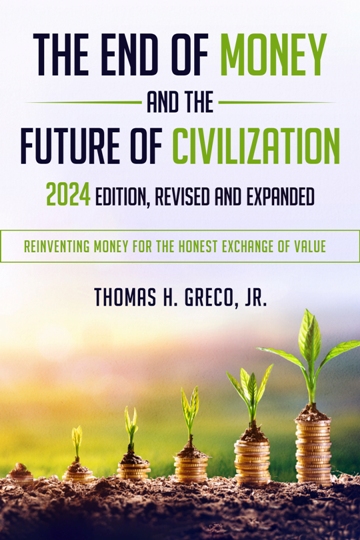
In this article I will discuss what the States can do to help liberate what I call the “credit commons” and restore “Constitutional” and honest money to various levels of our economy. The declaration by State governments of gold or silver as legal tender is important, not because metallic money will circulate widely, but because it establishes a proper measure of value and unit of account in which to denominate credit obligations which are the true media of exchange. Coins do not even need to be minted to serve that purpose, they only need to be defined, for example, as a specified weight of silver of some specified fineness. The definition that seems most appropriate to adopt is the original definition of the US Dollar that was established early in the history of the United States. I related that bit of history in the new, revised edition of my book, The End of Money and the Future of Civilization:

To complete the task of defining the monetary unit for the United States in a way that would not disturb commerce, a committee was commissioned to survey the money stock and assay a representative sampling of Spanish dollar coins so that the American dollar would closely approximate those coins already in circulation. This was easily accomplished, and it was quickly settled that the United States dollar should be defined as a silver coin containing 371.25 grains of fine silver. Coins were subsequently minted according to that specification along with gold coins valued in dollars. As the country developed, various expedients were implemented to make money more abundant[4].”
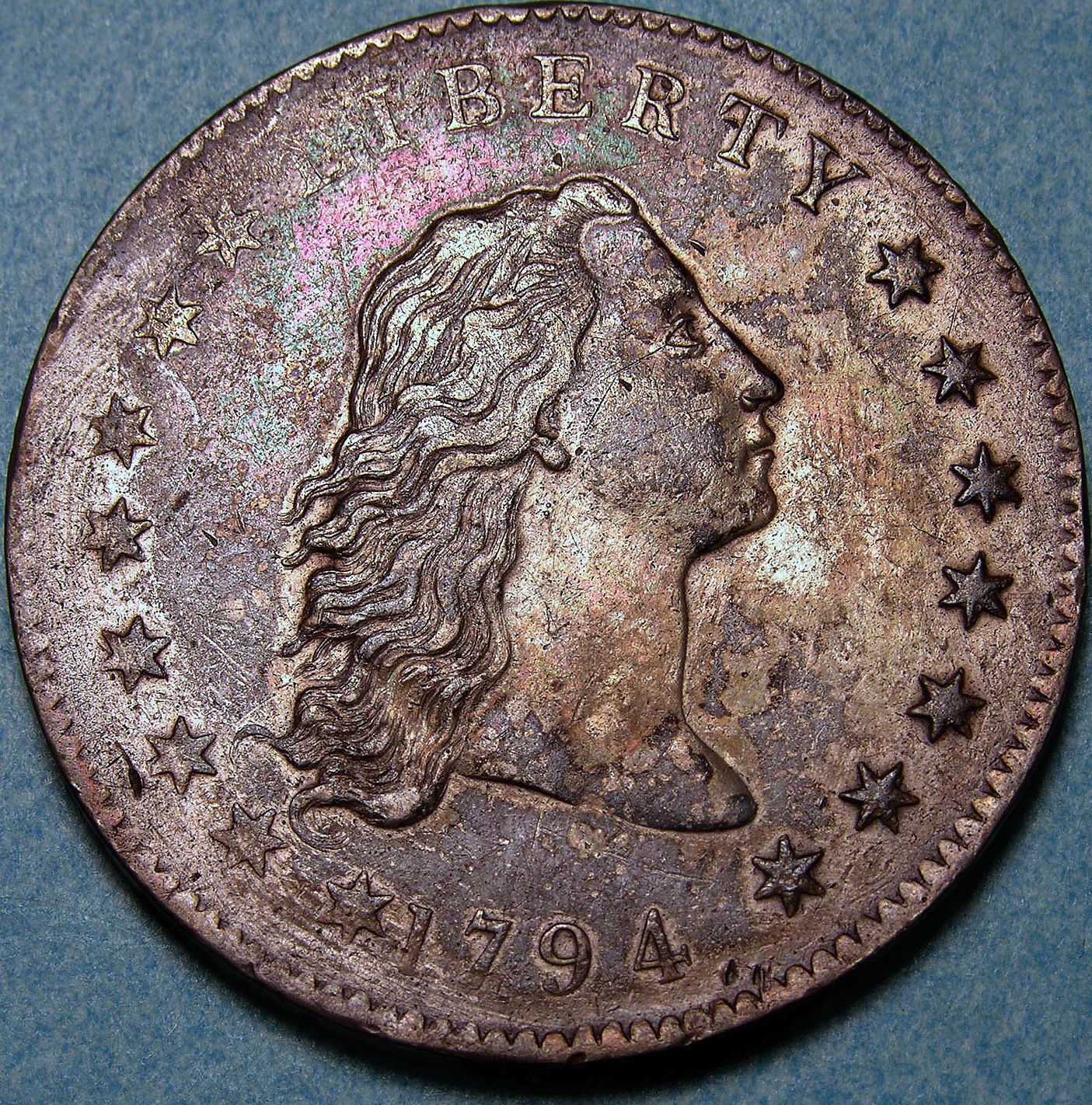
Source: US Mint

Once such a standard gets established somewhere, it will be widely adopted elsewhere, and that may eventually lead to a more stable composite standard being defined and adopted[5].

Once a State defines a commodity like silver to be legal tender, it can then encourage municipal governments or private businesses enterprises within the state to issue, individually or collectively, their own credit voucher notes denominated in terms of said silver dollar units by spending them into circulation as partial or full payment to suppliers of material inputs to production, and to employees and other service providers who must be paid. Those vouchers can then circulate widely as money to settle the obligations that others in the economy have to one another. The state government could also accept said vouchers, in whole or in part, as payment for taxes, fees, and other obligations due to the state government, and the state government might even consider issuing its own modified Tax anticipation warrants (TAWs) in the form of paper notes, ledger entries, or digital tokens denominated in terms of said silver dollar units.

People will accept these modified TAW and use them to pay one another because the warrants can be used to pay taxes and fees that are due to the issuing State government, or to pay private vendors of goods and services. When the government eventually accepts them back as payment for taxes and fees, the warrants are retired. In the interim period between their issuance and their retirement, the warrants can circulate among the population of the region as a means of payment that is independent of the federal Government, the Federal Reserve, and the banks that issue US dollars. As the TAW mature/expire, new series of TAW may be issued in amounts that are not excessive in relation to anticipated revenues.

As the people at large come to better understand and trust the validity and benefits of these payment media, they will increasingly use them in place of national fiat currencies in business dealings within the region, and in doing so will achieve a greater measure of local/regional self-reliance and control over their own affairs.


[1] See my posts on YouTube, Medium, and Substack.

[2] See these revised chapters of my book, The End of Money and the Future of Civilization, Chapter 4:

Central Banking and the Rise of the Money Power, and Chapter 6: Usury, the Engine of Destruction.

[3] Ibid. See especially, Chapter 11, Credit Clearing: the “Un-Money”, and Chapter 12. How to Solve the Money Problem.

[4] Chapter 9—The Evolution of Money—From Commodity Money to Credit Money and Beyond

[5] See, An Objective Composite Standard Measure of Value.

Now published, Chapter 10—The Third Evolutionary Stage—The Emergence of Credit Clearing

This is the latest chapter to be published of my new 2024 edition of The End of Money and the Future of Civilization. It continues the story begun in the previous chapter of how money has evolved and changed its character over time.

Here is a brief excerpt:

Money has become merely an accounting system, a way of “keeping score” in the economic “game” of give and take. Thomas H. Greco, Jr.

Let us begin by summarizing the evolution of the various kinds of money that have been used to mediate reciprocal exchange:

  1. The circulation of gold and silver coins gave way to paper banknotes that were redeemable for gold or silver coins, which made the notes essentially warehouse receipts for gold on deposit.
  2. Then, banks began to lend bank notes into circulation based on the pledge of collateral assets (some valuable and others not) other than gold, some of which included government obligations (bonds, notes, etc.).
  3. But ALL notes were redeemable in gold. This became known as the “fractional reserve banking” system.
  4. Bank account balances (checkable bank “deposits”) increasingly took the place of paper bank notes, and bank customers began to write checks against their deposits instead of using bank notes to make payments.
  5. As banks created ever greater amounts of non-bona-fide money based on national government debts and other illegitimate collateral assets, the fiction of gold-backing and redeemability could no longer be supported, and governments reneged on their promise to redeem their currency for gold. This broke the final link between political fiat money and the real economy of valuable goods and services.
  6. But, despite that, the emergence of credit clearing to offset credit obligation against credit claims was a major leap forward in facilitating the reciprocal exchange of value.

For now, you can read or listen to the entire chapter at Future Brightly:

Chapter 10—The Third Evolutionary Stage—The Emergence of Credit Clearing-Text
Chapter 10—The Third Evolutionary Stage—The Emergence of Credit Clearing-Audio narration

It will also be published soon here, and on my own Substack channel. Further chapters will continue to be posted as they are completed. Watch for Chapter 11 to be posted soon.

As always, your comments and suggestions are welcomed,
Thomas

What can AI do?

To satisfy my curiosity about AI, and ChatGPT in particular, I’ve been posing certain questions to it and been pleasantly surprised by the results. ChatGPT uses information that was publicly available online up to September 2021, so the responses that it generates will not include recent changes.

Here is one of my requests which, while much shorter, pretty well summarizes what I myself have written about the matter. I present it here for your information and your comments.

THG: Summarize the unique features of the work of Thomas H. Greco, Jr. on money and economics.

ChatGPT:

5/5 Thomas H. Greco, Jr. is known for his groundbreaking work on money and economics, focusing on alternative monetary systems and local economies. Some of the unique features of his work include:

  1. Decentralized Monetary Systems: Greco advocates for the development of decentralized and community-based monetary systems that empower individuals and local communities to create their own means of exchange. He emphasizes the importance of currencies that are not controlled by centralized authorities like governments or banks.
  2. Complementary Currencies: Greco promotes the idea of complementary currencies, which are designed to work alongside national currencies to facilitate local transactions and trade. These currencies are often tailored to specific communities or regions and can help stimulate local economies.
  3. Democratization of Money Creation: He challenges the conventional model of money creation by banks and governments. Greco believes in the democratization of money issuance, allowing communities to create their own money based on real value and resources.
  4. Mutual Credit Systems: Greco’s work includes the concept of mutual credit systems, where participants can extend credit to one another within a network. This can foster cooperation and exchange without the need for traditional banking intermediaries.
  5. Localized Economies: He emphasizes the importance of localized economies that prioritize community resilience and sustainability. Greco’s work encourages communities to rely more on local production and resources to reduce dependency on distant supply chains.
  6. Interest-Free Economics: Greco criticizes the conventional practice of charging interest on loans and believes that interest-free systems could lead to more equitable distribution of wealth and resources.
  7. Advocacy for Change: Through his writings and lectures, Greco advocates for individuals, communities, and governments to explore and implement alternative economic and monetary systems. He believes that a shift away from the current monetary paradigm could lead to more just and sustainable economies.

In summary, Thomas H. Greco, Jr.’s work revolves around reimagining money and economics by proposing alternative monetary systems, promoting decentralized currencies, advocating for interest-free economies, and encouraging the development of localized, community-based economic structures. His ideas challenge conventional economic thinking and aim to create more resilient, equitable, and sustainable societies.

#   #   #

Update: Monday, August 28, 2023
This iteration is a bit more complete:

Thomas H. Greco, Jr. is known for his unique contributions to the fields of money and economics, particularly in the realm of alternative currencies and monetary systems. Some of the key features of his work include:

  1. Local and Complementary Currencies: Greco emphasizes the importance of local and complementary currencies as tools for promoting economic resilience and community development. He advocates for the creation of currencies that are tailored to specific communities or regions, helping to stimulate local economic activity and reduce dependence on centralized national currencies.
  2. Decentralization of Money Creation: A central theme in Greco’s work is the decentralization of money creation. He believes that allowing communities to create their own currencies empowers them to meet their specific needs, bypassing the traditional centralized banking system and enabling greater control over their economic destiny.
  3. Credit Clearing Systems: Greco explores the concept of credit clearing systems, which facilitate transactions without the need for traditional currency. These systems work by enabling participants to exchange goods and services directly based on mutual credit agreements, reducing the reliance on scarce official currency.
  4. Integral Theory and Economics: Greco integrates principles of integral theory into his economic thinking, considering not only economic factors but also social, ecological, and cultural dimensions. He emphasizes the need for a holistic approach to economics that takes into account the interconnectedness of various aspects of human life.
  5. Monetary Reform Advocacy: Greco is an advocate for monetary reform, particularly in response to issues such as inflation, financial instability, and wealth inequality. He proposes alternative monetary systems that prioritize stability, fairness, and sustainability.
  6. Educational Efforts: Beyond his academic work, Greco is involved in educational efforts to raise awareness about alternative currencies and monetary systems. He has authored books and conducted workshops to help individuals and communities better understand and implement these concepts.
  7. Focus on Empowerment: One of the overarching themes of Greco’s work is empowering individuals and communities to have a greater say in their economic affairs. He believes that by rethinking the way money is created and circulated, people can gain more control over their economic lives and reduce their vulnerability to systemic financial crises.
  8. Sustainability and Resilience: Greco’s work aligns with the principles of sustainability and resilience. By promoting local economies and alternative currencies, he aims to create systems that are more environmentally friendly and less susceptible to the boom-and-bust cycles of traditional monetary systems.

In summary, Thomas H. Greco, Jr.’s work on money and economics revolves around the development of local and complementary currencies, decentralization of money creation, credit clearing systems, integral theory integration, monetary reform advocacy, educational initiatives, empowerment, and a focus on sustainability and resilience. His ideas challenge conventional economic thinking and offer potential solutions for creating more equitable and community-driven economic systems.

#   #   #

My archives, and new additions to the Beyond Money Library

Over the past few weeks I’ve begun the process of cataloging the books, pamphlets and other print materials in my unique and rather sizeable collection. The process has been greatly facilitated by using an app named CLZ Books which is able to find citations from the online database by reading the bar codes that are usually printed on the back cover or dust jacket of a book, or by manually entering the ISBN, or title, or author.

Many of the works in my collection are old enough to lack bar codes and many lack even ISBN numbers, but these can often be found in the database by manually entering the title or author. So far I’ve managed to catalog almost 200 titles. The remaining items are pamphlets and photocopies which will require more intensive effort.

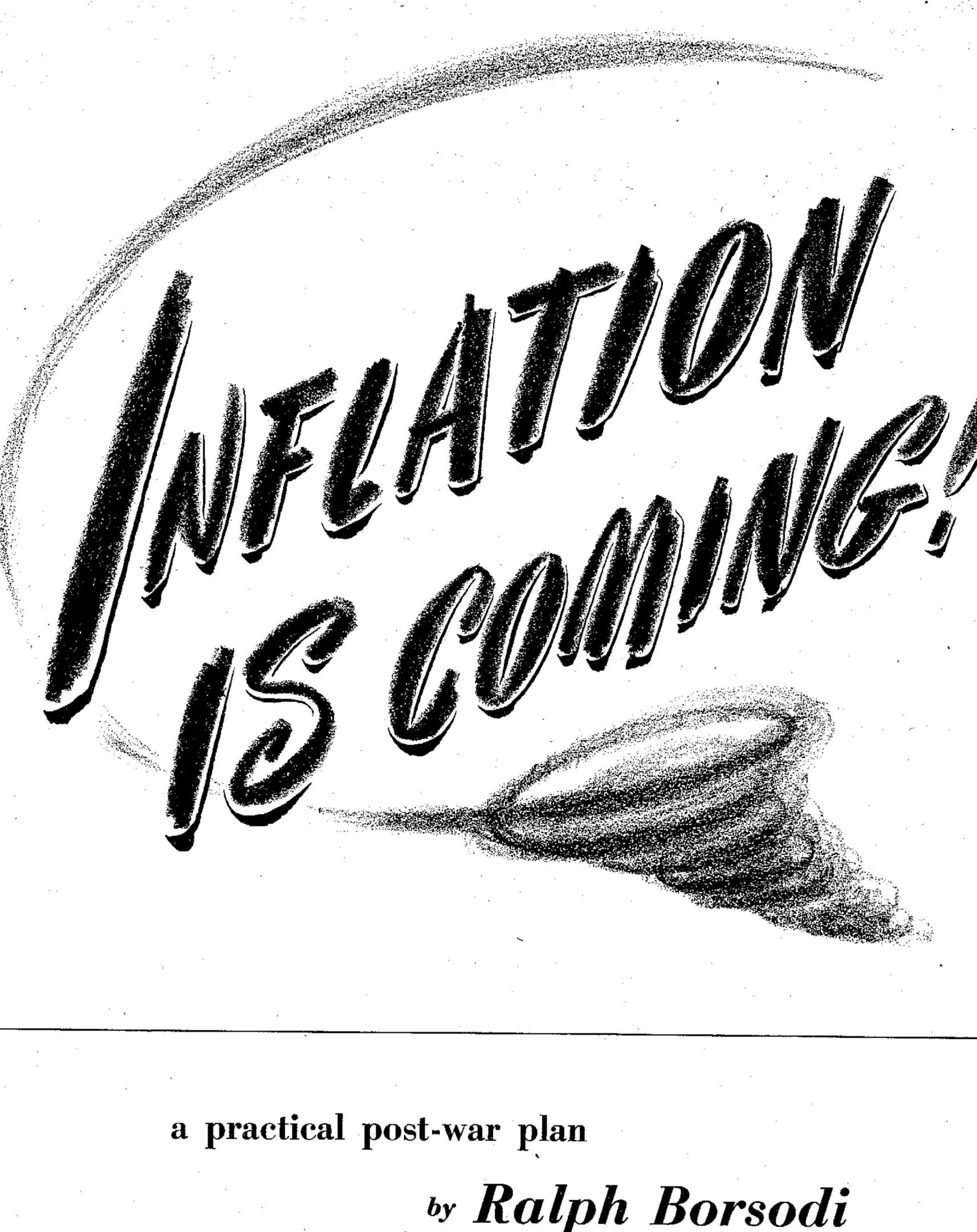
In going through this process, I’m selecting a few works to add to the digital Library on my website Beyondmoney.net. I first do a search to see if digital versions already exist somewhere on the Web. If they do, I’ll provide a link, or download them to my computer and place them on my own website. If no digital version is found, I may choose to transcribe the work, either in whole or in part, by speaking it into a voice recognition app that is able to convert it to text.  An example of the former is Inflation is Coming and What to Do About It, by Ralph Borsodi, one of the people who have inspired my work. It was written in 1945, but the copy I have in my library is the 1948 version which is essentially the same. I did retrieve a PDF file of the book from the website of Cooperative Individualism, and you can read it here.

The financial and economic collapse did not happen as soon as Borsodi thought it might, nor did it quite follow the mechanism that he expected. He seems not to have anticipated the globalization of the economy, the shift of the US from the world’s greatest creditor nation to its greatest debtor, or the extent to which the US dollar would become the global reserve currency, and the enormous appetite of other countries for holding and accumulating ever greater pools of dollars. Neither did he foresee the long succession of stop-gap measures that have been rolled out by the political and monetary authorities over the subsequent decades to prop up the flawed system, such as corporate and bank bail-outs, corporate consolidations, quantitative easing, and bail-ins, and the ever greater centralization of financial, economic and political control. But Borsodi was not wrong. We can now see looming on the horizon either (1) the collapse the dollar and the global financial system, which will take the economy with it, or (2) the imposition of an ever more totalitarian government that will micro-manage every aspect of society and individual behavior.

The first of these will probably be inadvertent and unanticipated. The second has long been planned, is in the works, and is rapidly unfolding. The global power elite seem to believe that they can engineer a controlled demolition of the existing financial mechanisms and replace it with a new system that will further increase their power and wealth. Recent developments are signaling the elimination of cash money, the introduction of Central Bank Digital Currencies (CBDCs), as well as onerous demands on people in the name of public health, climate change, and other “emergencies.” We should expect to see the United States and other countries to roll out their own versions of China’s social credit system which will determine what each individual will be allowed or not allowed to do, along with some system of positive personal identification (PPI), most likely using a mandatory chip implant.

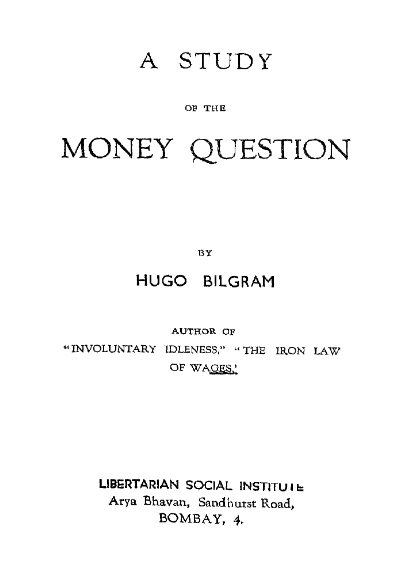
My physical book library also contains a rare copy of, A Study of the Money Question, by Hugo Bilgram. This slim volume,

published in 1894, provides some valuable insights into the essential nature of money, the necessary functions of an effective system of exchange, a critique of the banking system as it existed at the time, and Bilgram’s description of a “rational money system.” I did not expect to find it on the web so I spent a considerable amount of time transcribing it and adding my commentary, which you can read here. A subsequent search did locate a PDF file of the book on Internet Archive, which I have downloaded and added to my online Library.

I believe that both of these will be of value to serious students, researchers and innovators working in the field of money, banking, and exchange.

One of my most popular posts–There once was a river …an allegorical tale of money and credit

One of my most popular posts has been, There once was a river …an allegorical tale of money and credit, in which I’ve tried to show how we have all become slaves to money and those who control money. Using water in this little fable to represent money, I’ve also tried to show that we the people can free ourselves by thinking outside the box to overcome our fixation on the sort of money that has been provided for us and over which we have lost all control.

Every metaphor of course is limited and what I am hoping that readers/listeners will come to understand is that there are alternatives to conventional money that we can use to reduce, and eventually eliminate our dependence upon conventional political money. It is credit that is the foundation of an honest system of exchange and we have the power to give credit to each other in accordance with our own values and objectives, outside of conventional banks and without charging interest.  

You can access the story on my website (audio with transcript) or on YouTube (audio).
Or listen here.

You are welcome to post comments.

My latest interview on It’s Our Money with Ellen Brown

I was the featured guest on Ellen Brown’s podcast of December 30, 2021. I consider this to be one of my best interviews in which I covered a wide range of the most important questions related to rebuilding our system of money and finance. My interview is comprised of the first 38 minutes of the program.

This audio together with a transcript can also be found here.

Newsletter May 2021. Upcoming podcast series on “Our Money System,” and other news

In this issue:

  • Upcoming podcast series
  • Conversation with Tim Jenkin, Edgar Cahn, et al
  • Latest post–How, Then, Shall We Live? — What we might learn from the Amish
  • Markets and finances in today’s world
  • U.S. foreign policy, the primary threat to peace
  • Travel plans

james-morden-VeChXhxN8DI-unsplash_______________________
Upcoming webinar series

I will be conducting a free three part webinar series for the Henry George School of Social Science. Here is the description and registration link:

Our Money System – What’s Wrong with it and How to Fix it
A critical look at money & credit, their political and economic implications, and innovations that are making conventional money obsolete.

About this event

HGS_WebinarIn this webinar series, renowned monetary reformer Thomas Greco Jr., will present our system of money and banking, how it has evolved, why it is problematic, and where it is trending. The series will also look into past, present, and future exchange and payment alternatives, like Depression-era script, local and private currencies, commercial trade exchanges and LETS systems that apply the “credit clearing” process, and the more recent emergence of crypto-currencies and blockchain ledgers and their potential role. It will include discussion of how these have evolved, their advantages, limitations and future potential and what needs to be done to take them to scale.

The speaker, Thomas H. Greco, Jr., is the author of The End of Money and the Future of Civilization. For more than 40 years Mr. Greco has been studying, writing and lecturing and advising on the subjects of money, exchange, and political economy. His distinctive insights into these subjects and his innovative approaches to a more equitable and sustainable economy have made him a sought after speaker and advisor worldwide. His full bio can be viewed here.

Topics

  • WHAT is money?
  • WHY do we need money?
  • WHAT is wrong with our money system?
  • Can we live without money?
  • How can business be conducted without money?
  • What are the economic, social and political implications of monetary policies and systems?
  • What is the likely impact of present day monetary innovations?

May 21 – Session 1 will provide an overview of the present system of money and banking, how it has evolved, how and why it is problematic, and where it is trending. Mr. Greco will talk about the interest-based debt-money system, how it causes the growth imperative and the politicization of finance and exchange, and the political and economic consequences of its continuation. He will outline the fundamental concepts of exchange and finance and the principles upon which sound and sustainable systems are being developed. Participants will be asked to read or listen to some specific materials in preparation of the subsequent sessions.

June 4 – Session 2 will be a more interactive webinar that will provide ample opportunity to discuss whatever questions have been evoked by the previous session and the assignments. These might include topics like inflation, depressions, asset bubbles and busts, the savings and investment functions, and government responses to shocks like the 2008 financial crisis and the more recent pandemic. This will lead into a discussion about possible solutions to the problems that the present system causes, and the role of local currencies and other alternatives for the exchange of value.

June 18 – Session 3 will concentrate upon past, present, and future exchange and payment alternatives, like Depression-era scrip, local and private currencies, commercial trade exchanges and LETS systems that apply the “credit clearing” process, and the more recent emergence of crypto-currencies and blockchain ledgers and their potential role. It will include discussion of how these have evolved, their advantages, limitations and future potential and what needs to be done to take them to scale.
Please note that each session will start at 6 PM Eastern Time (3 PM Pacific and Arizona time), and end at 7:30 PM (4:30 PM).

Register Now!

_______________________
Conversation with Edgar Cahn, Tim Jenkin, et al

I was recently the featured guest on Taking Back Our Economy, a podcast series hosted by the Community ExchangeEdgar-Cahn-photo-600x599 Alliance. In this episode I discuss principles of exchange, the various kinds of systems that have been tried, and what needs to be done to realize their full potential, with Tim Jenkin, founder of the Community Exchange System, Edgar Cahn, founder of Time Banking, Anitha Beberg, Christine Gray, and Martin Simon.

You can tune in to the discussion on YouTube at https://youtu.be/BtIG9YLySD4.

_______________________
My latest post: How, Then, Shall We Live? — What we might learn from the Amish

While most of us have been caught up in the high-tech, consumerist, debt-ridden rat-race, there are certain groups that have been thriving on low-tech, low-consumption, earth-friendly, cooperative approaches to living. Notable randy-fath-Amish-Cramong these are the Amish communities which are characterized by their strong social bonds and mutual support. In the present chaotic times as we struggle to reinvent civilization there may be something important to be learned from the Amish. Read about it here.
_______________________
Markets and finances in today’s world

The biggest players in money and markets today are central banks and central governments. Their market interference is massive and largely overrides the effects of other market player’s actions. If you have not already done so, please read my article, Money and Finance Have Now Been Completely Collectivized.

One complicating factor that market analysts and investment advisors universally fail to mention, and probably do not even recognize, is the withdrawal of large segments of the population from the work force, and from the “old civilization.” In my view, a new civilization has been emerging for decades from the bottom upward and that process is now accelerating as people lose faith in the dominant centralized financial, economic, and political systems and structures. The new civilization is being built on relationships of trust that already exist among family members and friendship groups and within local business and political circles. As corruption, malfeasance, and errors in the dominant centralized structures become more egregious and apparent, this process is bound to accelerate further until the old systems become irrelevant. My “Walking Away…” series of articles (Part I, Part II, Part III) articulates in more detail my thoughts about that.

_______________________
U.S. foreign policy, the primary threat to peace

Two or three years ago in my efforts to gain a deeper understanding of the political dynamics of the Middle East I came across Graham E. Fuller, a Middle-east analyst and former CIA operations officer. Reading his book, Turkey and the Arab Spring, gave me an appreciation for the pivotal role the Turkey plays in the region and in the Muslim world generally. Since then I’ve been following Fuller on his website and on Facebook.

In his recent editorial, US primacy is a self-fulfilling threat generator, Fuller provides an excellent overview of US government foreign policy and the US role in the world. In it, Fuller states:

I have no wish to launch into a litany of American sins, failures, or mistakes by omission, or more often commission, that have by almost any measure been disastrous for so many foreign countries “visited” by U.S. military operations. The list is long and well known — Iraq, Afghanistan, Syria, Libya, Pakistan, Somalia, indirectly in Yemen in most recent times. He then nicely summarizes the essence of US foreign policy, saying, “…it’s hard to get off that enemy list when you actively assert your independence from Washington.”

The editorial is brief and well worth reading. You can find it on Fuller’s website.

_______________________
Travel Plans

As spring passes and summer begins, we wonder about the possibilities for travel and tourism to return to anything like normal. Will “vaccine passports,” testing, and/or masking be required to travel? If so, what form will those passports take, paper certificates, digital apps, chips embedded under the skin? Will governments impose quarantine requirements for people entering their country, as many have been doing for more than a year? If one does travel abroad, what are the chances of being stuck there and not allowed to leave?

Considering all that, it seems unlikely that I’ll be doing much traveling this year.

Stay alert, keep learning, and seek your inner peace,

Thomas